
I’ve been MIA for a while again throughout a super busy period – but I did have some downtime to finish this top, on which I’ve been working for over a year (with breaks for other projects).
I combined two patterns; one for the upper part and another for the lower, both from Pinterest.
Materials: Six 25-gram, 210-meter balls (total of 150 grams and 1260 meters) of Pure Silk by Ice Yarns, a 100% silk lace weight yarn, and a 2.5 mm hook.
This specific yarn has by now been discontinued (although some retailers still list what’s probably leftover stock), so I’ll just focus on what it’s like to crochet with pure silk yarn in general. Silk/wool or silk/cotton blends are far more common; working with 100% silk is a whole another experience.
First, the softness. Silk feels amazing against the skin and is 100% non-irritating and non-abrasive. Suitable for all skin types, even the most sensitive. Silk is hypoallergenic and naturally mold- and fungi-resistant. It’s also very gentle on the fingers and won’t chafe even when you’ve been crocheting for hours.
Second, the drape. Silk drapes incredibly and has quite a bit of stretch if you use a relatively large hook. This top wears amazingly: it hugs the body without being too tight and has zero stiffness. This, of course, is also due to the fact that I worked with laceweight yarn: the thinner the yarn you have patience to work with, the more delicate and drapey crochet garments will come out. (Sidenote: The crafters who say crochet garments never turn out as nice as knit ones usually forget that crochet creates a thicker fabric, so you HAVE to work with thinner yarns for good drape and a comfortable, not too thick garment.)

Third, the sheen. This isn’t noticeable in the photos, but when light hits the fabric directly, you’ll see a lovely, muted sheen, subtle and elegant.
Silk also has wonderful temperature regulation properties and is perfect for any weather. It keeps you cool when it’s hot and warm when it’s cold.
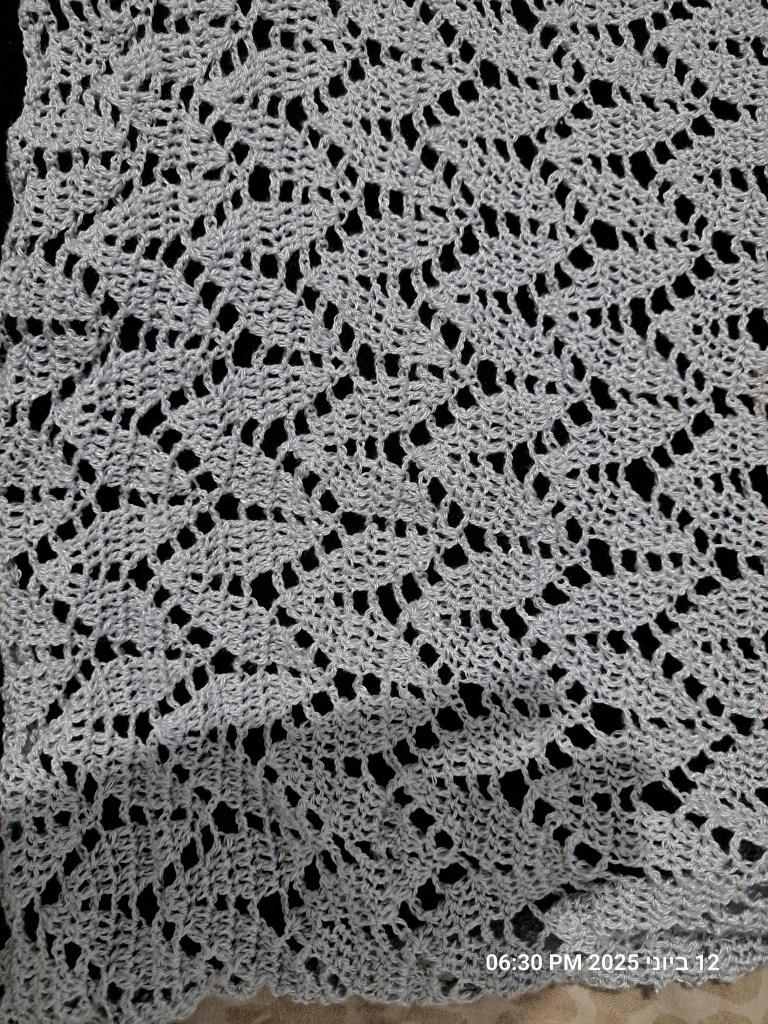
Now for the downsides: silk yarn can be pretty slippery, and keeping your tension (I.e., achieving even stitches) could be a challenge. Stitches tend to be looser and less uniform, which creates a poorer stitch definition, meaning your pattern won’t look as crisp as when you work with wool or cotton.
Silk yarn also tends to split, so a rounded hook would work best. Finally, it frogs so easily that you can accidentally rip out half a row if you drop your project or don’t fold it carefully enough in your bag when you aren’t working on it.
And, of course, we have to mention the price. Silk is highly labor-intensive, which makes it expensive. A whole garment from pure silk yarn can hurt the wallet! That’s another pro of working with lace weight yarn: a little goes a long way.
If you’re keen on diving into a crochet project with pure silk yarn, you can try the lovely Malabrigo Mora (which, however, is substantially thicker than the yarn I used here, being fingering rather than laceweight) or look up silk yarn on Colourmart.

 Domestic Felicity
That is so pretty!
LikeLiked by 1 person
Thank you so much!
LikeLike