The Basic Guide to Backyard Livestock

Dear friends,

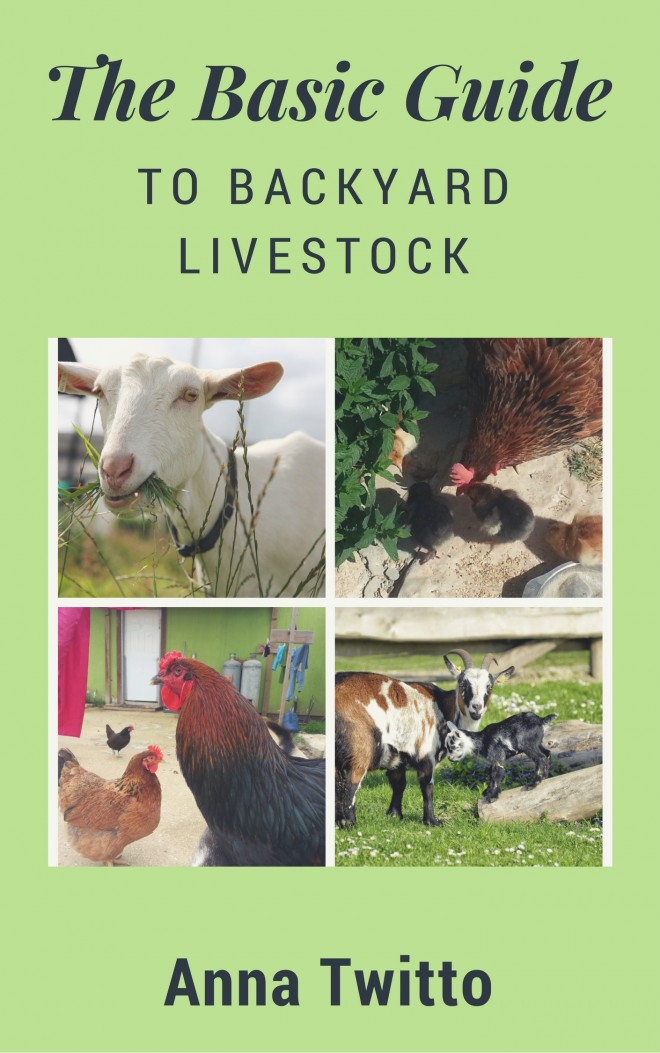
I am happy to announce that The Basic Guide to Backyard Livestock is now live and available. It contains all I’ve ever written on the subject of raising chickens, arranged in compact, well-organized, easy-to-read form, plus an introductory chapter to goats. As I’m Jewish, naturally I only deal with kosher animals and did not touch on the subject of pigs/rabbits, etc.

The book is available in digital form on Kindle and Payhip, the latter at reduced price, and also in print. I do have to make a disclaimer, however, that the print book is in black and white, as adding color photographs would bump up the price quite unreasonably. I do encourage all who would like a digital copy to purchase from Payhip, as it only takes a tiny commission compared to Amazon, and pays the authors instantly.

I would be infinitely grateful to all who help me spread word about the book by sharing via their blog/social media, or simply among friends who are making their first steps in the direction of raising poultry and goats. People who are interested in review copies are very welcome to contact me.

Nutrition – defeatism, real change and investment of time

Image result for health and nutrition

While I was in university, several of our professors repeated that there is almost no way to acquire all the needed vitamins and minerals from the typical modern diet, and thus progressed to say that synthetic supplements in the form of pills, and artificial fortification of widely used foods, are recommended to the population.

It is true, they argue, that what would really be optimal is a whole series of radical changes in the modern diet, but since these aren’t feasible, supplements should be taken. Similarly, since people are unable to give up their sugar addictions, it would be useless to try and make them do that. At most, we should recommend artificial sweeteners to replace refined sugar, based on the evidence that these are harmless in moderate amounts.

To me, even then and especially now, such an attitude seems not only defeatist, but also very underestimating of people’s willpower, intelligence and determination. Shouldn’t we believe that in the light of scientific evidence and proper encouragement, many people will go to great lengths to do what is needed in order to gain good health for themselves and their children?

“Children will never give up sweets,” they say. Thus, it is acceptable to feed them ice-cream and highly sweetened milk products in order to reach the needed daily calcium intake. “Children don’t like vegetables,” and so, it is alright to give them sugar-bombarded, poisonous-colored breakfast cereal because it has some synthetic vitamins stuck in it by the benevolent food industry. This is saying it’s impossible for little children to like and eat with relish simple, wholesome and healthy foods.

True, it might be more challenging, but it isn’t impossible for the committed parent, especially as children tend to copy what they see. If we consistently sit down to good, proper family meals consisting of good healthy foods, this is what the children will see as their model. Food should be a prize, not a chore. We never make a fuss when our daughter trifles with her food, nor attempt to make her eat a full portion when she clearly has no appetite for it, nor offer rewards in the form of sweets.

“People don’t have time to cook,” and so commercially prepared meals indisputably become usual fare. The often overlooked fact is that the modern diet is correlated with the modern lifestyle – rushed, crazy, and highly stressful. If you want to eat healthy homemade food, it doesn’t mean you need to spend all day in the kitchen preparing gourmet meals, but it does usually mean investing more time in food preparation. It means slowing down to plan ahead and think. If the morning is always spent in insane rush of both parents hurrying to get the children out of the house and get out themselves, each going his own separate way, chances are that someone will reach for that box of sugared cereal, rather than make a simple and nutritious breakfast of oatmeal porridge, scrambled eggs and toast.

The habit of family meals is something else we have been robbed off. Even when the family eats together, it often means that they all sit in front of the television with their eyes glued to the screen, many times eating convenience food of inferior quality and taste. A lot more than nutrition is compromised; we are losing the fellowship of the family table, the easy conversation over dinner, the laughter and exchange of ideas, and what happens by-and-by – the training of children in good eating habits and proper behavior. Even with the quality of food in conventional stores so compromised, we would still all be far better off simply with the investment of time to prepare good, proper, simple, nutritious and economical meals.

Needless to say, a mother at home makes a huge difference. Most often, it is her who keeps the cooking fires burning; it is her who gathers the family around the table, nicely set, and offers delicious hot dinner, at the end of which her children will go to bed well-fed, full and sleepy. But of course, conventional nutritionists will not tell women to stay home, if at all possible, and cook for their families. It isn’t politically correct.

The only hope is that people will see for themselves that the lifestyle so many are trying to maintain is nearly always impossible to combine with good health and vibrant family and community life. Our homes have been empty all day for too long, locked up, dark and cold. Our freezers have been stocked, for too long, with food that will temporarily satisfy the hunger while offering no real health benefits. For too long, we have looked for the secret to health and long life in all the wrong places, giving in to the calorie counting craze.

My belief is that nothing will make a real difference unless home, family, and consequently the family table, return to occupy their traditional proper place in our society. This is far more complex than calories, fats, vitamins and DRI. This is about the whole course our life will take from now on.

September 1st

Image result for back to school

September the 1st, the date so many parents are longingly looking forward to, is upon us. And though homeschooling obviously isn’t the way for every family (though I believe it can be the way for many more families than those practicing it today), I do find it a little sad that not more parents can enjoy the summer vacation with their kids.

Undoubtedly, there is a very practical reason for the collective sigh of relief that is going to sound once the school buses come to take the children away. In most households in Israel, not only do both parents work, but both parents work an increasingly high number of hours (how family friendly this practice is, and whether there are alternatives, is probably a topic for a whole different post). There is a real, big discrepancy between the days children are out of school and the days parents can take off work. Thus begins a merry-go-round of summer camps, summer schools, babysitters, driving the children off to grandparents, and in many cases, leaving them home alone way too long and too early. Every year, parents campaign for the shortening of summer vacation, stating that the education system is out of tune with real life. I’m mainly saddened by the tone of these discussions, which make children appear to have become a liability.

I’m convinced it’s more than that, however. Many parents, even if they can take time off work, just aren’t comfortable with the idea of spending time with their children at home for any length of time. Thus the typical summer crowding of malls, amusement parks and waterparks, zoos, and any place that usually serves to amuse children. Without a home-based routine, summer becomes a time of chaos, and parents understandably feel they want order restored.

We used to have a simple year-round routine when the girls were little(r), but last year we found a small family-based study group in the area, and when it broke up for the summer, while we didn’t experience the school withdrawal symptoms common in most families, I did have to deal with some attitude problems. For example, whenever I tried to teach something, I would hear whining and remarks such as, “this isn’t what summer is for!” To which I would respond, “Oh, right, I forgot – your brains have gone on vacation and stopped working.” A few days were mostly enough to fix this.

I often hear, “don’t your kids drive you up the wall?” and the answer is, of course they do. Kids whine, fight, test their boundaries, and sometimes I do feel like I need out, or I will explode. It’s important to remember, however, that taking a break, while it can be refreshing, does not solve problems. I have had instances when children fought over something silly (“over dead air space”, as a friend of mine aptly puts it), were taken by their dad to the library or the park for distraction, and resumed the same argument the moment they got home!! Now, clearly the solution isn’t to always keep children away from home, or siblings away from each other (preferably on leashes and in cages). Problems need to be addressed and attitudes worked on. And believe me, I have had my moments of utter despondency. I have clutched my hair and yelled myself hoarse, and I know this can be so very hard. I’m just saying that you’ll have to deal with the same problems whether you home educate or not, although admittedly every little issue is magnified when it has been raining for days on end and you’re all cooped up at home day and night.

In Israel, summer vacation is shortly followed by the string of Jewish holidays that leave many parents at a loss again. What I suggest for every family, homeschooling or not, is the cultivation of quiet contentment among children (and parents) that will enable you to stay home together as a family, and entertain yourselves inexpensively by things like reading, crafts, walks, and picnics in parks. I know some families that flat out refuse to put themselves in the heavy traffic flow on the middle days of Sukkot, for example, and they save a whole lot of time, money and frustration. If you do take trips, you needn’t go far – exploring your own area can be more interesting than you think.

What is enough? Thoughts about spending and debt

Image result for mindless spending

We’ve been staying with my Mom for the last couple of days, and like many times before, I find myself stricken by the contrast between our life and the life of people in town, if only an hour ‘s ride or so away.

My kids are very unused to being cooped up in an apartment 24/7, so naturally, I go out with them a lot. Luckily, there are many beautiful parks in the area where they can run, jump, swing, climb, and take out all their seemingly boundless energy.

One thing that really struck me every time we go out is how much people buy. It seems that possibilities to spend money are endless – clothes, toys, books, any kind of stuff you can imagine, as well as eating out. I hardly know what to think when I see a waitress moving forward with a tray that probably costs as much as we spend on food in a week.

I must be honest, and can’t say the only thing I’m thinking is, “sheesh, how much money are they throwing out, these mindless spenders!” Sometimes I feel a pang of envy, wishing that I, too, could just sit down and order a meal in a cozy cafe without comparing its cost to my grocery budget; or whip out a credit card, walk into a store, and buy heaps of clothes – things that smell beautiful and new and that had been owned by nobody before; and if the size doesn’t fit, why, I can just go to the saleslady and ask for a bigger or smaller one. These are things we have gone totally out of habit of doing, and most of the time I’m not sorry we can’t afford them.

The thing is, judging from statistics on income and poverty, I’m not sure all the people who are caught up in shopping sprees can afford it, either.

Last Shabbat, I participated in a Torah class led by a lady who brought out a variety of very interesting sources, which all seemed to point into one direction, essentially stating that borrowing money and being in debt is wrong from the Jewish point of view, and should be avoided as much as possible. Of course, many people who are not Jewish or even religious at all have come to the same conclusion regardless. The big stumbling block to this principle is, of course, a mortgage, without which buying an apartment is impossible for most Israelis in most parts of the country. When women pointed this out, the lady said that the best compromise she knows of is to take as little a loan as possible and settle for a modest apartment.

Being committed to avoiding debt, we have never taken a mortgage and bought, so far, two houses with cash. They were old and fixer-uppers, and many people would no doubt say they wouldn’t have chosen such a bargain, but I still consider it a good choice. Financial freedom does not come without certain sacrifices.

Would love it if anyone cares to share their thoughts on this.

Chicken Behavioral Problems

Above: a photo of one of our roosters strutting around. This guy has been occasionally known to have some attitude problems, which are quickly adjusted by a well-aimed sweep with a broomstick. Some roosters are a lot more troublesome, however, and may be found incompatible with the backyard flock owner seeking a quiet, peaceful life.

Admittedly, roosters are often the more problematic part of the flock, being noisy, territorial and sometimes aggressive. It is no wonder that the English language boasts of expressions such as “being cocky”. However, I also believe that at least half of all the behavioral management programs in backyard chicken flocks – whether it’s excessive pecking, aggression toward humans or extreme flightiness – can be dealt with by choosing the breed that suits you best.

Read more in my latest Mother Earth News post about chicken behavioral problemsPredators, pests and diseases are not the only challenges a backyard flock owner will have to deal with. Sometimes the problems are originated in the flock itself, and solving them involves lots of creativity, ingenuity and even diplomacy.

Green from the Ground Up: Book Review

Here’s another book spotlight for you: I’ve been reading this for the past few days, and just love it! While it’s mostly aimed at professional builders, anyone can glean from this book. It’s just jam-packed with useful, solid, comprehensive advice on every aspect of green home-building – foundations, roof, windows and the passive solar aspect, insulation, plumbing, etc. Plus, it’s full of photographs that are very illustrative and demonstrate each point very clearly, even to non-professionals. I wish I had this book in print, since I imagine it would be a lot more comfortable to view this way, but anyhow, it’s one of the most useful books I’ve read lately.

Note: I didn’t get any review request or compensation from the author; I just had to share this because I found it so useful.

From a review: “Eco-friendly housing used to be thought of as expensive, ugly or just plain weird. Now it’s becoming common. David Johnston and Scott Gibson offer guidance on environmentally sensitive home building in Green from the Ground Up: Sustainable, Healthy, and Energy-Efficient Home Construction. The book helps builders and homeowners create houses that conserve natural resources and are energy-efficient and healthful. It’s packed with information, tips, illustrations and case studies that offer wisdom earned from experience.”

Late Summer

Image result for late summer

August is approaching its middle, and while the days wan steadily shorter, I am looking forward to longer, cooler nights, autumn rains, and the fresh greenery in the landscape that will come with them.

Late summer is always a busy time for me, as I wrap up my spring and early summer garden (and prepare for a second growing season, that will last well into November). Last week, I pulled up my exhausted tomatoes, after having picked the last of the produce, planted some basil, and started more tomato plants indoors. The first spring chicks are almost pullets now, and two of my hens are sitting once more, probably for the last time this season.

The time of the year is turning me into quite a scatterbrain, and concise writing efforts are getting put off for cooler, serener times, but here are two of my latest Mother Earth News posts for your perusal:

Drying Produce – Herbs are one of the easiest things to dry. Simply cut a good-sized bunch, wash it thoroughly, tie by the stems and hang to dry – outside if the weather is sunny, inside if you have frequent rains or live in a very humid climate. In a few days, depending on the weather and humidity level, you should have a bunch of perfectly dry herbs ready to be stored in a tightly sealed glass jar or plastic bag. You can keep them as leaves for tea or crush them into powder for seasoning.

Dealing With House and Garden Pests – Having lived in town for most of my life, I experienced a kind of shock when we married and moved into a little house on a plot of land. The critters that have invaded our premises over the years could form a small menagerie: we’ve had lizards, snakes, black scorpions, giant yellow centipedes, mice, rats, spiders and, of course, a whole host of insects – beetles, ants, woodlice… you name it.