Why sugar addiction is so hard to beat

Image result

Of all the changes one might try to make to improve one’s nutrition, eliminating or reducing the intake of added sugar is probably one of the hardest (but also one of the most crucial) things to do. Here are some reasons why:

  1. Sugar is everywhere. It is ever-present and very socially acceptable, being used as part of every gathering, food treat, or celebration. Children get candy as a reward for good behavior. Almost every occasion, from birthday party to wedding reception, is impossible to imagine without cake. Furthermore, many alcoholic drinks – another social convention – are heavily sugar-laced.
  2. The love of sugar is biologically ingrained. On a biological level, sweet taste allows one to assess the ripeness of fruit, therefore helping choose the ones which offer most nutritional benefits – as in nature, sugar is a component of nutritionally dense foods. The consumption of sugar is chemically rewarded by the brain – it acts on the pleasure-center and triggers the release of serotonin, which in turn floods our bodies with pleasant sensations. The problem is, this kind of biochemical high is also addictive – when the consumption of sugar is over-indulged, on attempting to break it one might literally find oneself feeling and behaving like a junkie on withdrawal.
  3. Commonly used in food industry – sugar is one of the favorite ingredients of food industry, and do you have to ask why? It’s cheap, has a pleasant taste and an almost infinite shelf life. It is used, therefore, to entice innocent people, cover up for bland taste inferior ingredients are responsible for and, in short, to line the pockets of the food conglomerates.

I have stated before that I am an acknowledged sugar addict. I’m not saying “recovered” or “former”; I will probably struggle with this affliction for as long as I live, but eating well, resting well, and being aware of the problem helps quite a bit. One interesting book I am reading now is The Carbohydrate Addict’s Diet. It isn’t a new book, and some of the things they recommend and/or allow are outdated, but overall they have an interesting approach. Their attitude, in a nutshell, is reducing hyperinsulinemia by limiting carbohydrate-containing meals to one per day. Other favorite reads of mine are Sugar Blues and Beating The Food Giants.

Why I love bartering

Image result for barter

As terrific as it is to buy from small local businesses, bartering is even more awesome. It allows one to bypass the money economy entirely. When I trade something I have a surplus of for something I need, I feel like sticking my tongue out and saying, “ha ha ha, mighty Tax Authorities, I fooled you! You won’t get any share of money from this exchange!” (Very mature, I know). Also:

1. Bartering fosters close community ties and allows one to meet awesome, like-minded people. It develops personal connections that may grow into real friendships.

2. Bartering is the very essence of the saying, “one man’s trash is another man’s treasure”. In season we may have so many fresh eggs, for example, that we literally don’t know what to do with them – but other people living right next to us are in need of those fresh organic gold protein nuggets. They, in their turn, might have something else we need (fresh veggies, artisan products, skills). If each side takes something they don’t want/need and trades it for something they do, everybody wins.

3. Bartering is creative and allows for much more interesting business-making than just stepping into a store and buying whatever you need.

Read more in my latest Mother Earth News post:

“While I’m not naïve enough to believe we can opt out of the money economy altogether – the modern world is too populous and complex for that – bartering can still work exceedingly well in small communities with close-knit personal relationships where people choose to earn less, spend less, and support each other rather than a large chain-store or a mega-farmer.”

The Private Life of Chickens

Once in a while I come upon a documentary that is as deliciously comforting as a cup of hot cocoa when you’re feeling a little under the weather. The Private Life of Chickens was just that for me: a dose of comfort and relaxation to take late in the evening, when the chores are done and I’m tired and craving something cozy and domestic like only a British documentary can be.

This documentary takes us to the beautiful English countryside (something I would dearly love to re-create in Israel), to the farm of a sweet lady named Jane, who rescues ex-battery hens, cares for them, and passes them into the hands of small backyard flock owners. She is really one of a kind – I wish I had a neighbor like her.

So, if you’re a chicken lover and would like to learn some fascinating facts about your favorite bird, kick back, relax and enjoy an hour of fun and relaxation with The Private Life of Chickens.

As for me, I’m moving on to watch The Private Life of Cows.

Using less disposables

plastic cups holder

Do you use disposable kitchen utensils? I really, really wish I could ban these things from the house altogether, but still succumb to the convenience especially during busy times, such as Friday afternoons and the pre-Pesach rush. Still, I have taken some steps around here to use less paper and plastic. Read more in my latest Mother Earth News post:

“I have devised strategies to using less disposable plates, cups and utensils that work for us. The first and most obvious would be to buy less of them, and make sure they are reserved for such water-less emergencies as I mentioned above. Also, it makes sense to buy the flimsiest, least convenient sort, to make the use of them less tempting.

Another method is to keep disposable plates and cups well out of sight. When my husband bought a disposable cup holder and placed it on the kitchen counter, declaring it would be convenient, I declared it’s a bad idea. Of course it would be convenient! But we don’t want it to be.”

Pesach cleaning, schedules and resentment

Purim will soon be here – which, at least in our household, means we’re already busy cleaning for Pesach. Some people actually relish the chance to scrub out every little long forgotten nook and cranny, but I’ll admit this isn’t my favorite season. Our day to day life, while simple, is full – and when extra cleaning creeps into my schedule, it feels like a thief trying to rob me – of peace, tranquility, adequate rest, time with my children and the very limited time I have for hobbies and personal projects. All gives way to cleaning the top of the kitchen cabinets, because maybe some long-lost crumb had found its way there somehow.

I realize all these spots – the tops of kitchen cabinets, bathroom cabinets, pantry shelves etc – do need to be cleaned some time, and without Pesach looming on the horizon I would have little incentive to do so. Still, I can’t love the feverish business of these spring weeks – especially as the lovely weather is so inviting to be out.

My husband usually contrives something to make things easier for me. For example last year we needed to replace our stovetop,  which was done just a few days before Pesach so that I could simply throw the old one away without bothering to clean it. Another year, we had a new refrigerator delivered shortly before the holiday. But of course we don’t replace our kitchen appliances every year.

I always find it ironic that window-cleaning, the traditional Israeli pre-Pesach sport, should take place at such a particularly unlucky season – full of sand storms and dusty rains. Rationally I would say there is no point in cleaning the windows on the outside till the summer. But of course everybody still does it, including me.

This year I have a detailed schedule which will, hopefully, get me through the next six weeks with my sanity intact. Every day I get up knowing what I need to do, and when I’m done I hang up my mop and dust rag. I don’t try to outrace myself, knowing that no matter how hard I drive at those kitchen cabinets, there will still be plenty to do the next day.

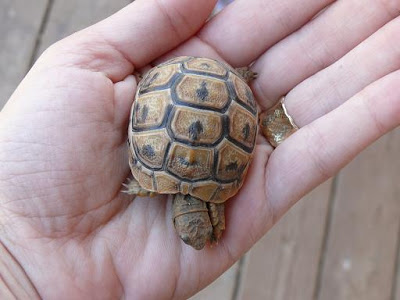
Moving at a turtle’s pace, slow and steady

The rewards of making bread

bread

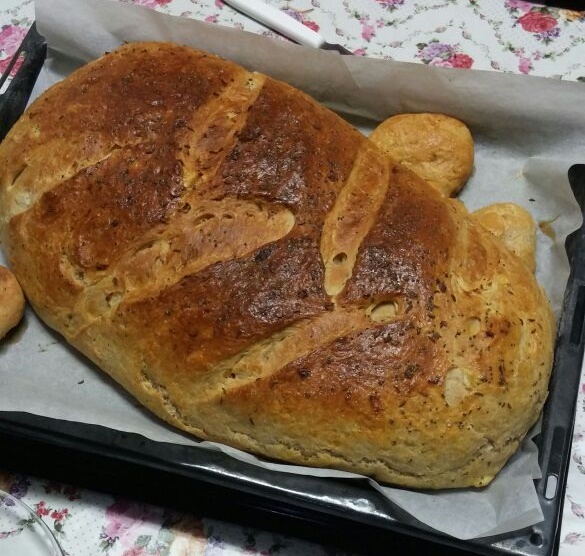
Above: a fresh, hot out of the oven, deliciously smelling loaf of bread with onions, caraway seeds and poppy. It was made, in concession to my family’s preferences, with instant yeast and half whole wheat, half white flour. 

Bread is one of the most rewarding and cost-effective things you can make in your own kitchen – anything you bake yourself will save you money, too, vs. any store-bought bread of comparative quality. Far from being time-consuming, it simply requires some planning ahead. Here is the total time it takes to produce a beautiful loaf like the one I made yesterday afternoon:

  1. Mix dough – 15 minutes, more or less, including kneading.
  2. Wait for dough to rise: this varies according to weather, flour used, and yeast (instant or sourdough starter). Can be anything between 1 and 24 hours, but during this time you don’t need to babysit your bread – you just put the dough in a warm place to rise and go on doing other things.
  3. Punch dough down after it has risen – 1-2 minutes.
  4. Wait for dough to rise again: the second rise is usually shorter.
  5. Roll out/shape into loaf (or loaves): 5-10 minutes.
  6. Bake: 20-40 minutes, depending on size of loaves and heat of oven.
  7. Clean up: 10 minutes max.

Total work time: 30-40 minutes. This really isn’t so much at all, when taking into account the deliciousness of the bread and the fact that I know exactly what I put in it (olive oil, organic maple syrup and home-grown eggs, vs. cheap commercial oil, white sugar and I don’t know what else).

So roll up those sleeves, take out your rolling-pin and get to mixing, kneading and baking. You can read more of my posts about bread-baking here, here and here.

Getting the chicken coop ready for spring

leghornchick

Check out my latest Mother Earth News post, about preparing the chicken coop for spring:

“Though we’re still in the deep of winter, days are beginning to lengthen and, at least around here, spring really seems to be just around the corner. The spring-like feeling is validated by the new grass – as winter is the green season here – and by the narcissuses and cyclamens that are beginning to pop up.

Our chickens pick up the cue of longer days and generally resume laying around February, even though it’s still cold. The young pullets hatched at the end of last season – say, September or October – are generally ready to start laying in February or March.”

With warmer weather, greens all around, and a steady supply of fresh eggs, I begin to look forward to a productive spring and summer for our little flock, with lots of eggs, new layers as last autumn’s little pullets mature, and of course the excitement of new chicks, which will probably begin arriving around late March or April.