For a very long time, I didn’t have an income or a credit card and lived in a location without any shops. Thus, while frugality was (and still is) a big part of my lifestyle, for many years I was free of the temptation of impulse purchases.
Fast forward a few years. I began earning money as a freelancer, got a credit card, and moved to an area with shops and reliable Wi-Fi. This meant I started doing a lot more shopping, and had to deal with controlling my own spending practically for the first time in my life.
It feels amazing to know that you can buy stuff after many years of everything, from socks to a new washer, being out of your reach. But staying within one’s budget is also part of adulting.
I’ll admit that, like so many others, I have occasionally succumbed to the lure of the next shiny thing. Impulse purchases are especially difficult to avoid when you shop online and can order something with the click of a button. And then, when that coveted item finally arrives, how often do you wonder what made you order it in the first place?
When I analyzed those “Don’t know what I was thinking” purchases, I saw a pattern. More often than not, I was stressed when browsing online. Or tired. Or I had had a really tough work week and felt like I “deserve” a little treat. And in most cases, by the time I got my stuff, I wasn’t sure why I wanted it and was 100% certain I didn’t need it.
There’s some great advice on curbing impulse purchases out there. Here are the top three tips that I’ve found most helpful:
One, distract yourself. Look up a fun recipe, watch a video of some beautiful places in New Zealand, listen to music, or read a book (you can find many freebie books on Amazon).
Two, reward yourself with positive things that don’t cost money, like a nature walk, a nice soak in a hot bath, or an afternoon of baking with your kids.
Three, wait. Add the item you want to a shopping list or put it in your online cart, but don’t hit “Buy” just yet. Wait a few days. If upon sober contemplation you decide you do want this thing and can afford it, go ahead. This way, there’s a much better chance you will enjoy rather than regret your purchase.
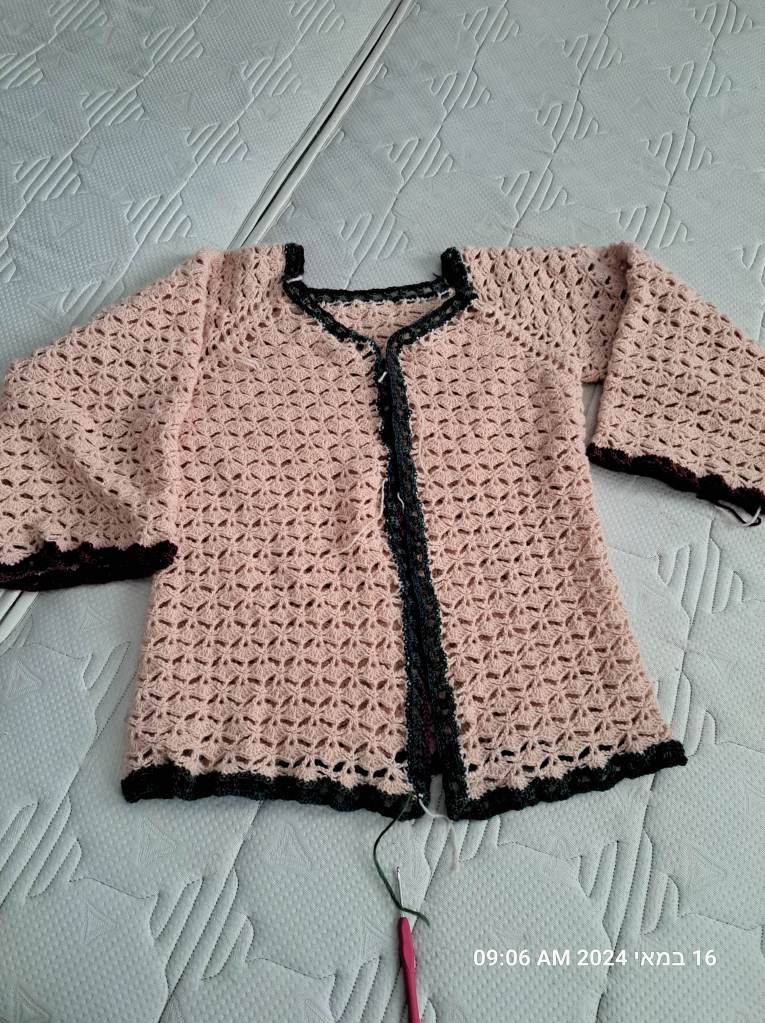
I still need to weave in the ends and attach the buttons, but I think I can finally label this long-standing project as “complete.”
About a year ago, I ordered myself to stop buying new yarn until I work through at least the larger part of the sizeable stash I amassed. This cardi answered the challenge, being made 100% from yarn I already had.
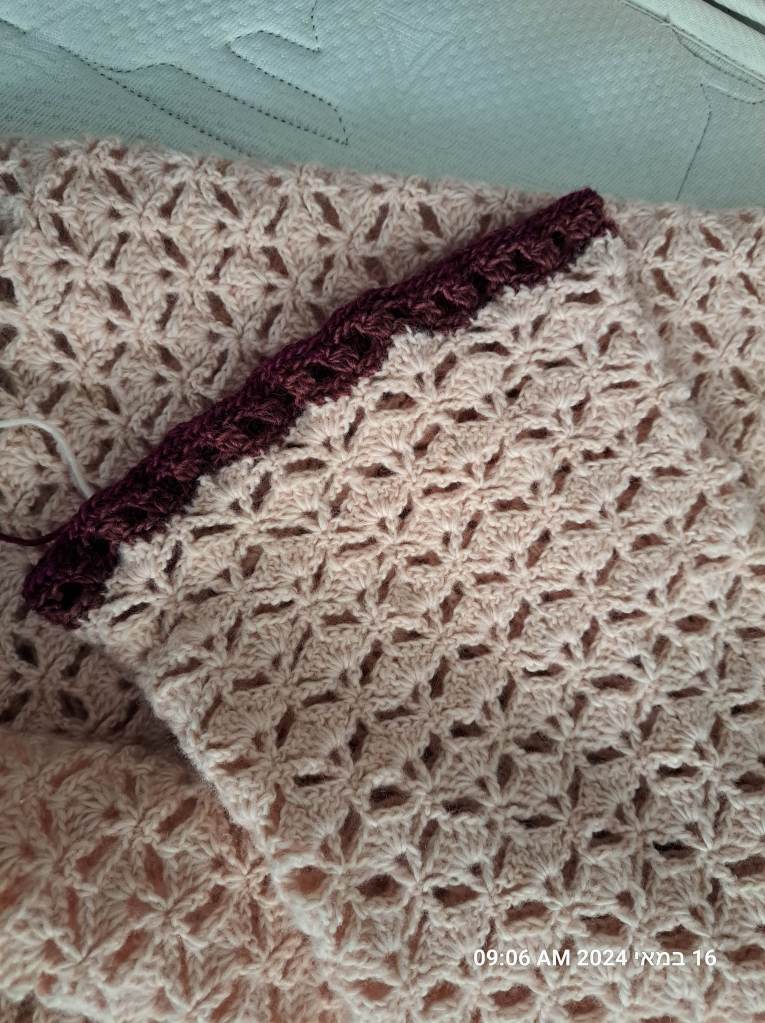
For the body, I used Leonardo yarn by Ice Yarns. It looks like they’re out of the color I used, Ecru, but I’m including the link so you can see the specs. It’s a single-ply DK weight yarn composed of 66% merino wool and 34% organic cotton, which makes it 100% biodegradable. The cotton addition also creates a slightly cooler and crisper yarn than 100% merino, which is perfect for a warm-climate area like ours.
You know I love sharing my experiences on working with different yarns, so here goes. The Leonardo is fairly soft; not as soft as Malabrigo yarns, but still feels nice and not scratchy/itchy. It has nice traction on the hook. It also has a slight halo, which makes for middling stitch definition and a real pain to unravel your work if you discover you made a mistake.
The border is made with 100% wool DK self-striping yarn I bought once on eBay, but I can’t find the link/company right now.
I’m off to choose buttons for my cozy new cardi, store it until next winter, and move on to summer projects now.
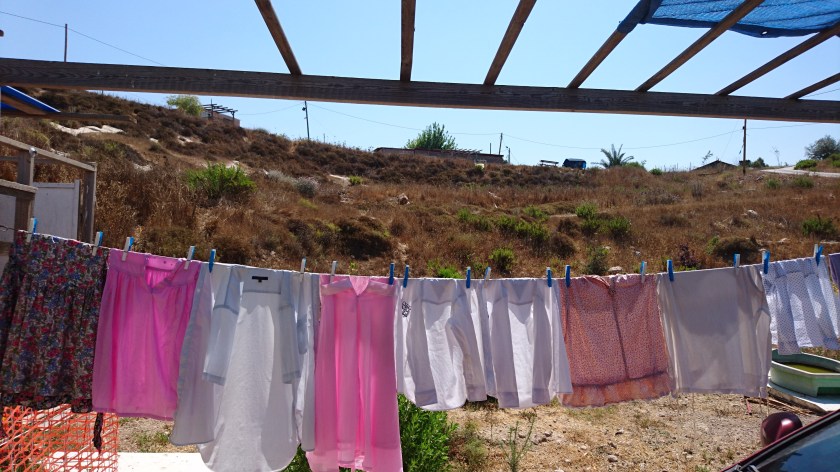
Every winter, I think that maybe it’s time to finally splurge on a dryer. And every year, by the time I’ve almost decided to take the plunge, the rainy season is over and I can happily go back to this:
I’m lucky enough to live in a dry climate with plenty of sun and whole seasons without rain. But when it rains, I have to resort to indoor drying racks, which can be extremely annoying. Washing bedlinens usually waits for good weather days.
Here are a few tips to make indoor air drying more effective:
One, place the clothes with as much space between them as possible to help air circulation. I often use two racks when I could fit everything onto one, because clothes dry faster that way.
Two, go back after a few hours to a day and flip the clothes over to the other side on the rack. Yes, it’s a bit of extra hassle, but it speeds up drying.
Three, if space allows, place the drying rack in a room that you’re heating anyway. It will add moisture to the air, and your items will dry more quickly.
Finally, a bit of foresight: I love natural fabrics, but during stretches of rainy weather, we often wear synthetics. Synthetic materials dry in a flash, while my favorite cotton long-sleeved shirts can take almost a week to dry indoors completely.
And, of course, make sure you have enough changes of socks, pants, and other items, especially for kids. Young kids aren’t terribly careful with keeping clothes out of mud and puddles.
August heat tends to throw me into a kind of torpor. It seems like summer just goes on and on, with no prospect of ever ending. All I want is to stay indoors with a cold drink and the AC running full blast, but indulging in too much air conditioning ends with an inflated electricity bill. So how can you stay cool (or at least a little cooler) during scorching hot summers without overpaying for it?
#1 Stick to cooling one part of the house
Heat rises up, which means that the upper level of our house gets insufferably hot during the day. Using the AC is more cost-efficient when we all hang out in the living room downstairs, rather than disperse around the house and run multiple AC units at the same time.
#2 Block sunlight
Draw the curtains or use blinds to block the sun when it hits your house directly (this, of course, will depend on where your house faces). Open the windows to catch the breeze during the cooler hours of the day, like the early morning.
#3 Use a frozen bottle and a fan
Freeze a water bottle and place it in front of a running fan. This simple hack will release a stream of cool air into a room.
#4 Take it easy when it’s hot
Don’t force anything too demanding during the hottest hours of the day. Stay indoors, and preferably rest. Do outdoor chores early in the morning or after sunset.
#5 Wear cotton
Choose lightweight, loose clothes from natural fabrics like cotton or linen. Don’t be tempted to expose too much skin to the sun, as it can actually make you feel hotter. Also choose cooling, absorbent bed linens.
#6 Take a cool shower
Or a cool foot bath. You could even sit with your feet in a bowl of water while you work on your laptop.
#7 Cook quickly
Opt for quick meals that don’t require you to heat up your kitchen (and the rest of your living area) for a long time.
#8 Spend time out of doors
When heat subsides, of course. Around here, we have 2-3 hours in the late afternoon/evening when the house has heated up despite my best efforts, but outside the temperatures drop. Spending that time out of doors helps us stay cool without keeping the AC overworked.
When food prices soar and people are struggling to maintain food security, those who annihilate free food sources completely miss the direction the wind is blowing.
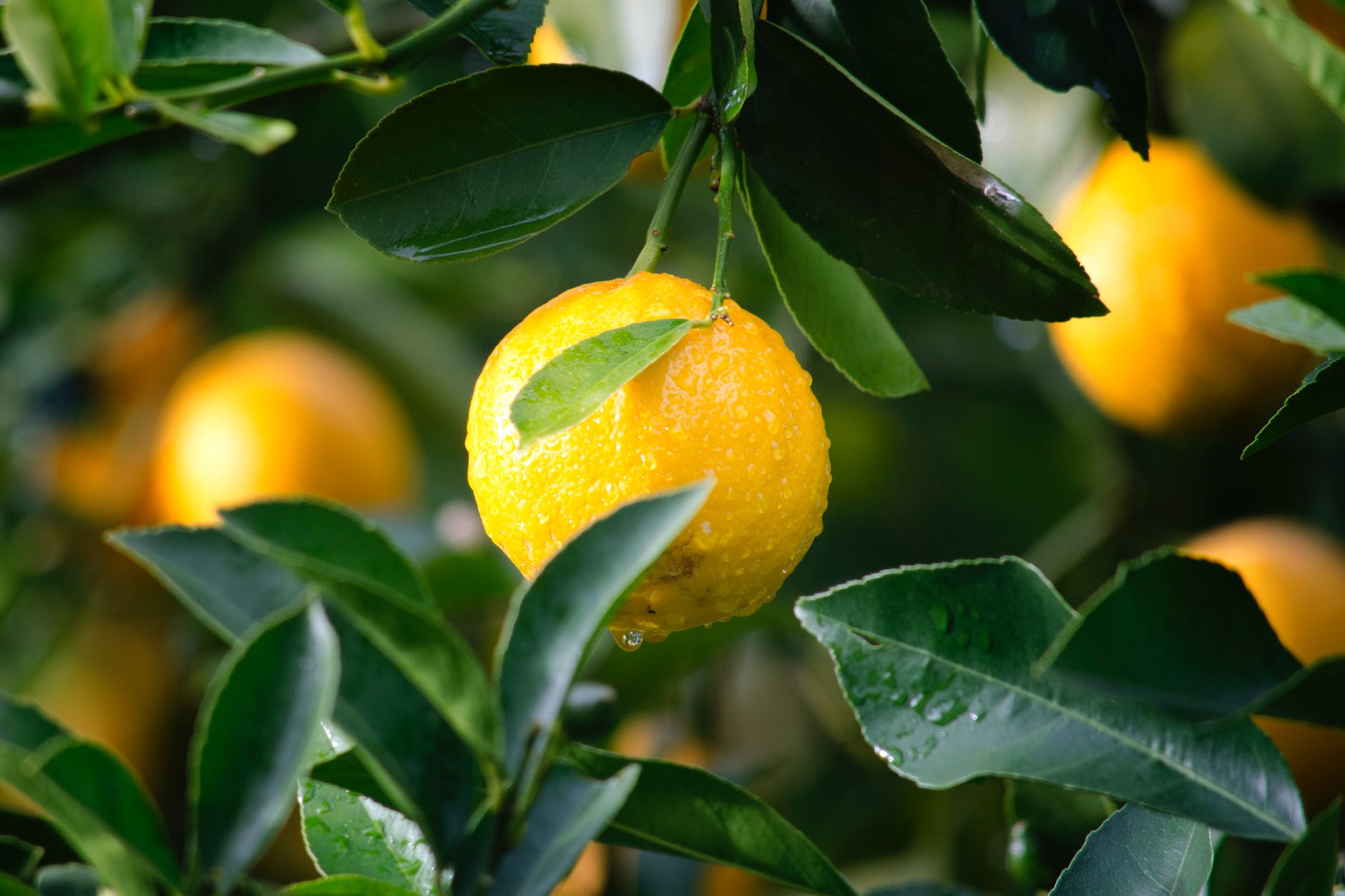
Right next to our home, there was an old, abandoned-looking little house with several lovely orange and lemon trees. Its elderly owner had moved to a long-term care facility and let the neighbors know they could pick the fruit to their heart’s content. We’d carefully step over the sagged low fence and bring home bags of lemons and oranges.
Time passed. Not long ago, the elderly homeowner passed and his heirs put the house up for sale. An enterprising young couple bought it, divided it into two sublet units, and cut down the beautiful old trees.
My heart broke when I saw the lush green branches being dragged to the waste disposal and left there to wait for the municipality’s truck. My kids, who saw it too, nearly cried. We stopped next to the branches for a while, picked a few last oranges, and said goodbye to the tree that had given so much to so many people over the years. Today, I saw they were preparing to pour concrete over the place where the trees had stood.
It’s not the first time we have recently witnessed fruit trees being decimated. Just a few weeks ago, our municipality uprooted two ancient, magnificent trees from which people in the neighborhood used to pick olives every year. Some bean-counter must have decided that fruit trees aren’t worth their annual upkeep, like pruning or removing falling fruit.
Here’s what I think. I believe that when food prices soar and people are struggling to maintain food security, those who annihilate free food sources completely miss the direction the wind is blowing.
Luckily, we still have plenty of abandoned yards and public spaces where we can pick lemons, oranges, and tangerines. They might be smaller and have more pits than regular varieties you’d find in the store, which might be the reason why most people don’t bother with them, but they’re perfectly good for juicing.
In Judaism, fruit trees hold a special place and it’s generally forbidden to cut them down for no good reason. I think it’s one of the greatest pieces of wisdom in Jewish lore – the respectful, almost reverent attitude toward sources of food and life.
Israel’s new government is about to cancel two consumer taxes the previous government has put in place: a tax on disposable plastic tableware and a tax on sugary drinks (which also go out onto supermarket shelves in plastic bottles). Many people see this recent move as pandering to the Israeli ultra-Orthodox population and have a lot of things to say about those nutty religious fanatics who can’t bother to wash their dishes.
I’ve often said that large families have a huge environmentally friendly potential. Modest lifestyles, a limited amount of car and airplane travel, and lots of using hand-me-downs make religious families with many kids a lot less wasteful than many families with just one or two kids who burn up gas like there’s no tomorrow and order huge boxfuls of cheap stuff from Shein that’s going to end up in the landfill after a couple of wears.
Basically, I believe there are two elements that keep most large families in Israel from becoming truly environmentally friendly: time and brain-space.
I know what it’s like when you have a bunch of kids come indoors from playing, look into the sink, and discover it’s still full of last night’s dishes. Then you desperately reach for the stack of disposable plates and cups on the upper shelf, promising yourself you won’t procrastinate with dishwashing next time (or, in my case in the past, telling yourself you’ll have to wash those dishes the moment the running water supply resumes!)
Sidenote: As far as I know, most Haredi families in Israel don’t use a dishwasher. One reason is Jewish dietary restrictions: most strictly observant families would use the dishwasher either for meat or for dairy dishes, which would still leave them with huge amounts of kitchenware to wash by hand. Another reason is that the initial investment would seem daunting to many large families on a shoestring budget. And, finally, a dishwasher takes up space, and many Haredi families live in cramped apartments with tiny kitchens.
Another thing is brain-space or, if you prefer, lack of awareness. Ultra-Orthodox schools and society rarely emphasize environmental studies (although I definitely believe they should). Some even disparagingly call caring about the environment “the secular religion” and go on a tangent, saying that people “worship” the environment instead of caring about the “really important things”, like helping people in need. Of course, it’s a false narrative that often covers up one simple truth: when you have five kids under six, it’s hard to care about anything but day-to-day survival. You do what you need to do to keep your head above the water, even if it creates bigger landfills – which is ultimately one reason I chose not to cloth-diaper. I do try to improve and make more environmentally friendly choices, though.
A friend who lived in the U.S. for a few years told me that in her opinion, the Israeli reliance on disposables is unprecedented in the developed world. I think it’s a shame, especially since, in my opinion, disposables don’t really save as much work as people think.
First, you need to remember to buy them, and then you panic if you don’t. And sometimes you end up running out to the store just because you’ve run out of plastic dishes and you haven’t geared up with a “real” dish set for the guests that just arrived at your doorstep.
Also, since plastic kitchenware (especially the cheap kind most Haredi families use) tips over, tears, and breaks easily, it will create more spills and messes when children use it. And finally, disposables clog up your garbage can so you need to empty it more often.
Plus disposable kitchenware is just plain yucky. Food both looks and feels so much nicer when served in glass or crockery.
The second tax that is now being revoked involves sugary drinks. My feelings about this one are more mixed. On the one hand, I don’t believe in a condescending, paternalistic attitude that tries to teach people what’s good for them by punishing unhealthy food choices through their wallet. I also have great faith in a free market. My suggestion is that, instead of revoking the tax, it’s time to roll it to the bottled drink manufacturers who destroy public health with their sugar-loaded offerings.
Finally, we should all remember that the consumer’s power is in our hands. Whatever taxes the government imposes or cancels, we can all choose to make an informed decision about what we eat, drink, or use in our kitchens. We can all take responsibility for our food and consumption habits and work towards making our own private household healthier and more environmentally friendly.





 Domestic Felicity