Harvesting and Using Carob

carob powder

Although it isn’t quite carob season yet, I’m already gearing up for it, especially now that I have a nice new food processor which is going to make turning the pods into powder a breeze! Those dark brown pods are just loaded with nutrients, they are naturally sweet, which means that when using them in baking you can use less added sugar, and best of all, they can be picked for free!

Read more about harvesting and using carob in my latest Mother Earth News post:

“Carob trees grow all over Israel (and in similar climates), and the dark brown pods can be picked in the summer. They keep extremely well, so you can pick a big bunch and then process it at your convenience. Make sure the pods you pick are ripe. They are supposed to look and feel dry and to come off easily from the tree. Choose the biggest, shiniest, healthiest-looking pods.”

Image above: carob powder in the process of making.

Have you brushed up on your survival skills?

Once in a while it strikes me how singularly fortunate we are compared to past generations: so many of the things we take for granted would have been unthinkable luxury, or even science fiction, a mere 20 or 30 years ago. Truly we live in a time of plenty… yet on the other hand, the future feels so precarious that every time I watch the news (and believe me, this doesn’t happen often), I feel like checking that my pantry is full and that we have a good supply of drinking water in case anything happens. I wish we were more self-sufficient when it comes to food and energy.

Read more in my latest Mother Earth News post:

“It all seems to be asking the following question: if the world is turned upside down and we can no longer rely on the fancy tools of modern man, do we stand a chance?

Well, do we? Honest introspection leads me, and many others, to conclude that we are less resourceful, resilient and capable than our forefathers. We do less things with our hands. We walk less on our feet. We don’t exercise our minds as much, because the convenience of the Internet is just too alluring. Many times, when struggling to remember a piece of information, I open up Wikipedia at once rather than strain my memory.”

Just Being Home

Image result for there is nothing like staying at home for real comfort

I think the best, most effective, and most enjoyable way to save money at home actually isn’t about pinching pennies, or utilizing the contents of our freezer and pantry to the utmost efficiency, or saving electricity and water (although all these practices are good and valid, of course). It is simply staying home, as opposed to running/driving about.

Of course, we all like to go out sometimes. Day/field trips, visits with family/friends, even shopping trips are fun – but it’s all about the proportion of time spent in vs. out (by “in”, I also mean on your lot – in your garden, on your deck, on your sun roof, etc, not necessarily in your living room).

It is really quite straightforward: when you are pleasantly occupied in your home, instead of browsing shop-windows, for example, you have less temptation to buy stuff you don’t really need. Also, you don’t waste money on gas.

Naturally, this means you have to put in the effort to make your home a place of fun, enjoyment, wholesome activity, family togetherness, usefulness, comfort and recreation. And there is really no limit to all those things, even in the smallest, most humble home.

This doesn’t mean you need to have expensive decorations or furniture, or spacious rooms. A welcoming home is cozy and well-organized, without being oppressive to children or visitors (as in, making people wary of touching anything for fear of ruining a perfect arrangement).

A day or two ago, my daughters complained about “having nothing to play with”. Now, if you had seen their room, you would have known the claim was simply ridiculous – because though we’re not at all consumerism-driven when it comes to toys, still, gifts from grandparents and friends, and giveaways, etc, make for quite enough to be getting on with. As a matter of fact, they had a couple of new board games and puzzles they had hardly touched. All these, however, were lost in a jumble of toys all piled atop one another.

So, you need to make books, games, toys, and art and craft supplies easily accessible.

Another point is to create inviting areas for all sorts of activities: reading, drawing, sewing, etc. We have one all-purpose table in the kitchen that serves us for eating, studying, ironing, board games, and all sorts of projects. Being so much used, it’s easy for our table to overflow with stuff. I must be careful to keep it clean and clutter-free, so that when my children want to draw, they won’t need to restrict themselves to the last tiny corner of free table space.

Do interesting things at home and thereabouts. We currently have seeds going on indoors, several experiments on the go, our chickens, our garden, and always plenty of reading to do. Naturally, in the winter when it’s too cold and rainy, and in the summer on the hottest days, we are more restricted to indoor activities. The spring and autumn are the pleasantest seasons where we live.

PS: Isn’t it funny how some of my favorite Jane Austen quotes are actually put in the mouths of characters I can’t stand? The above “staying home for real comfort” was said by Mrs. Elton.

Building Mistakes

Image result for building mistakes

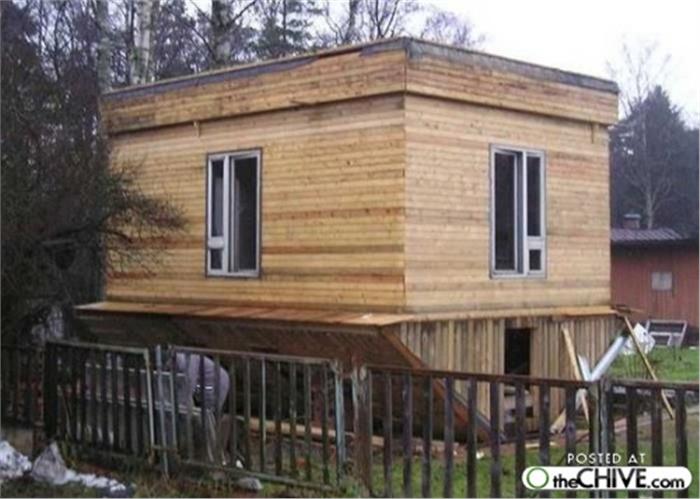
Read my latest Mother Earth News post about the lessons we learned while building our cabin:

“Mistakes are an integral part of a learning process and can be expected if you are an amateur builder, but it might also be very frustrating, since this isn’t just a practical lesson – it’s a real dwelling you are trying to raise and make livable and comfortable, often under great constraints of time and money. It would be wise to mentally prepare for making mistakes and fixing them as you go.”

Also, this will probably be my last post before Pesach, so happy Pesach to all my Jewish readers, and a happy spring to everyone else!


Dairy goats: breeding, kidding and milking

goat

Read my latest Mother Earth News post on dairy goats, focusing on breeding, kidding and milking:

“Most dairy goat breeds have a clearly defined breeding season and will go into heat during the fall and early winter, generally from August to December-January. Gestation period lasts around 20 weeks, so kids will be born in late winter and early spring. If you have several goats, you can schedule breeding so that, for example, some of your does are bred in August-September and some in December-January. This way the milk production of your herd will be a lot more consistent and you’ll have milk practically year-round.”

Also, Dana (better known as Mama Zed) made my day with her awesome review of my book, Your Own Hands:

“Your Own Hands – Self-Reliant Projects for Independent Living” would be what I consider to be an absolute fantastic book for new homesteaders. The book covers a wide range of topics rather than written to cover one topic in great depth. These topics include gardening, home building and maintenance and even “artisan crafts” such as soap making!

And now I had better roll up my sleeves and jump right back into the midst of Pesach cleaning. Happy spring, everyone!

Home business: doing it smart

DSC_0108

Freedom: a shot from our recent beach trip

The Internet, social media and Etsy have opened a whole new medium in which home based businesses and artisans can flourish. Many people are choosing the freedom and creativity of being self employed over the stability (real or perceived) of a monthly paycheck handed over by someone else.

For me, and indeed for many other people, looking into home-based business ventures came out of sheer necessity. I was a mom with two very young kids (whom wand an unstable family income, living in a rural area with no car and with very limited opportunities. At some point I began desperately searching for something I can do from home. I tried nutritional counseling, private lessons and various crafts, all of which were successful to some degree, but ultimately my lifelong passion lay in writing, and it was there that I focused my main energies. I can’t say I have “arrived”, as it’s a long haul, but in the past year or so, working consistently, I am seeing some breakthrough with my books.

I am by no means an expert on home business or making money from home, but I did learn a thing or two along the way as a writer, nutritionist and creative entrepreneur, and my word of advice to anyone just starting out would be: let your business grow organically, take one step at a time and beware of large expenses which may or may not redeem themselves.

Read more in my latest Mother Earth News post:

“At some point you might discover that your homemade hobby actually has business potential. Maybe people have seen your beautiful pottery and asked if you have any for sale. A neighbor of ours has experienced just that – her lifelong passion for pottery has blossomed into a home-based business and, as they had saved money, into a tiny home-attached studio. Maybe you’ve seen some handmade candles at an artisan fair and realized that your own are even prettier, so why not try selling them? Or maybe your home is full of homemade soap you don’t really have much to do with, but making it is too much fun to stop.”

Why I love bartering

Image result for barter

As terrific as it is to buy from small local businesses, bartering is even more awesome. It allows one to bypass the money economy entirely. When I trade something I have a surplus of for something I need, I feel like sticking my tongue out and saying, “ha ha ha, mighty Tax Authorities, I fooled you! You won’t get any share of money from this exchange!” (Very mature, I know). Also:

1. Bartering fosters close community ties and allows one to meet awesome, like-minded people. It develops personal connections that may grow into real friendships.

2. Bartering is the very essence of the saying, “one man’s trash is another man’s treasure”. In season we may have so many fresh eggs, for example, that we literally don’t know what to do with them – but other people living right next to us are in need of those fresh organic gold protein nuggets. They, in their turn, might have something else we need (fresh veggies, artisan products, skills). If each side takes something they don’t want/need and trades it for something they do, everybody wins.

3. Bartering is creative and allows for much more interesting business-making than just stepping into a store and buying whatever you need.

Read more in my latest Mother Earth News post:

“While I’m not naïve enough to believe we can opt out of the money economy altogether – the modern world is too populous and complex for that – bartering can still work exceedingly well in small communities with close-knit personal relationships where people choose to earn less, spend less, and support each other rather than a large chain-store or a mega-farmer.”