
Mulberry bonanza!

Late spring/early summer is when mulberry trees deliver the good stuff. My kids love picking the sweet, intensely purple berries, but this year was the first time I discovered the leaves were edible, too.

I cooked them a la stuffed grape leaves, picking ones that were big enough to stuff but young and tender enough so they wouldn’t be too tough and fibrous. You also need to prep them by boiling for about two minutes to make the leaves pliable enough to work with. Don’t overboil, or you’ll end up with a mushy mess on your hands!

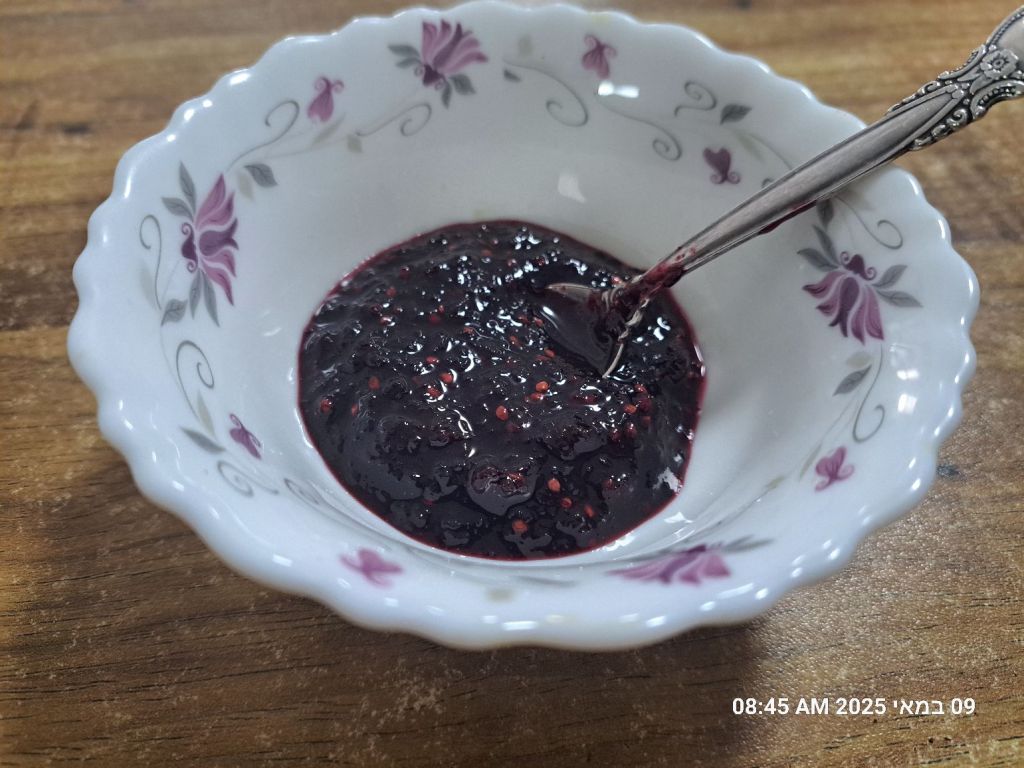
We also had enough berries to make jam this year. If you try it, just be aware that mulberries STAIN big time: kids’ hands, clothes, kitchen towels, work surfaces. I later discovered purple fingerprints on the refrigerator handle.

Mulberries don’t have a lot of pectin, so you either need to add some or boil the jam for a long time to thicken it. I happened to have a pomelo on hand, so I chopped up some of the white spongy pith, stuffed it in a couple of muslin bags (the ones I typically use for teas), and let it cook together with the jam. I also added some lemon juice. It set pretty nicely after cooling.

I forgot to remove the stems, which isn’t a disaster, but can influence texture. A quick whir in the blender solved this problem. Yum!

Success: growing new fruit from a pineapple top!

Pineapple is one of my favorite fruits. Ironically, I first tasted fresh pineapple only a few years ago: when I was growing up, I only saw it canned or dried and overloaded with sugar. So, of course, when I heard that you can actually grow a new pineapple plant from the top, I had to try it (especially since pineapple is among the pricier stuff in the produce aisle!).

First, choose a pineapple with a healthy-looking crown firmly attached to the top. This is really important: the new plant can’t photosynthesize or form roots without existing top leaves. Avoid pineapples with dried-out, browning leaves or signs of rot near the base.

Chop off the top close to the leaves. Some methods suggest rooting it in water, but I simply placed the top in potting soil, covered up to the base of the leaves, and kept it moist. In a few weeks, it took root and I could see new leaves beginning to form.

I kept my plant outdoors, but if it’s too cold for a pineapple in your area, it also makes a pretty houseplant. It’s also a fun project to do with kids.

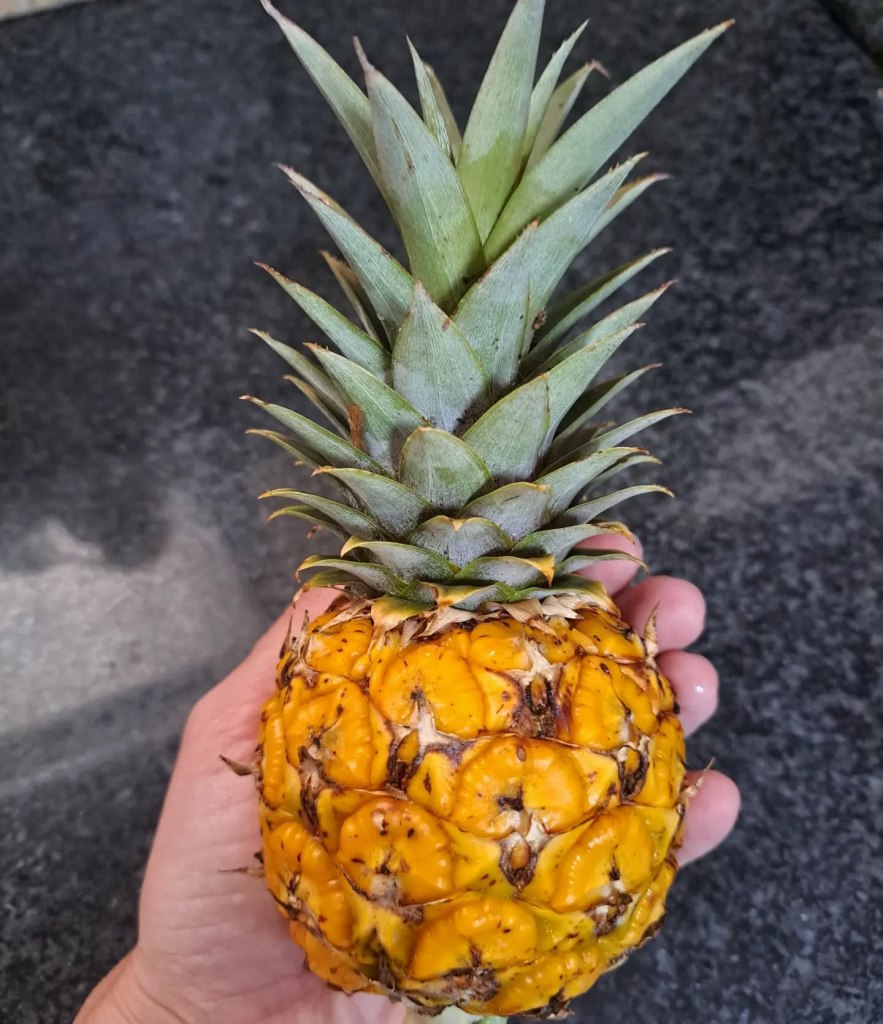
Most guides that discuss growing pineapples this way mention that you should only expect fruit after two years or so. However, our pineapple gave us fruit in under a year! It was pretty small (as you can see in proportion to my hand), but the most delicious I ever tasted: juicy and very flavorful.

Another round with Coturnix quail

Years ago, we tried raising Japanese (Coturnix) quail. While these are delightful and easy-to-keep birds, our first experiment didn’t go that well, for two reasons: one, I think we subconsciously expected quail to act like mini-chickens (which they aren’t), and two, we underestimated our local predators.

We kept our quail in a bottomless cage placed directly on the ground, mistakenly thinking that its weight will deter anything that wants to snack on these feathery little nuggets. Big mistake. One morning, we walked out to discover that something had dug under the cage and carried off most of the quail.

The remaining birds escaped when transitioning between cages; we were totally clueless as to how well they can actually fly, and once they escape, you’ll likely never see them again. Letting them free-range is NOT an option.

Fast forward to now, when the kids began asking for some quails again. So we decided to give it another go and brought in this trio. The hens are supposed to start laying soon, and we may even try hatching some eggs in time.

Japanese quail are a great option if you’d like some home-grown eggs but live in an area that doesn’t allow chickens, or if you aren’t sure whether raising poultry is really your thing. They’re quiet (the males call, but it’s nothing compared to roosters), robust, and don’t take up a lot of space. You’ll need about 1 square foot per bird.

Japanese quail can pop out up to 300 tiny, delicious eggs per year. 3-4 eggs are roughly equal to one chicken egg in volume. Hens start laying as early as 8 weeks (!). Whenever I get to updating The Basic Guide to Backyard Livestock, I’ll be sure to include our experience with quail.

***

On another note, I’m excited to share that my dystopian trilogy, Wild Children, is now re-released with updated covers! The books follow a group of youngsters surviving and making a life for themselves in the wilderness. Among other things, they discover how essential animals are to food security.

Triangular flower scarf/Malabrigo Lace yarn review

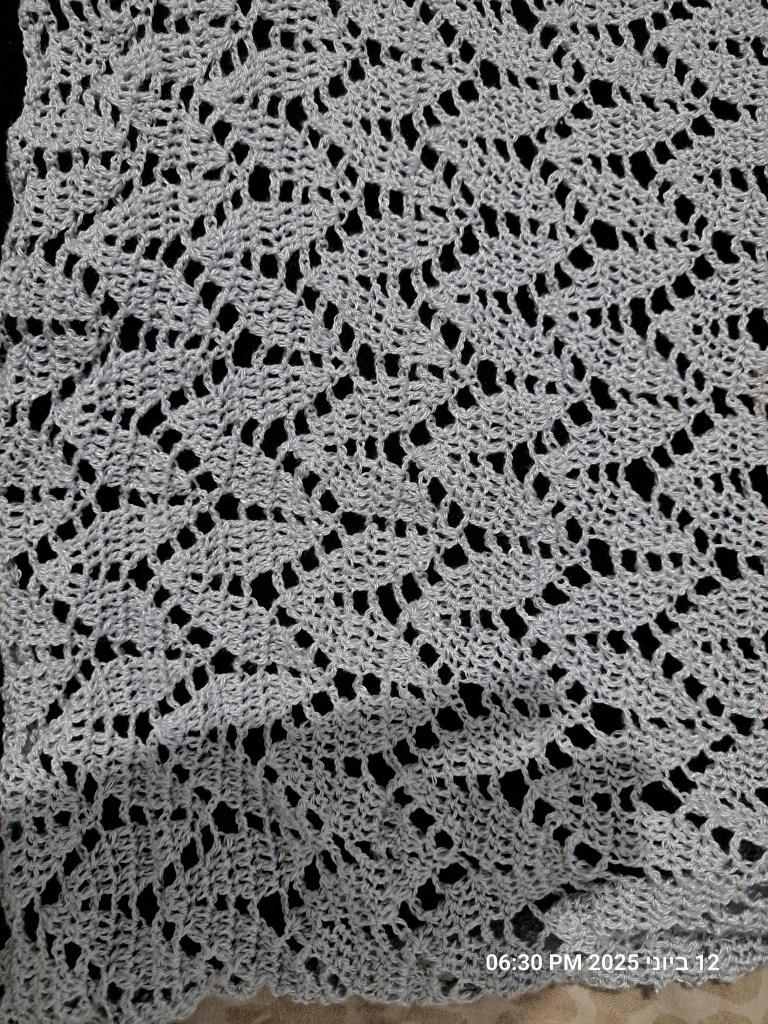
I’ve really struggled to find time to crochet lately, so it was like a small celebration to finally weave in the ends on this lightweight, buttery soft triangular scarf (which I probably won’t get to use until next winter!). I’m currently in the final stretch of Pesach cleaning; crochet is my favorite way to unwind during rare free moments.

I used two hanks of Malabrigo Lace in the colorway Hojas and a 2mm hook. The pattern is the Mehr Shawl by KnitterKnotter, a gorgeous but uncomplicated pattern that evokes the image of a spring field full of flowers. I also added a basic border of chains and sc.

Now, for my favorite part: working with the yarn! This was my first time using Malabrigo Lace, and it didn’t disappoint. First, keep in mind this is very, very thin yarn. It packs a generous 470 yards (430 meters) in a 50-gram hank, so two hanks are plenty for a nice-sized scarf, shawl, or cowl.

A brief detour on working with lace-weight yarns in general. It’s an ideal choice when you’re a crocheter rather than a knitter, because crochet always works up thicker, so picking a lace-weight yarn ensures you get a lightweight, drapey fabric, perfect for any wearables you don’t want to be too bulky, stiff, or warm.

On the flip side, lace-weight yarns can feel like they take forever to work up into a finished project. Also, they seem almost insubstantial when they slide between your fingers, so keeping tension is often a challenge.

Anyway… Malabrigo Lace. It’s a 100% merino, heavenly soft and with zero itch/irritation factor, a fantastic choice for scarves or anything you wear next to the skin. As a single-ply yarn, it’s slightly uneven, so I got some stretches of yarn that were thread-thin and others that were almost as thick as DK.

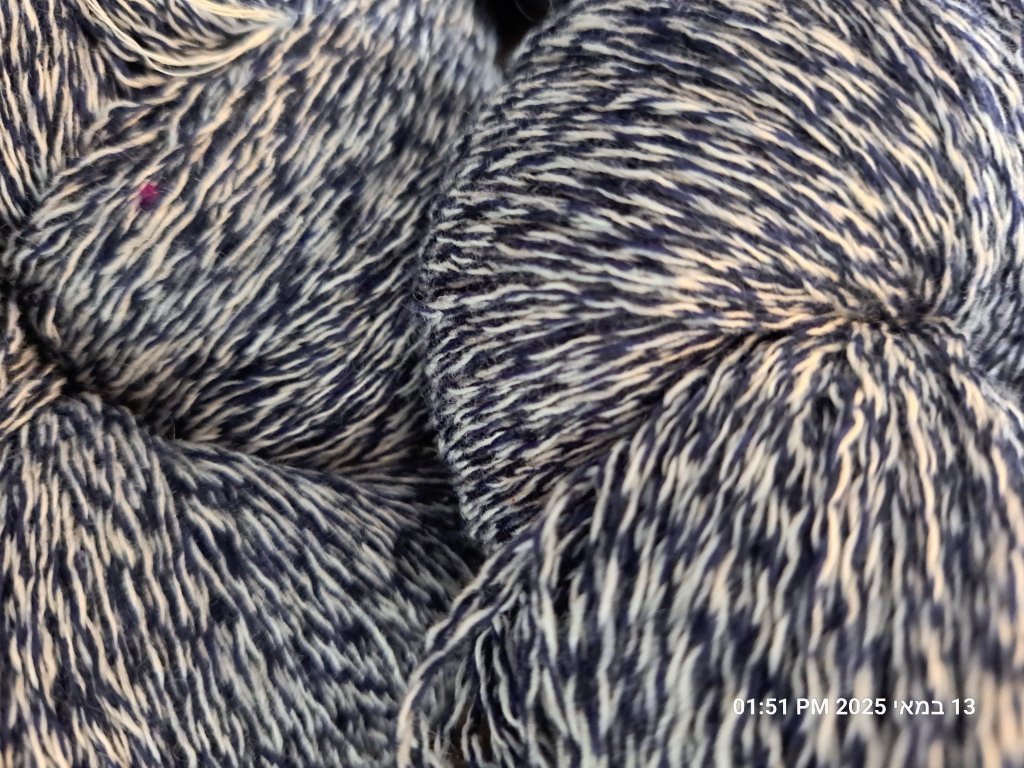
Malabrigo warns that “we don’t have a record of which yarn store receives a specific dye lot and it’s impossible for us to find out where you can find the same dye lot skeins. I found out the full effect of this once I began using the second hank and realized that the hues are ever so slightly different: the first one leaned toward more blues, the second showed more of a greenish palette, as you may notice in the photo.

It’s not that big of a deal in this case, since the scarf is for me, and the color changes won’t be really noticeable when it’s worn bunched up around the neck. But it’s something to keep in mind if you’re making a wearable for a gift or if you need the shade to be exactly the same throughout the item.

Overall, I really enjoyed working with this yarn, and would use it again for a delicate scarf or a spring cardigan.

Make sure to check out my reviews of other Malabrigo yarns: WorstedRiosSilkpacaMoraSock, and Silky Merino.

Is sharing finances with your spouse always the right choice?

I recently came across the following Facebook post by Dave Ramsey:

Dave proceeds to suggest that spouses should address whatever underlying issue that’s preventing them from sharing finances. While true in theory, this view is incredibly simplistic and naïve.

I agree that in a perfect world, all married couples would be on the same page financially, and would have no reason to keep their money separate. However, this doesn’t always work this way.

I can think of many situations in which sharing finances could, in fact, cause a lot of trouble. Here are just a few:

  • One spouse’s destructive financial habits, like compulsive shopping and inability to budget
  • Gambling and other addictions
  • A spouse carrying debt from before the marriage
  • People in blended family situations, i.e., each spouse brings kids from a prior marriage and is responsible for covering their own kids’ expenses

And that’s even without getting into the issue of financial abuse, like one spouse (often a stay-at-home parent or the one who earns less) being blocked from freely using joint accounts and instead getting “spending money” from the main breadwinner.

Reddit is full of stories like this one, with the self-explanatory title of “Recently discovered extent of my wife’s shopping addiction. The poster proceeds to tell that his wife blew “$6200 on high end cloths this last month with $5200 the month before that.”

So, according to Dave Ramsey, this couple should work on budgeting and aligning their financial goals. Which is a great suggestion, actually! But what if this doesn’t work out?

Suppose the overspending wife doesn’t acknowledge the extent of her problem. Or, suppose she does and makes an effort to fix it, but relapses. Should the financially responsible husband shoot himself in the foot by sharing funds with his wife at all costs, because “marriage is about unity”?

He could divorce her, of course. Many marriages fall apart because of disagreements over money. But is breaking up the only option if spouses can’t agree on money matters?

Let’s say this Redditor wants to stay together with his wife. Maybe they have a good relationship otherwise, and money is their only major disagreement. Maybe his wife actually wants to improve her spending habits, and maybe she even will at some future point, but in the meantime, what can he do to keep up with mortgage payments and put food on the table?

Separate their finances, obviously. It’s better than drowning together with your spouse because “there’s no such thing as your money/my money anymore.” Overall, I believe everyone should do what works for them, whether it’s shared or separate accounts.

Warm winter days

Time passes more quickly than I can grasp, and before I knew it, we’re in 2025 already. We’re having a pleasant, warm winter, and the weather has been so nice that our newest pullets have actually started laying already!

Although the weather doesn’t feel very winter-y, it’s still cool enough for my beloved laceweight wool crocheted scarves. I’m working on another triangular scarf/shawl in Malabrigo Lace (review coming when it’s done, hopefully before summer rolls around).

Regionally, it seems like things are starting to calm down a bit, too. Although you never know what the future may bring, I’m optimistic in looking forward to a period of relative calm.

An exciting announcement: Yours truly has started writing for Emergency Prep Guy, a great resource for preparedness and survival. Check out my contributions here.

The moment I realized food can disappear

Photo by Patrick Winzler on Pexels.com

When I was a very young child during the Perestroika, I once walked into a grocery store with my mom. The Soviet Union was on the brink of collapse, and the shelves were practically empty. I think it was then that I realized basic things we take for granted, like food in stores, can disappear.

Fast forward to today, I appreciate my well-stocked pantry full of canned goods, dried legumes and grains, hygiene products, toilet paper, candles, and basic medical supplies. Although, thankfully, we haven’t faced a full-blown collapse scenario yet, that stockpile really came in handy during times like COVID lockdowns and shortages caused by war.

Stocking up is also a great option for more trivial situations, like finding a really great deal on canned mushrooms and buying a total of 36 cans. Or when you predict prices are going to soar and take advantage of the last days or weeks when some products are relatively affordable.

Another big bonus of being well-stocked is not having to go shopping as often. When I run to the supermarket, it’s typically because I’m out of milk or other perishables, not dish soap, coffee, or shampoo.

I also have nice stashes of items that aren’t survival-oriented per se, but come in really useful, like printer paper, craft supplies, glue, and (guilty!) yarn. Keeping ourselves, not to mention fidgety kids, entertained during a shelter-in-place scenario is a challenge, and it’s nice to know you can always find something creative to do.

If you have animals, you’ll also want to make sure you have enough food for your furry or feathery friends. I get slightly anxious when the sack of chicken feed runs low, even though technically I know chickens are omnivores and could survive on leftovers for a few days.

The main thing that helps me keep my stockpile organized is the FIFO rule: first in, first out. I make sure to move the older packages to the front so I use them first, even if it means rearranging a whole shelf.

What about you? Do you stockpile, and what do you think you should keep more/less of around?