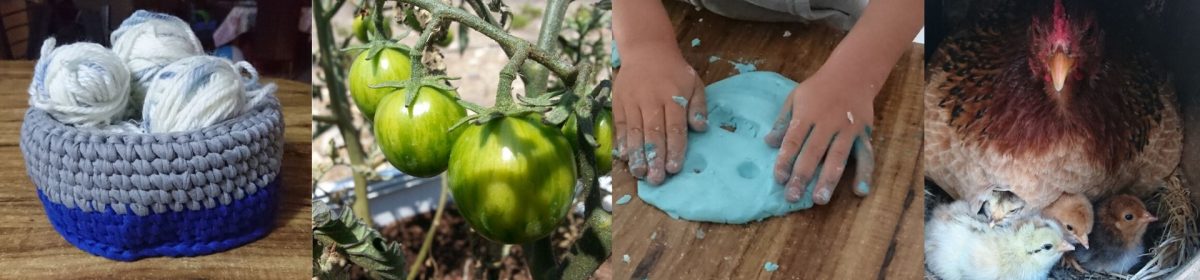
In the course of history, many Jews have become very much detached from their Biblical agricultural past with its complex laws connected to seasons, years and the Holy Land. In modern Israel, agriculture was reclaimed to a certain extent, but it is generally highly commercialized, industrialized and mass-scale. The urban and suburban areas are very densely populated, leaving people little space for home gardens and a personal connection to the land.
There is, however, a rising movement – in particular among Orthodox Jews living in the less populated areas of Israel – of small-scale, organic, family-run farms, oil presses and wineries, belonging to people who have seized the opportunity to till their own gardens, pasture their own sheep, make their own wine, and embrace – with modern innovations that make life easier, of course – the Biblical version of living off the land.
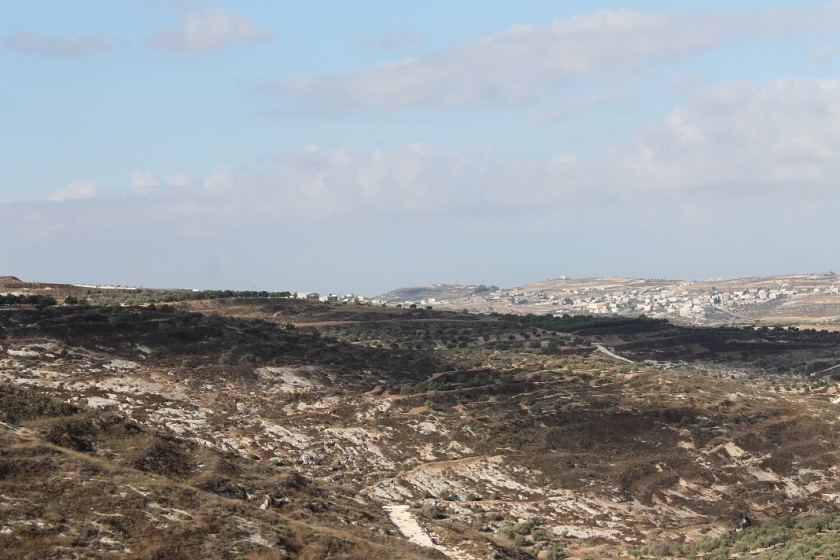
Image: typical view of terraced hills and olive trees
And of course there are people like us, who don’t really aim towards doing anything on a commercial scale, but want to grow or raise a significant part of their own food, and see this as an opportunity of being good stewards of the land and resources we were given.
So what makes an Orthodox Jewish homesteader or farmer in Israel different from any other homesteader or farmer? Generally speaking, it’s adherence to the Halacha – the Jewish Law – with the specific Biblical rules and regulations pertaining especially to the land of Israel.
Disclaimer: what I have written below describes the relationship between the Jewish farmer, the Jewish law and the land of Israel in the broadest terms; if you wish for detail, there is plenty of further information out there. We are not a rabbinical authority, nor are we mistake-proof.
Shabbat – No working the land, moving plants, picking or watering is allowed on the Shabbat day, which starts on Friday at sunset and lasts until Saturday nightfall. An automatic drip system is a good gardening solution, but we don’t have that in parts of our garden, and we have to water manually there. Last week, a tomato plant died because we had a very hot Saturday and couldn’t water until nightfall, by which time it was much too late.
The Sabbatical year – Unlike the Shabbat, which is observed by Orthodox Jews around the world, the Sabbatical year applies to Israel only. Every seventh year, the land is supposed to rest, which means no tilling, no planting, no working the land in any way. Gardening in containers is allowed, as is basic plant maintenance (such as, watering the trees so they’ll survive) and, with certain restrictions, picking produce. It is also possible to nominally sell the land to a non-Jew just for the year, which makes it possible to work it as usual, but the latter is less practical for backyard gardeners and owners of small homesteads.
Tithing – Jews are required to give a tithe out of their agricultural produce. This means that even if we grow one single tomato, we are under obligation to set aside part of that tomato. Since it is impractical to seek out needy people and offer them one slice of a tomato, backyard tithes are usually just set aside and respectfully disposed of.
The firstborn male – when we kept goats and had one of our does kid for the first time, with a little buckling, we were surprised to discover that this little male goat does not in fact belong to us, but instead should be given to a Cohen (priest). However, since we do not have a Temple today and much of the original function of priesthood had been temporarily lost, such a gift cannot be really used (butchered, purposefully used for breeding, etc). Too late, we found out that what we were supposed to do was nominally sell part of the pregnant doe to a non-Jew, to avoid such a complicated situation. In the end the little buckling was shipped off to a petting zoo.
Regional conflicts and safety – Because of the ongoing Jewish-Arab conflict in Israel, the Jewish homesteader or farmer living on an isolated hill somewhere, or in the middle of the desert, is in a precarious position. To put it bluntly, if you hear an intruder in your farmyard in the middle of the night, you have no way of knowing whether their principal purpose is stealing your sheep or murdering your family. Therefore, the only reliable way for Jewish farmers and homesteaders to protect themselves is to shoot first and ask questions later. Fortunately, after the Shai Dromi acquittal, the law is on the side of honest men who take up arms to protect their lives and property.
Some will say that such local, small-scale homesteading and farming ventures are impractical, labor-intensive and complicated, and that it’s simpler and cheaper to just buy what you eat from big farmers, or import produce, but I disagree. Money is not everything, and nothing beats the satisfaction of eating real food grown by real people living on the land they love.


 Domestic Felicity