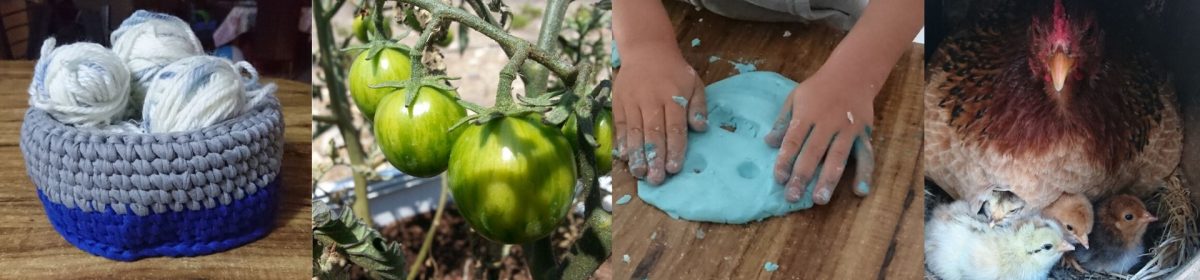
Hand-raising baby chicks

brahma cross baby chick

There’s something comforting, in the middle of winter, in planning on running the incubator and raising baby chicks that will be let out into the great outdoors once the warm weather comes. It’s a bit like browsing a seed catalog while a winter storm is howling outside.

I can tell you there are some breeds I can’t wait to get my hands on – start a pure-bred flock of Marans or Speckled Sussex, and look forward to the possibility of obtaining some good-quality eggs from breeders I know, in a month or two. Read more in my latest Mother Earth News post:

“We are big proponents of breeding and raising chicks the natural way, with broody hens, but sometimes running the incubator or ordering a batch of baby chicks can have definite advantages – such as, for example, the ability to monitor valuable eggs extra carefully, and to give your flock a head start in the spring. If you are not averse to the idea of keeping chicks indoors for a few weeks, your February babies may well be ready for the outdoors as early as March or April, depending on your local weather – at about the time when your hens are just thinking of getting back to laying.”

A winter day in Israel

Winter in Israel is the pleasant rainy season with lush grass and flowers that are at their most prolific sometime mid-February. Here in the hills we have the occasional frost and snow, and a great deal of wind, but many winter days are very inviting, tempting us to focus on outdoor chores and spend most of the daylight hours outside.

As you can see, the hills are gradually turning from brown to green, and our bedding is hanging out in the light breeze after a big rain.

Our chickens are enjoying a run outside, reveling in the abundance of fresh grass and bugs. The weather has been so pleasant that they have gone on laying, though daylight is now at its lowest ebb, and we are relatively well supplied with eggs, compared to previous winters.

Those of you who are now shoveling snow and melting ice for their chickens to drink probably think we have a really cushy life, but wait until the summer with its dust storms and heat! In the meantime, I wish you all nice weather and an enjoyable festive season.

Gambusia fish for mosquito control

Image result

Do you suffer from a pesky local mosquito population? Granted, it’s less of an issue in the northern hemisphere at the moment, but if you dread the coming of spring due to an unreasonable quantity of mosquito bites, here’s a solution for you: set up an outdoor tank or pond with a few gambusia fish, also known as mosquitofish. Read more here:

“Many sources suggest combating mosquitoes that lay their eggs in ornamental ponds by introducing a few predator fish, usually gambusia. It certainly works, but around here we have taken this a step further. We set up an outdoor fish tank on purpose to attract mosquitoes, the eggs and larvae of which will serve as a feast for the fish. The local population of mosquitoes is thus reduced.”

Safety for remote living

Image result for homestead security

Do you dream of living in the neck of the woods somewhere, with no other house in sight? If you ever consider it, homestead security should be your top priority. It might seem that, living away from the hustle and bustle of a city, in a quiet, small way, you are not a likely target for robbers and other unsavory elements, but you can’t count on this. There are plenty of unscrupulous people roaming out there, who wouldn’t hesitate to steal your livestock and farm equipment if they aren’t well protected.

We know farmers who have had their herds stolen from them, repeatedly, up to the point that some have given up on the beloved pursuit into which they had put all their money and many years of their lives. It is heartbreaking, but not imminent.

In Israel, things are even more edgy, because isolated homesteads, farms, and even simply houses located on the fringes of a settled area have suffered from terrorist attacks, and one can never know for sure whether the intruder spotted in the yard is after stealing sheep or murdering people.

Read more in my latest Mother Earth News post.

“When we first moved into our old house – which was located on the fringes of a tiny settlement, with no neighbors in sight – I was a little apprehensive. I grew even more apprehensive when my husband announced that we will have to keep a dog for safety purposes. I’ve never had a dog; never felt comfortable around dogs, and never thought I’d find myself taking care of one. Still, I had to admit that my husband has a point, as nothing deters intruders so effectively as a large, alert and protective dog.”

Choosing a dairy animal

Image result for dairy cows

Those who have been reading my blog for any length of time probably know that I’m itching to get to milking again. And I have faith that G-d will eventually lead us down the path to further food self-sufficiency and sustainability, which will include keeping dairy animals.

Do you dream of having your own delicious milk, cheese and yogurt as well? Do you keep, or plan to keep, goats or cows? Are you struggling to choose between the two? Read my latest Mother Earth News post for more insight.

“This is a question many homesteaders seriously grapple with when they consider getting a dairy animal. Goats or cows? Cows or goats? There is no one clear-cut answer for all, but rather, many points to be considered while you make the decision about what kind of dairy animal is the right one for you.”

PS: Today, my thoughts are with my American friends as I remember September 11-th. The world is with you. Let’s not let evil get the upper hand.

Late Summer

Image result for late summer

August is approaching its middle, and while the days wan steadily shorter, I am looking forward to longer, cooler nights, autumn rains, and the fresh greenery in the landscape that will come with them.

Late summer is always a busy time for me, as I wrap up my spring and early summer garden (and prepare for a second growing season, that will last well into November). Last week, I pulled up my exhausted tomatoes, after having picked the last of the produce, planted some basil, and started more tomato plants indoors. The first spring chicks are almost pullets now, and two of my hens are sitting once more, probably for the last time this season.

The time of the year is turning me into quite a scatterbrain, and concise writing efforts are getting put off for cooler, serener times, but here are two of my latest Mother Earth News posts for your perusal:

Drying Produce – Herbs are one of the easiest things to dry. Simply cut a good-sized bunch, wash it thoroughly, tie by the stems and hang to dry – outside if the weather is sunny, inside if you have frequent rains or live in a very humid climate. In a few days, depending on the weather and humidity level, you should have a bunch of perfectly dry herbs ready to be stored in a tightly sealed glass jar or plastic bag. You can keep them as leaves for tea or crush them into powder for seasoning.

Dealing With House and Garden Pests – Having lived in town for most of my life, I experienced a kind of shock when we married and moved into a little house on a plot of land. The critters that have invaded our premises over the years could form a small menagerie: we’ve had lizards, snakes, black scorpions, giant yellow centipedes, mice, rats, spiders and, of course, a whole host of insects – beetles, ants, woodlice… you name it.

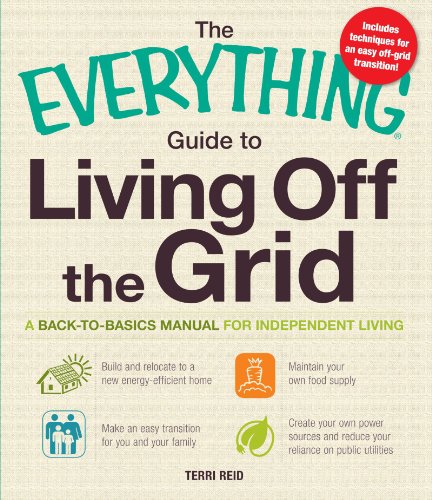
The Everything Guide to Living Off the Grid: Book Review

The Everything Guide to Living Off the: Reid, Terri

I’m now reading The Everything Guide to Living Off the Grid by Terri Reid and, though there are some sections which are obviously irrelevant to me (such as hunting, fishing and raising pigs), I have found this book a veritable treasure trove of useful information on planning a homestead, gardening, keeping livestock, getting and staying out of debt, and much more.

I have read some of the reviews on this title, and while many readers complain that, rather than provide in-depth information, each chapter barely skims the surface of the subject it discusses, I don’t necessarily find this a drawback. Yes, this isn’t a comprehensive guide on gardening AND building a house AND setting up an off-grid energy system – nor could it reasonably be, unless it were ten times longer; it’s more of a read to whet your appetite to learn more about each of these subjects, and make you brainstorm about what might be the right solutions for you on your individual path to sustainable living. In that capacity, it is certainly a useful book.

I would, however, recommend taking everything with a grain of salt, and cross-compare your information by also seeking out other sources, as I have spotted some obvious mistakes in the text; for example, the author states that beekeeping has been around for 150 years, while in fact it is an ancient practice dating thousands of years.

All in all, I would still recommend this to anyone interested in simple living, sustainability and self-reliance, but not as an exclusive and one-in-all guide. My overall rating: 3.5 stars out of 5.