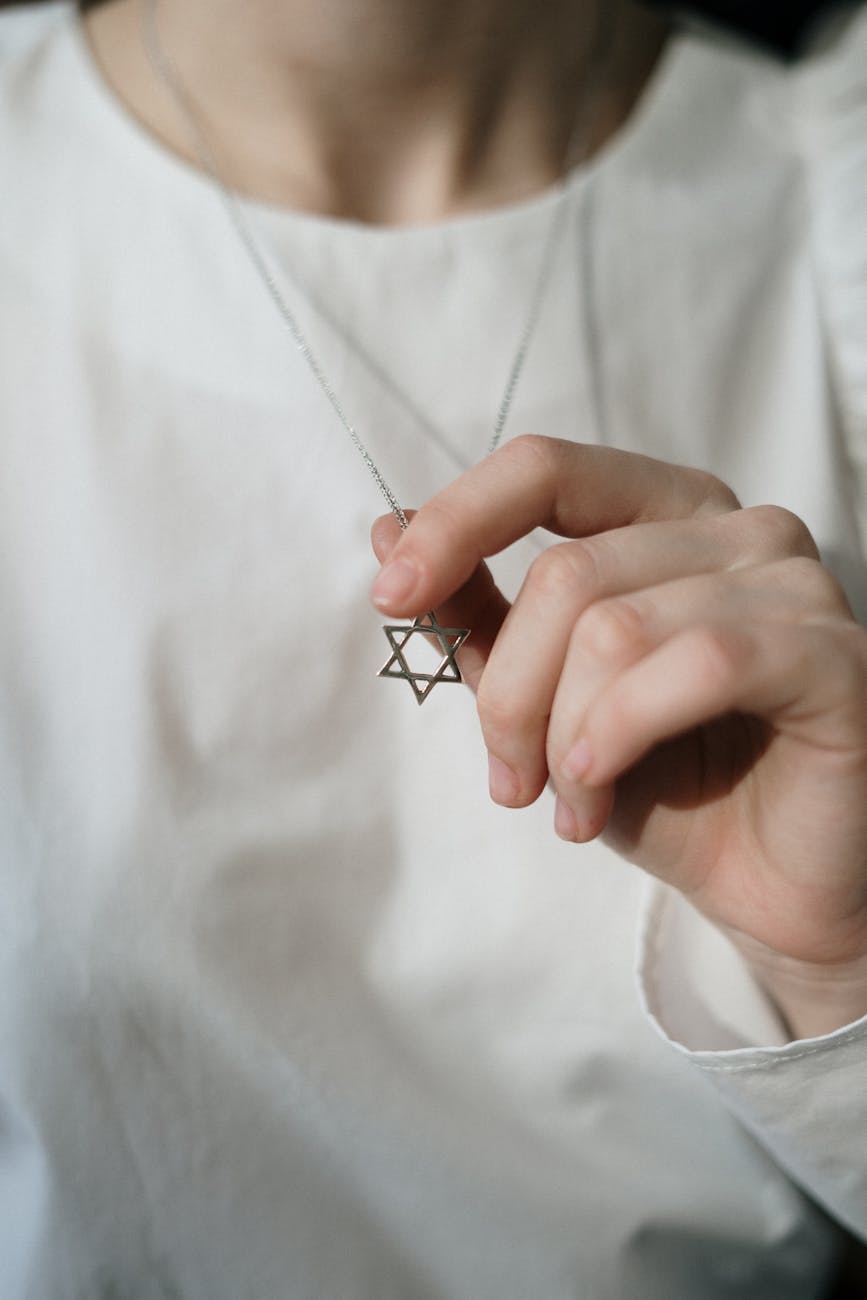

Two years since October 7th

Photo by cottonbro studio on Pexels.com

As we near Simchat Torah, the Hebrew anniversary of the October 7th massacre approaches. I usually try to anchor myself in positive things – like kitchen hacks, chickens, and yarn – but right now, I can think of little other than the day two years ago, when our world got turned upside down.

I remember it perfectly. I was sitting and schmoozing with some other moms at the playground. It was Saturday, Simchat Torah, and as Shabbat observers, we were blissfully unaware that anything was going on.

Then a panicked-looking lady ran past us, swinging her phone, and snapped at us, “What are you doing sitting here? (Would it help if we started running?) Don’t you know there had been an attack?” (How would we know?)

I would be away from my phone until the evening of that day, but as we walked home, I caught snatches of buzzing conversations: “army taken by surprise… 300 people killed… how is this possible?”

Hours later, the full extent of the horrifying pogrom became known to us. A horde of bloodthirsty barbarians had invaded from Gaza and proceeded to slaughter around 1,200 innocent people (we’d learn this number later, as bodies were gradually uncovered and identified). As if we didn’t have borders, intelligence units, and a tech-whiz army. As if we were back in the shtetl, at the mercy of invading Cossacks.

The IDF rallied within a few hours, but any illusion of personal safety had been snatched away. We were afraid to leave the house. My children were speculating on whether a terrorist would think to search the attic if we lived through a similar invasion in our town.

I would get up in the middle of the night to check the door and windows. I’d experience a moment of relief once I ensured that everything was locked, only to figure that a hand grenade would probably enable a terrorist to break in.

This was nothing new, of course. We were, and are, part of a nation that had long carried generational trauma of countless expulsions, pogroms, persecutions, and, of course, the Holocaust. But October 7th drew a clear line in the sand: life before, life after. Things would never be the same.

In the months following the massacre, my mental health suffered. I continued working and carrying on my daily routine, but it was mostly on autopilot. I would forget simple stuff. I’d open the refrigerator and struggle to remember why. Things I enjoyed seemed to lose their flavor. I’d want to have my children within my sight, always, which of course wasn’t possible.

The recommendation of mental health services seemed disingenuous. No amount of counseling could obliterate a REAL danger. I began feverishly exploring different possibilities of getting our family out – to some remote corner in the world where we could hide and be safe. Until the rising tide of worldwide antisemitism convinced me that there probably is no such a corner anywhere anymore.

Today, two years after the massacre, and with the elimination of Mohammed Deif, Ismail Haniyeh, Yahya Sinwar, Hassan Nasrallah, and the Iranian nuclear facilities, I have achieved some measure of balance. Life will still never be the same, but I strive to be a worthy link in the chain of Jewish resilience through the ages.

May we get to celebrate a joyful Simchat Torah despite the black cloud of trauma that has now settled over this holiday for all of future Jewish history.

A quick update

Photo by aboodi vesakaran on Pexels.com

Following the recent developments in our area, I thought I’d just pop in, say hi, and let everyone know we’re fine.

We’ve had our share of dashes to the bomb shelter at 4 a.m., but overall, we’re OK and hoping for some deep-rooted changes in the area after all this is over.

The threat of the bloodthirsty IRGC, which has vowed multiple times to annihilate Israel, has hung over us like a black cloud for years. I was often scared, not of war, but of what may happen if our government sits on its hands for the sake of temporary false calm. In a way, it’s a relief to know we’re tackling this menace now.

In the meantime, we’re trying to go on as normally as possible. Everything is closed, we don’t dare to venture too far from home because we need to stay near the familiar route to the bomb shelter, but we’re de-stressing as much as possible with books, crafts, board games, cooking, baking, digging in the ground, and hanging out with our animals.

Everything will be well. Am Yisrael Chai!

Just a little hello

Hanukkah had already passed without me popping in to say hi (even though I meant to, I promise), but this is still a good time to wish everyone a happy holiday season. May our light shine brightly and chase darkness away.

Right before and during Hanukkah it became clearer than ever to me that we’re dealing with an unprecedented wave of antisemitism. An online author event I was going to participate in was canceled because the organizers were afraid to expose participants to social media trolls. When I started contacting people in the hopes of organizing an alternative event, I discovered some are legitimately afraid to “out” as Jews. There have been other outrageous happenings, like the Zenner club in Berlin refusing to host a Purim party.

It’s like a very thin, flimsy cover of civilization and tolerance has been yanked off, and Jew-haters are running in a pack again, this time dressing their antisemitism as “anti-Zionism.”

These hateful individuals are forgetting the sad failure of Egyptians, Babylonians, Persians, Greeks, Romans, the Inquisition, Nazi Germany, and other nations or movements that tried to erase the Jewish existence or the Jewish spirit. They won’t succeed… but it’s almost certain they will keep trying.

It also seems that the West is on the brink of much more serious chaos than a few anti-Semitic marches. I won’t be surprised if an epic storm of you-kn0w-what might hit the fan in the upcoming years, and we’d all better be prepared. Today, I’m convinced that the survivor won’t be the lonely guy with a bunker full of supplies for the next 100 years, but the resilient community of people who help each other out.

Stay safe, my friends. Wishing you all a very happy and successful 2024.

Summing up a Sabbatical year

At the end of the Sabbatical year, my plants are looking rather sad and forlorn. During the Sabbatical, a Biblical concept unique to Israel, Orthodox Jews must observe a range of rules, but in a nutshell it comes to this: not planting and doing just the bare minimum to keep existing plants alive.

It’s a bummer for hobbyists gardeners and backyard homesteaders, but much beyond that for people who rely on growing crops to make a living. Some resort to ritual “selling” of the field to a non-Jewish person; others abandon their crops altogether and spend a year doing something different from agriculture, or go into hydroponics.

Similarly, when buying vegetables, one has to check that they come either from a “sold” area or from regions that don’t count as part of Biblical Israel – which includes some regions of the modern State of Israel, like Eilat and parts of the Arava.

I wish I could say I can’t wait to get to planting again after Rosh HaShana, but the truth is, I’ve gotten a bit of used to neglecting my plants. There’s just too much to do – and sometimes I wish I could enjoy lush greenery and succulent tomatoes without doing any of the work 😉 I guess I’ll get back into the swing eventually.

Either way, I’m wishing everyone a most happy Jewish new year and look forward to seeing what it brings.

Should she ask her husband’s permission to buy a new dress? Part 2

Photo by Breakingpic on Pexels.com

In my last post, I responded to a question I saw in a Shabbat leaflet. It dealt with a woman whose husband opposed her buying a new dress for her sister’s wedding. I raised my concerns over the potential red flags of such a situation – namely, financial helplessness and covert abuse – and one reader suggested that I might respond to the woman by writing to the newsletter.

Well, I did it. I wrote to the editor, and today I received a response, along with a copy of this week’s leaflet, in which my comment (abridged for reasons of space) and their answer appeared. I’m copying and pasting their answer here.

“Thank you for your comments!
Financial abuse is not only extremely harmful, but can be used as a tool to trap a victim in an abusive relationship. As with emotional abuse, financial abuse is generally not about a specific situation. In most relationships, there are periods of financial stress wherein the couple must reduce their spending
or make other decisions and adjustments.

However, with financial abuse, the abuser usually wants to control, manipulate, trap and dominate the other person. Some examples involve controlling the victim’s acquisition and use of money and assets, preventing the victim from working, putting the victim into large debt and/or ruining their credit, creating legal issues for the victim, controlling all the spending, refusing to work, withholding basic needs and hiding assets. Even if they are only using one of these tactics, their behavior may still be financially abuse.

While there may be indications of possible abuse in the woman’s question, it might also be simply a tight financial period. A good idea, as you mention, would be for the woman to know the finances. Her husband not agreeing would be a red flag. However, assuming he agrees, she should also participate in financial decisions, hopefully lessening her resentment.


Shalom Bayit (for my non-Jewish readers: this refers to marital relationships, literally “peace in the home”) counseling is delicate. The goal is to bring the couple closer while also being attuned to the individual needs and vulnerabilities of husband and wife. Before introducing a label such as emotional, verbal or financial abuse, it is important to gather as much information as possible.

Targeted questions, involving the subjects mentioned above, will enable both the counselor and the counselee to understand whether it is abuse or not.
If a person feels their situation might be abusive, they should speak with a professional who can help them assess their situation and move forward with a healthy, successful and normal life.”

***

I have just a few words to say in conclusion. First, I appreciate the editor’s attention to my concerns, and I am thankful they chose to give space to the subject of financial abuse, often subtle and not enough recognized in Orthodox Jewish circles. I also agree that it is impossible to find out, just on the basis of what we know, whether the writer of the original question is going through financial abuse or just a period of financial strain and faulty communication.

However, there is one thing I just wanted to note: “If a person feels their situation might be abusive” may be hard to pinpoint. Many people live in a financially abusive situation for years without being aware of it. They might feel it’s normal, or it may happen so gradually that they look back one day and realize they have given up all their financial freedom and capability.

I guess what I’m trying to say is just that I hope people will gain more awareness of financial abuse. A couple of years ago, a few Israeli Knesset members tried to pass a law that would protect victims of domestic financial abuse. I am sorry to say that Orthodox and right-wing PMs were the ones who stopped this law from passing. They ridiculed the suggestion of giving more legal protection to financial abuse victims and claimed this law “interferes in family dynamics.” I found a brilliant article that discusses it here.

Also, for whoever is curious, the leaflet that prompted me to write these last two posts is Living Jewish.

A spring woodland hike

After we all worked our butts off in preparation for Pesach, here’s the reward.

Jezreel Valley is beautiful at this time of the year – especially after the earth has been soaked by some generous spring rains that washed away the aftermath of a horrible dust storm.

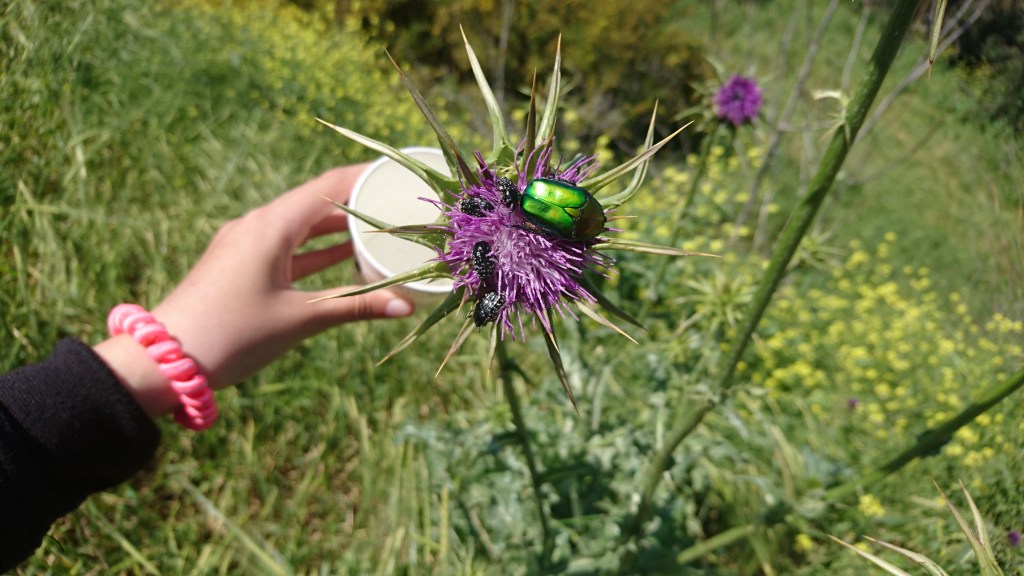
A super cool collection of beetles.
Flowers in a hidden nook.
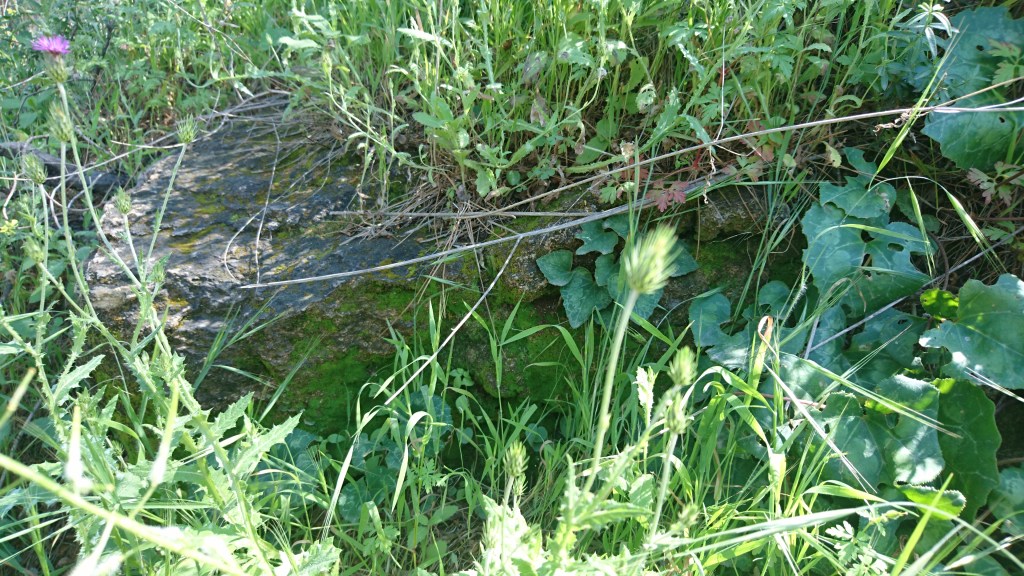
A rock overgrown with moss.
A captivating view.
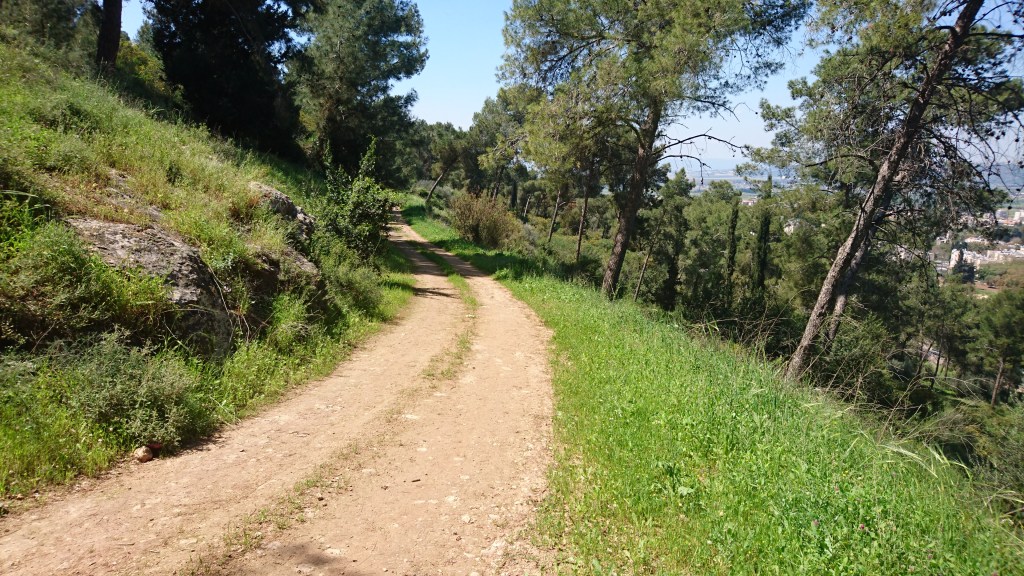
And a trail you just want to follow forever and ever.

The hard work is over. Woo-hoo! Time to relax and have fun.

Spring is here!

Have you ever heard of a more perfect excuse to ditch Passover cleaning and go out for a walk?

Such dainty clouds.
the road goes ever on and on.
I love lupines.
So much more fun than cleaning ☺

Happy spring, everyone!