My first sourdough loaf

20161226_095511

I have wanted to try making sourdough bread for a long time, and last week I’ve finally taken the plunge. I used simple instructions for sourdough starter that called for nothing but flour and water, and was a little skeptical at first, leaping with joy when I saw the first foamy bubbles – hurray! It’s working! I’ve captured myself some real wild yeast.

By day five, my starter acquired a prominent yeasty smell and I decided it’s time to dive into baking. I used whole rye flour, opting for sticky dough that is stirred rather than kneaded. After proofing the bread for about 8 hours in a warm kitchen, I eased it into English cake tins and let it stand a couple hours more before popping it into the oven.

Unfortunately, I left rather too much room for rising, forgetting that rye bread, especially sourdough bread, does not rise that much. As a result I got flat and, let’s face it, sorry-looking loaves, but the taste was very satisfying – full, complex, a little sour, with a very pleasant chewy texture. It was delicious warm, covered with melting butter, and was definitely worth the effort and waiting.

I saved a bit of the dough for next time’s starter and froze it, because bread-making happens somewhat sporadically around here. I hope next time I get a loaf that is good-looking as well as great-tasting.

A friend of mine, who makes delicious sourdough bread in the way of a little kitchen business, tells me that her secret to great-tasting bread is in the flour: she buys whole rye and spelt in bulk, soaks and sprouts the grains, then oven-dries the grains and only then grounds them into flour which she uses for bread-making. For practical reasons (my oven is tiny) I can’t do the same, but I still think I did pretty well for a first-timer. I’m excited about this venture into the world of traditional slow-rising breads.

Drying hyssop

hyssop

We don’t often find fresh hyssop in stores, so when we came across it we grabbed a bunch and I decided to take advantage of the dry, windy weather we’ve been having to dry it up.

Dry windy spells in winter are a pain. They make being outside unpleasant, they cause one’s hands to dry out and crack, and what’s more serious, they dramatically increase the risk of wildfires (by the way, thanks so much to those who have expressed concern for our family – we are thankful to say we are in no immediate danger of fire, but are keeping alert and hoping for rain). But these winds are perfect for drying herbs.

Drying hyssop – or any herbs, really – is very simple. All you have to do is take a good-sized bunch, tie it by the stems and hang it outside – or, if the wind is really violent like it was this time, put it in a mesh bag to prevent the leaves from scattering.

Of course, a food dehydrator or a simple oven can work just as well. Or you can hang the herbs inside. They will dry up eventually, only it will take longer. On the upside, they will make the room smell nice.

Once the hyssop is properly dry, remove and crush the leaves and discard the stems. The crushed leaves can be used as a seasoning in various dishes or, as is more common in Israel, mixed with olive oil, salt and sesame seeds to make za’atar, a popular local dip eaten with pita bread and/or cream cheese.

Book update

I’m quite excited to tell you that I’ve made a lot of progress with Your Own Hands. I’m still open to receiving more stories and testimonies from homesteaders and simple living enthusiasts, but overall the first draft is pretty much put together and will soon be proofread, formatted and sent out to the people who had been interviewed so everyone can review their own part before release. Once I get the OK from everyone, it won’t be long before the book is out. I was fortunate enough to have the participation of people who contributed some awesome stories and gorgeous photographs and am really happy with how it’s all coming together.

For more updates, visit my Facebook page.

yohcoverpreviewfront

Above: one of the possible cover versions (I’m still tinkering with it).

Easy Coconut Cream

Every time I’m whipping up a dessert, my husband hopefully asks, “is it parve“? Parve essentially means a dish that contains neither meat nor dairy. Since Orthodox Jews must wait six hours after consuming meat or chicken before they can eat dairy, it’s no wonder most people try to make their desserts parve. Unless they are vegetarians, in which case it doesn’t matter.

Unfortunately, in many cases this leads people to use unhealthy ingredients such as margarine or fake cream with partially hydrogenated vegetable oils in the desserts they make – and a whole lot of sugar to make the entire thing more palatable. For me, parve dessert has usually meant fruit salad or, in season, chilled melon or watermelon… that is, until recently I discovered the wonders of coconut cream.

Coconut cream contains natural, stable, healthy fat (in particular containing large amounts of lauric acid, which is renowned for its antibacterial, antiviral properties) and, when chilled, has the perfect consistency for whipping – in fact, it acts almost exactly like normal cream.

coconutcream

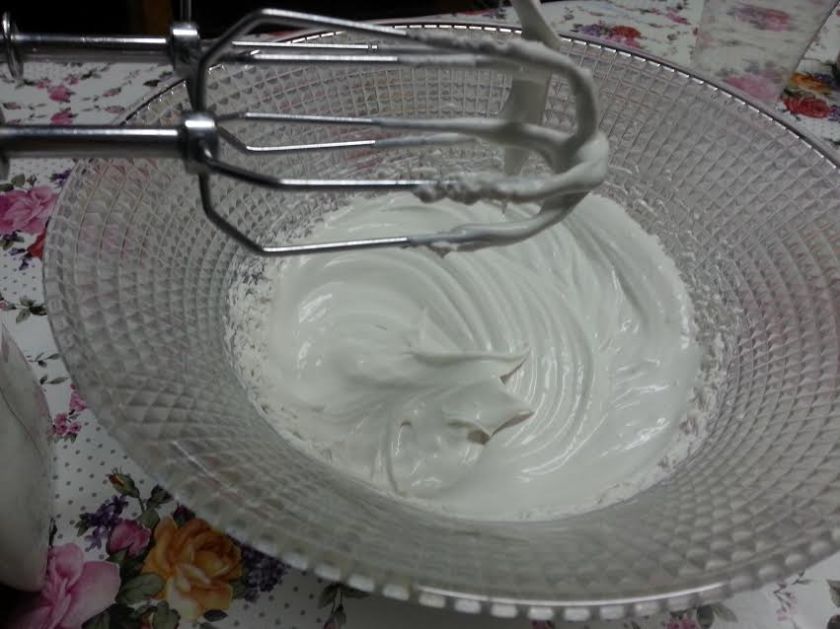
Whipped coconut cream. Doesn’t it look just like the real thing?

So here’s how you do it: pick  a can of coconut cream containing at least 17%-18% fat and chill overnight. A hard fatty layer will form on top; skim it off carefully with a spoon and add a little of the liquid at the bottom (use the rest of the liquid in baking or smoothies). The cream can be whipped and combined with all sorts of flavorings to create a variety of desserts. Yesterday I made delicious halva mousse by whipping up the coconut cream with raw tahini and some honey. I imagine it would go equally nice with chocolate… yum! I imagine it can also be frozen to make natural, dairy-free ice cream.

Personally, I love coconut, but the taste of it is very mild in the cream, so even those who aren’t coconut-crazy can enjoy this.

***

I also wanted to let everybody know that the work on Your Own Hands, the new simple living book, is going well and at this point I have most of the first draft complete. I also put some improvements and formatting changes into The Practical Homemaker’s Companion, which is now 122 pages long. I left the Payhip price at 4$, less than the print and Kindle version, as I really prefer people to download from Payhip because it only takes a small commission compared to Amazon and payments are instantly transferred to our Paypal.

Easy coconut body butter

I got my hands on a nearly-discarded bar of coconut oil in my Mom’s refrigerator. At first I thought it’s some ancient soap, but when I asked and was casually told that “it should probably be thrown out, it has been here for years”, I took it for myself.

The internet is full of wonderful recipes for homemade creams, lotions, butters, balms and scrubs using coconut oil, and the simplest of them is this: just take some coconut oil (in solid consistency – cool it if you need to) and whip it with an electric beater until you get a smooth, airy texture, akin to whipped cream. I tried to do that, but the coconut oil itself was too thick to whip up well. I had to add a glug of almond oil – don’t ask me for quantities, but I think it was about 1 tbsp. of almond oil to 1/2 cup of coconut oil.

By the way, I used almond oil because that’s what I had on hand, but I daresay it’s also possible to use olive, wheat germ or grape seed oil, or whatever you prefer.

When what I had in the bowl resembled whipped cream so much that my daughters begged to lick the beaters, I stopped whipping and scooped what I got into a small wide-mouthed jar, which I refrigerated for an hour or so before transferring it to room temperature. Then I tried the body butter. It has a lovely creamy consistency and feels very pleasant on dry hands. And it cost practically nothing!

coconut

In various recipes, I saw that people suggest adding a few drops of essential oils to your skin product. While I imagine a hint of lemon, orange or lemongrass wouldn’t go amiss if I had them on hand, I must say I simply love the pure natural smell of coconut, which is both gentle and delicious.

Result: easy-to-make, very affordable, 100% natural concoction that I wouldn’t hesitate to use even on small children or babies.

Preparing for emergencies: water shortages

In my previous post, I discussed what we do during power shortages. Now let’s move on to a situation when the tap isn’t running.

Drinking water – always keep a supply of fresh water on hand for drinking and cooking. A little while ago, a new family moved into the neighborhood and one day when the tap stopped flowing we went to check on them. It turned out that the mother was alone in the house with a nursing baby and had no water to drink. The oppressive heat outside made her reluctant to venture out and ask any of the neighbors for water, so she just sat hoping that the problem would be fixed soon (it wasn’t, until the next day). I dispatched the older children to her house with a couple of water bottles, which were gratefully received – but you don’t want to depend on the kindness of others in such situations.

Flushing the toilet – we have three bathrooms in the house, so the water in the toilet tanks is generally enough for flushing for a day or two, but remember that you don’t have to flush every time (even if it goes sorely against your habits). When there’s no running water, I tell my kids – pardon the details – to only flush when they poop.

Dishes and laundry – the key word here is prevention. Running water issues can be unexpected (a pipe suddenly busting due to excessive heat, for example), so I try not to procrastinate when it comes to dishes and laundry. I do my best to wash dishes right after a meal, and clothes as soon as I have a full load. There are few things more annoying than leaving a sinkful of dishes overnight saying, “I’ll do this tomorrow”, and then tomorrow brings no running water.

Disposable dishes – plastic plates and paper cups are not very classy, economical or environmentally friendly, but when you have no running water for a day or two they can be a sanity saver. Besides, my kitchen cupboards are small and I simply don’t have enough plates for the whole family to keep using for two days straight without the possibility to wash them. I always keep a stash of disposable kitchenware to be taken out as needed.

The garden – this can be a serious issue. 48 hours without water, combined with a heat wave, can easily kill plants, especially those which don’t have deep roots. In such cases, I cover young plants. I also cover some of my garden beds with a mulch of straw to prevent moisture loss.

Finally, I save the water from my baby’s bath and use that for watering the plants. It isn’t much, but it can help tide some plants over until water flows in the pipes again.

I do realize, however, that we need a larger water container for our plants, especially now that our garden is expanding. We are currently planning to set up a greywater tank that will hold all the water from our showers, to use in the garden.tomato

A thriving garden can be killed off very quickly by a combination of heat and lack of water.

Water cisterns – several families in our neighborhood have water cisterns that provide, on average, all their water needs for up to two days. When other people have no running water, they carry on as usual – cooking, bathing, doing laundry – and hardly notice anything is amiss, except perhaps a little reduced water pressure. We are considering making an investment and installing such a cistern, which will eliminate nearly all water-related issues from our lives. The cistern will need to be set up above our house, so that the water runs down by force of gravity.

Electricity and running water are two things that, in the developed world at least, are considered so basic we usually take them for granted. When they are suddenly taken away, people are prone to panic. However, short-term power and water issues are easy enough to deal with, and need not disrupt your daily life – if you are prepared.


Preparing for emergencies: power shortages

Earthquake. Tsunami. Nuclear attack. These are the things that often come to mind when you think “emergency”. Fortunately, in most cases an emergency is something a lot more trivial – think a temporary power outage due to strong winds, or a blizzard that leaves you trapped at home for a couple of days. Or you just wake up one day to discover that your tap isn’t running, and receive a message that the water line won’t be fixed until tomorrow afternoon.

To put it simply, you know the world hasn’t ended and things will soon be back to normal, but for now you need to deal with this unexpected inconvenience that has come your way.

In the area we live in, the electricity and water lines are patchy and we often experience power shortages (especially during the winter) and water shortages (mostly during the summer).  This essentially means that every now and then, we will spend up to 24 hours without electricity and up to 2 or 3 days without running water. We have learned to expect these events and know how to prepare for them so they don’t turn into real emergencies. Here is how.

For power shortages:

Lights – we have emergency lights in the kitchen/dining room area, as well as plenty of candles and oil lamps on hand. When I think the power might go out, I light a fat beeswax candle in the bathroom as I head into the shower, even if the electricity is still on. You don’t want to find yourself groping your way out of the shower when it’s pitch-black – or try to maneuver when you’re bathing a baby and suddenly the lights go out.

p1090643

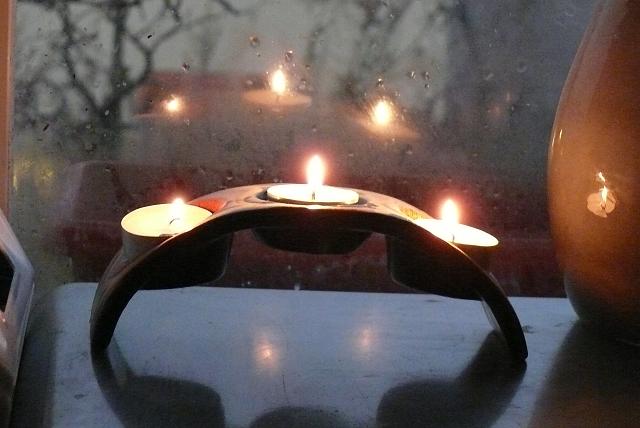
Above: candles on a rainy day

Heating – we have a gas heater which we connect in the living room. I close the bedroom and bathroom doors to keep the heat in one area, and we all camp out where it’s warm. Many people in our neighborhood prefer to use woodstoves instead, but we find that with gas, we can provide heat more quickly and efficiently.

Warning: heating with gas can be dangerous if you don’t provide some air circulation. I open the window a crack now and then when we use the gas heater.

Cooking – I always use a propane gas stove for cooking. It does have electric ignition, but can be also lit with a match. If needed, I can even bake flat bread in a pan on the stove. I just have to make sure, now and then, that we always have plenty of gas.

Food storage – the food in your freezer and refrigerator can usually survive a 24-hour power outage with relative impunity, depending on the temperature outside, your refrigerator’s insulation and how often you open it. Recently, when it was actually quite warm, the power was out for 27 hours, during which we have refrained from opening the freezer altogether. When the power was back, I peeked into the freezer and was very glad to find all the food still frozen solid. It helps to keep your freezer packed (stuff it with plastic water-filled bottles if you have some extra space) and make sure it’s well-insulated.

Backup generator – during our first winter here, we toyed with the idea of getting a backup generator, but eventually gave up on it as too expensive. Practically, surviving a day without power is quite possible and not very disruptive to your usual routine as long as you have light, heating and the ability to prepare food.

Going off-grid – this, of course, would be the ultimate solution to our problem. We are currently considering the option of investing in a solar energy system, which will free us from the power fluctuations and save us money in the long run. The initial cost is a little prohibitive, but the idea of generating our own energy is very appealing.

Stay tuned for part two: preparing for water shortages!