Jewish homesteading: an interview

A while ago I was contacted by Tachlis magazine, who were looking for information on the Jewish homesteading movement. My email interview with them is below:

Where do you live exactly?

I’m sorry, but as our privacy is important to us, I cannot state our exact location. I can only say we live somewhere in the Shomron.

What is your homestead like?

I wouldn’t call what we currently have a homestead, precisely; I look at it, figuratively, as the seed of what I would like to have. Right now we have a small flock of chickens, a small garden and a few young fruit trees. I would like to have a large, productive garden and orchard, more chickens, and ideally some sort of a dairy animal. This way, we would provide a significant part of our own food.

In the meantime, we are doing what we can with what we have, and learning relevant useful skills in gardening, improving soil and raising animals. We used to keep dairy goats so I know how to hand-milk and make cheese, and can easily go back to it again.

Is there a community where you live? Is there a minyan?

Yes and yes. We have some wonderful neighbors around here.

How did you decide to homestead?

I don’t think it was a one-time conscious decision. We did know, even when we first married, that we wanted to live on a piece of land, not in an apartment building. We are just taking baby steps in a certain direction, and anything we have accomplished so far has been largely thanks to my husband: sometimes you just need to jump in with both feet, and he can do it much better than I. He was the one who brought home a box with our first chicks, and he was the one who decided on buying goats. He has also accomplished various complicated projects around the household I couldn’t have done myself.

What do you feel your family is gaining from homesteading?

Even though I wouldn’t refer to us a homesteaders just yet, we are learning a whole lot from growing plants, raising animals and working on a plot of land. Our children know the thrill of a newly hatched chick and a newly sprouted seedling. They know how an incubator works and where is the best spot to plant tomatoes. They know all sorts of things I wish I had learned as a child.
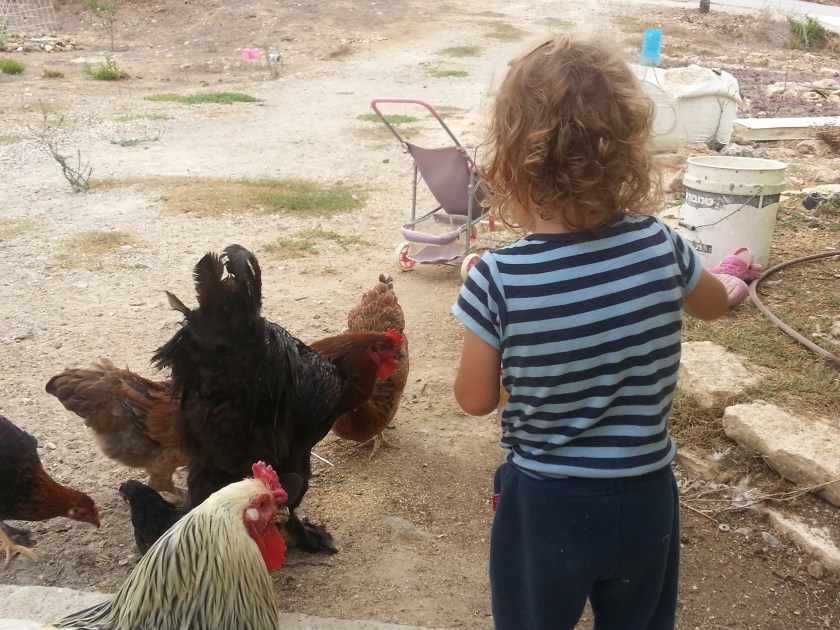
Israel+chickens3

Above: Israel, 19 months old, loves to feed the chickens.

I think one of the best things in growing your own food is that the experience does something to every member of the family, regardless of age. You can all share the excitement of newborn baby goats – nobody is too young or too old for that. And when you go foraging for wild-growing goods, you are all equally satisfied when you come home with full containers.

Our lifestyle has brought us together with many wonderful like-minded people, which has been a terrific experience and an education in itself.

And, of course, those who “graduate” to growing and raising a significant part of their own food will reap the benefits of a healthier diet and reduced expenses.

Does homesteading help you connect to the Torah in a deeper or more personal way?

Yes, certainly. Jewish life and working on the land are closely intertwined. Many of the mitzvot specifically refer to agriculture: ma’asrot (tithes), Shmita (the Sabbatical year) and the holy status of the firstborn male, to name a few, and of course anything that has to do with humane treatment of animals. When you grow plants and raise animals, even on a small scale, you get to experience this first-hand, not just learn it in theory. Then there’s everything Shabbat-related, such as the restrictions of tending to the garden (you must do everything before Shabbat) and milking (you can milk so the animals don’t suffer, but not collect the milk). Also, as we’re into poultry especially, we have learned there’s some doubt about the kosher status of certain heirloom chicken breeds (in particular ones with an extra toe). We have found out so many things we would otherwise have had no clue about!

You can read more about homesteading and small-scale farming in Israel in this post.
One-minute household chores and e-book giveaway!

How many times have you looked around the house and experienced this sinking feeling that there is a million of things to be done, and no time to do them? Well, apparently the key to success is to break the million things into one-by-one, and just head in and do something, even if it is something little. The sense of accomplishment will motivate you to go on, and efficient planning will enable you to make good of those little pockets of time during the day.

Here is an excellent list of household chores that can be done in one minute.

I do have to say, however, that sometimes those little things may take longer than we estimate; for example, it really is only a minute to change your kitchen towels – if you keep them readily available. I personally don’t have much cupboard space in the kitchen, so my kitchen towels are kept in the closet in the children’s room and I have to walk there and then back to the kitchen to get the towels. I also need to drop the used towels into the laundry basket.

If you really only have a minute or two, work in the space where you already happen to be, or near it. For example, if I’m watching over a toddler playing in bath, I might use up that little slot of time to wipe down the bathroom mirror, sink and tap, and perhaps to scrub the toilet. If I’m watching over kids while they are playing in the yard, I will clean the outside of the living room window (yes, the one with fingerprints and nose prints all over it!)

Logical storage strategy is another important thing. I’ve already mentioned kitchen towels; by necessity, I keep them away from the kitchen, but I realize it would have been better to make room in one of the cupboards. The little sponge I use specifically for wiping sinks, I keep in the bathroom so it’s within easy reach. I’m forced (again by necessity of space) to keep some of our clothes in the storage shed closet, which is larger, but I make sure those are the clothes we use less often, in particular during the warm months (coats, jackets etc).

Then it’s important to assess whether a chore really takes up only a minute, or we are run away with our fanciful imagination. For example, I’ve been known to step out to fold the laundry, saying “it only takes a minute”, forgetting that with little ones in tow, it most certainly does not. In that case I must either allot more time for the chore, or delay the task until later.

And of course, this doesn’t mean every last little moment of spare time must be filled with housework! Sometimes, when you only have a couple of minutes, it’s better to take a deep breath, have a glass of cool water or a little snack, or read a page or two of a good book.

***

Giveaway announcement: starting from now and until August 31-st, you can download my natural health e-book, Nurturing Hands, from my Payhip store for free! Simply proceed to checkout and use the 100% discount coupon I have activated. Of course, you are most welcome to share this giveaway on your own blog, Facebook or Twitter and let your friends know! Coupon code: 783CZRSQDP

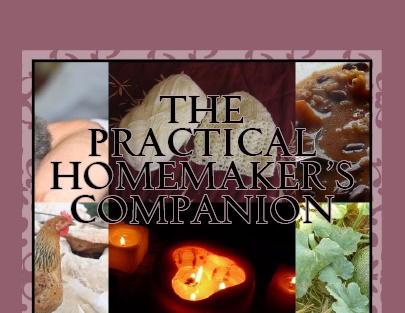
I have also included a 50% discount coupon for The Practical Homemaker’s Companion, which will be valid until September 7-th. Coupon code: E1KQKKJURV

In addition, following requests, The Practical Homemaker’s Companion is now also available in paperback for only 5.38$. Since it’s a short, very condensed book and my aim was to make it as affordable as possible, I chose the lowest price setting allowed.

Banner


From the back cover:

“Our job as wives and mothers is of tremendous importance and eternal impact, but it’s all too easy to get bogged down and discouraged by the mundane. The dinner got burned; the mountain of dirty clothes in the laundry basket is growing at an alarming rate; you have outstripped your grocery budget; your kids are squabbling; you lose it and yell and feel guilty. You go to bed with a nagging headache, wondering how you’ll get up and begin all over again tomorrow.

We’ve all been there. We’ve all done that – are still doing that. Opening a fresh page every day, doing our best and hoping it’s enough.

This book is a compact combination of inspirational articles, practical tips, and advice for making a small income go a long way. From encouragement to take heart in your job as a homemaker, to stockpiling, wise grocery shopping and keeping chickens, it’s based on the homemaking and simple living tips I have found most useful over the years.”

Why government won’t support homesteading: an opinion

Our society used to be mostly agricultural. It revolved around the nuclear and extended family, a close-knit community where people usually lived their whole lives, the family farm, the village, the artisan tool-maker, and everything small-scale and personal. For better or worse, the Industrial Revolution put an end to that kind of life and propelled us to a world where manual work is scoffed at, and agriculture is seen as something menial or boring.

Yet this did nothing to change our nature. As living beings, we were made to interact with other living beings. It is good and healthy for us to tread earth, smell flowers, pick fruit off trees, take care of animals, and make occasional escapes into wilderness. People who live in small apartments in big cities can find an outlet for this healthy instinct by growing plants in pots, keeping an aquarium and a cat, and venturing out to the country from time to time. The words “farm”, “country”, “rural”, “pastoral”, “village” still bring up pleasant nostalgic associations (compare them with the associations you get when you hear the words “factory”, “industry”, “rush hour”, “traffic” or “highway”), and some people even find out that they are inherently incapable of living the city life anymore, and drop their perfectly good jobs in order to cultivate a piece of rural land, such as in Marcel Pagnol’s splendid novel Jean de Florette.

We still yearn for the simple, cyclic, gentle and healthy rhythm which can be found in nature, the earth, and the seasons.

Some time ago, I picked up the Israeli Shabbat leaflet “Olam Katan” (“Small World”) and was genuinely interested by an article which suggested that modern technology and means of transportation make small-scale farming/homesteading possible even for people who don’t want to, or can’t make this their main source of livelihood. It is entirely possible, the author argued, for a family where both spouses hold a regular job to also keep a small homestead on, say, on 1 square km of land. Such a homestead can include a barn with 3-4 dairy goats and a dozen chickens, a small vegetable garden, and some fruit trees. Furthermore, it was argued that Israel has enough unexploited land which is suitable for agriculture. Such land, according to the author, could be divided into small homestead plots and handed out or sold inexpensively to anyone who would like to start a homestead or a sustainable small-scale farm. Thus many more people can live a healthier, closer-to-nature life, while also creating a strategical advantage for Israel by preventing Bedouin clans from illegally taking over empty lands.

While I would like, and am ready, to believe that a small-scale farming/homesteading revolution is possible, I also think the only way for it to happen is by individual people making the change in their private lives. I don’t think it will ever be encouraged or supported by the government, for many reasons. Here are just a few:

1. The government will never, not in a million years, hand out land or sell it cheaply (if it did, I’d be the first to stand in line!) – it will reap big bucks by selling land to big contractors, who in their turn will reap their big bucks by erecting tall buildings with cramped over-priced apartments.

2. Small-scale farming/homesteading will never be encouraged on a government level because commercial-scale farmers hold too much power.

3. A family living on a homestead will very likely have a rewarding, satisfying life; the more they grow, the less they will buy, not only in the way of food, but also in other areas. Shopping will no longer be needed as a recreation. They will move away from the temptation of big stores and shopping centers. In the evening, they will hurry home to milk their goats and water their tomatoes. Such people, for psychological and logistic reasons, are more likely to buy only what they need, which means the government will lose money by way of taxes each of us automatically pays when we buy in a licensed store. People who succeed in their little homestead venture might also discover they like it so much they will possibly opt for a less demanding, lower-paying job and enjoy a more relaxed lifestyle – and then the government will lose money by way of income tax. Some economical guru up there is bound to figure it out, and the government will never – not in a million years – agree to lose money, even for the sake of promoting a healthier and happier society.

4. A homesteading/small scale farming network will encourage the development of a local, sustainable market based on barter and small unregistered sales – the government won’t want this to happen because this will, again, mean less taxes.

However, it is a joy for me to know that other people, like me, indulge themselves in dreams of a world where families work together, more food is produced locally, and giant chain stores are cheated of part of their profit because people realize they don’t need so much stuff.

Making carob powder

The pods of the carob tree are rich in minerals and vitamins, and can be utilized to make tasty, naturally sweet powder that is often used as a cocoa/chocolate substitute. Now, I personally can always tell the difference between carob and chocolate, but I still like the taste very much and think it’s great in brownies and other baked goods. As a bonus, unlike cocoa, carob is naturally sweet, so when using it I can cut back on added sugar.

Carob trees grow all over Israel (and in other similar climates) and the dark brown pods can be picked in the summer, for free, if you know where to look. They make a tasty, chewy snack right off the tree – only beware of the little hard seeds. They also keep extremely well, so you can pick a big bunch and then process it in parts at your convenience.

Make sure the pods you pick are ripe. They are supposed to look and feel dry and to come off easily from the tree. To make sure, break one in half and taste it. Pick the biggest, shiniest, healthiest-looking pods.

Wash the pods and boil them for around 30 minutes to soften them. This way they will be easier to de-seed. Cut them lengthwise with a sharp knife, remove the seeds, break into pieces and place on a cookie sheet. Dry in the oven on low heat – really low, as you don’t want to burn them (it will give the powder a bitter tinge), or in the sun. The pod pieces should be really crisp.

roasted carob

Throw your dried carob pieces into the food processor. Once you have mostly powder, sift to remove any chunks that are left, then return them into the food processor and repeat. I know my end product isn’t really like commercial carob powder – I could have used a finer sieve, but I didn’t bother. I know it will be quite good enough in my brownies.

powdered carob

Once the powder is ready, it can be stored in a tightly closed glass jar for a long time.

The secrets of soap

I had wanted to make soap for a long time, but was stopped by the mysterious ingredient called “lye”. I had no idea what it was or where to obtain it… until by pure chance, I discovered that lye is actually the caustic soda we always keep on hand to take care of severely clogged pipes.

We also had a bottle of olive+unspecified vegetable oil we once bought to light Hanukkah candles and discarded because it smoked. So it just sat for years on our pantry shelf, not fit for human consumption, lighting, or much of anything really. It was the perfect candidate for my soap-making attempt.

I started reading about soap-making and realized it’s a whole science/art, with all sorts of oil combinations with different properties, essential oils, etc. I decided to just do something basic for starters. I followed a very simple recipe, omitting the essential oil and using, instead of the different oils, the one I had on hand.

I’m far from figuring out all the intricacies of soap-making just yet. I didn’t use a scale. My measurements might not have been 100% accurate. My batch of soap never showed a proper “trace” and took forever to set. There was probably too much liquid. Nevertheless, the oil did turn into soap and I was thrilled, because I made something useful out of something useless.

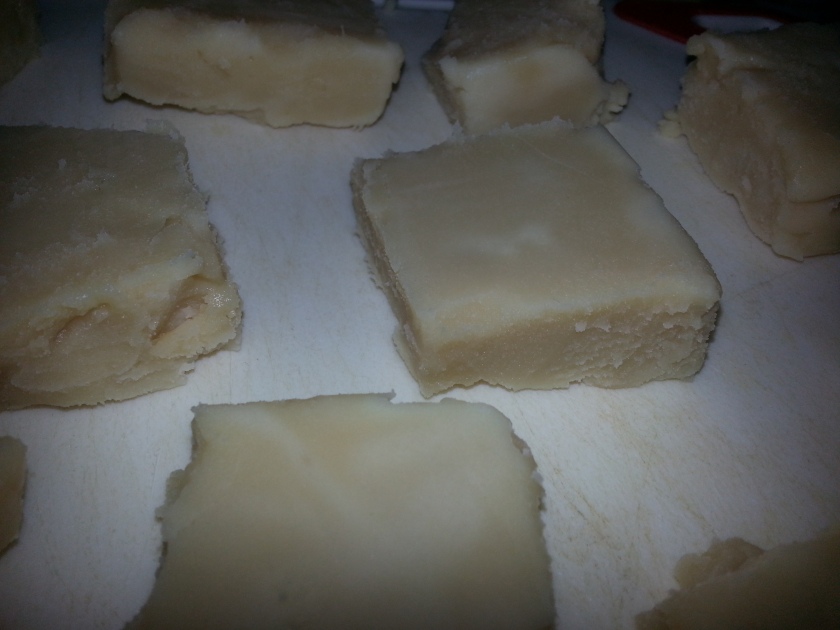
soap.jpg

Above: soap cut into bars and set out to cure

These soap bars might not look very shapely, but I’m making good use of them for laundry. I cut off a piece of appropriate size and simply place it in a little mesh bag, which I then toss in with the load of clothes. It really works! It doesn’t have the potency of a commercial laundry detergent, but it’s fine for clothes that are slightly sweaty/dirty.

I intend to go on and learn more about making soap, and will keep you posted as I progress.

Why I love raising chickens

IMG_9900

Our love affair with chickens started a few years ago, when my husband surprised me with a box of baby chicks. Those little ones all turned out to be males, but no matter – the chicken bug was already there. Ever since, we’ve had a chicken coop wherever we lived.

So what makes chickens such a popular choice for almost everyone? They are kept by big and small farmers, country dwellers and urban homesteaders alike. Here is why I personally like my chickens so much:

1. Eggs – need I say more? Fresh homegrown eggs are about the best source of high-quality animal protein out there. They are full of essential nutrients and their taste is far superior to the bland egg factory product. In winter, when our hens went off laying and we had to buy eggs from the grocery store, we were actually shocked at the contrast in taste after getting used to our superior home-grown eggs.

2. Pest and weed control – chickens love to eat all sorts of insects, bugs, worms and weeds in their young green stage. All this goes into the eggs and makes them healthier and better-tasting – and helps with yard maintenance. Of course, chickens will also go for many garden plants, so you have two choices: either keep a fence around your vegetable patch, or learn which plants you can grow without competing with your chickens. Generally we find that herbs (such as mint, sage, rosemary), certain vegetables (onions, garlic, potatoes) and fruit trees are safe with chickens.

3. Entertainment – just sit back and watch your chickens for endless hours of fun. Observe how they interact with each other and with you. I can entertained a 1-year-old for up to half an hour by making a rooster jump and snatch tricks out of the air. Keeping chickens is one of the best fun and educational experiences we’ve ever done.

4. Easy maintenance – once you get into the routine of chicken-keeping, it’s incredibly easy. Basically what chickens need is access to food, water and a sturdy sheltered coop that provides protection from the rain and wind and can be locked at night against predators. Depending on the climate in your area and the breed of your chickens, you might have to provide a source of heat during the winter. We usually don’t need to do this as we keep sturdy breeds and temperatures here don’t often fall below freezing.

You can greatly reduce the cost of chicken feed by giving your chickens your kitchen leftovers (old bread, rice, pasta, cores and peels, etc) and by allowing them to free-range and find their own food.

Modern technology and sustainability

“I don’t think the past was that simple, especially after researching the pre-industrial era. Rural life may seem idyllic to us, but the reality was often harsh and cruel. Children died from disease and ill hygiene. People worked and got by with so little, sometimes going for days without food to eat. 

Self-sufficient they may have been, but their life was pure drudgery, toiling from dawn to dusk without education or recreation. I don’t think the farmhands who ploughed and sickled by hand, enduring blisters,and the women who spent hours lighting fires and scrubbing clothes by hand really appreciated the simplicity of their way of life, haha. People died earlier too!”

Far be it from me to deplore modern technology. On the contrary, I am very thankful for all we have at our disposal today, modern medicine not the least of it. There’s no way I’d willingly give up my washing machine, which helps us do our laundry with so little effort; my nifty little grinder, which allows me to prepare freshly ground oatmeal with such ease and efficiency; the ability to control our room temperature with one press of a button; the Internet, which allows me to obtain a wealth of information and connect with like-minded people from all over the world; my cell phone, the ability to travel with relative ease, our refrigerator or any of the countless things we take for granted these days.

Being free of the drudgery of drawing water from a well or scrubbing clothes by hand frees me up to spend more time with my children, relax, and work on meaningful projects.

When it comes to people who desire simple living and the connection with earth and nature, I believe technology is actually what makes modern one-family homesteads possible. Things like solar panels, milking machines, incubators and modern agricultural techniques, for example, enable people to go off the grid and start their own small-scale farms.

Furthermore, even when building small-scale, off-grind cabins, people normally use electricity-powered tools such as saws, drills, etc.

In our neighborhood, we have a farm which is run by a very industrious family. They make delicious cheeses, yogurt, and a variety of other products. They use milking machines, a computerized irrigation system and, of course, extensive refrigerators for all their fresh produce. They work hard, that’s for sure, but if they didn’t have modern technology there’s absolutely no way they would have been able to accomplish all that work on their own, without employing a few workers (which I know they cannot afford). If you read historical novels set on farms, it will strike you how many people it took to do all the work manually, in order to accomplish anything on a serious scale. Most of these people were unpaid or very poorly paid and uneducated. These days, nobody would want to live like that, and that’s perfectly understandable.

It’s all great while technology is used as an aid at home; but when the coin flips, and technology controls you – when people are addicted to always having the latest gadget, to over-processed foods, to internet shopping, to online social networks; when people begin to spend a larger and larger portion of their life in front of the screen, that’s where I believe we do have a problem. It does take a particular balance to eat the apple, so to speak, and spit out the seeds. And this is precisely what I’m aiming for when I talk about simplifying.