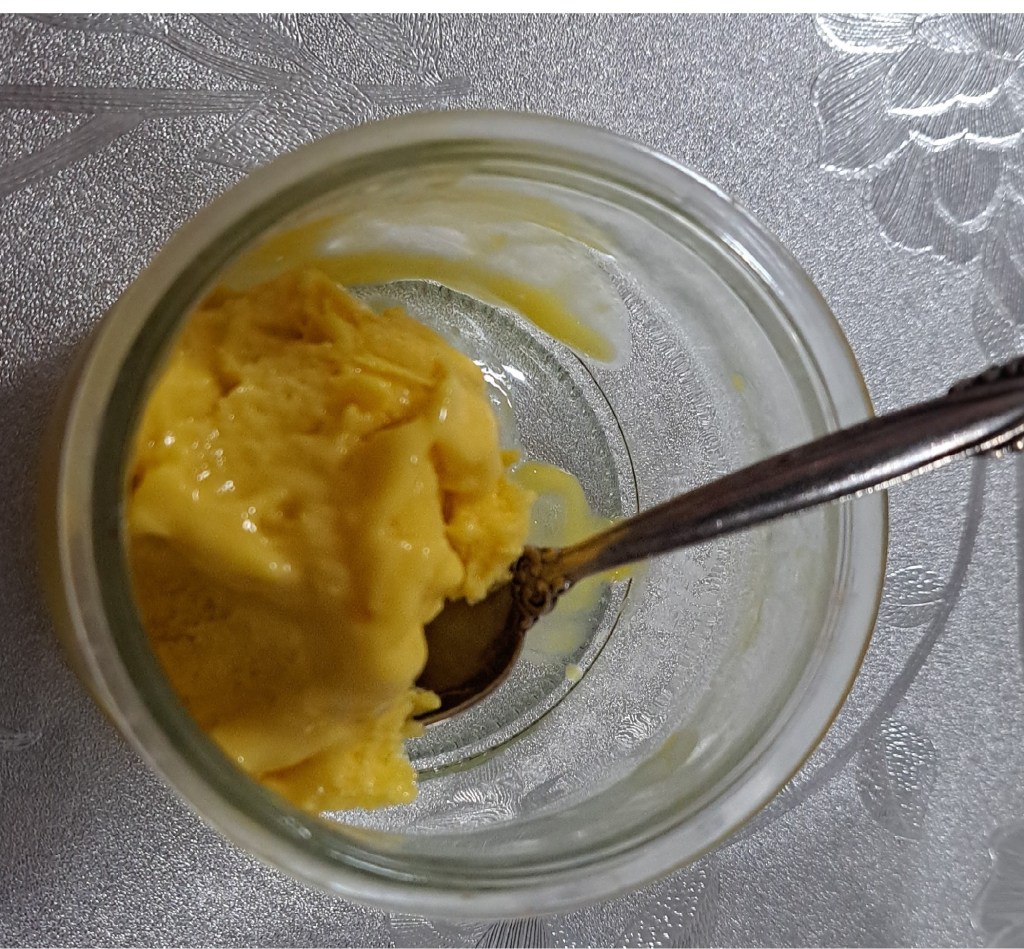
Our mango tree yielded a surprisingly large crop this summer (photo not mine, as I didn’t snap a picture of the mangoes before processing them), and there’s only so much mango you can eat. So, I sliced and froze a batch, and on one hot afternoon, I decided to experiment and make mango ice cream.
The result was an absolute hit: refreshing, creamy, and quick to make. It contains only three ingredients and is all-natural and vegan!
You’ll need:
About 2 cups of mango slices/cubes, peeled, either fresh or frozen
1 cup of coconut cream
Your preferred sweetener to taste (I used brown sugar)
Blend all ingredients together until thoroughly mixed and smooth. You may need to wait for your mango to thaw if you’re using frozen fruit. Pour into a container, pop into the freezer, and stir about every 30-60 minutes to keep ice crystals from forming.
Scoop and enjoy! If the ice cream is too solid, let it thaw a bit.
I haven’t tried this yet, but I imagine it will also work great with berries, bananas, peaches, passionfruit, or a combo of the above.
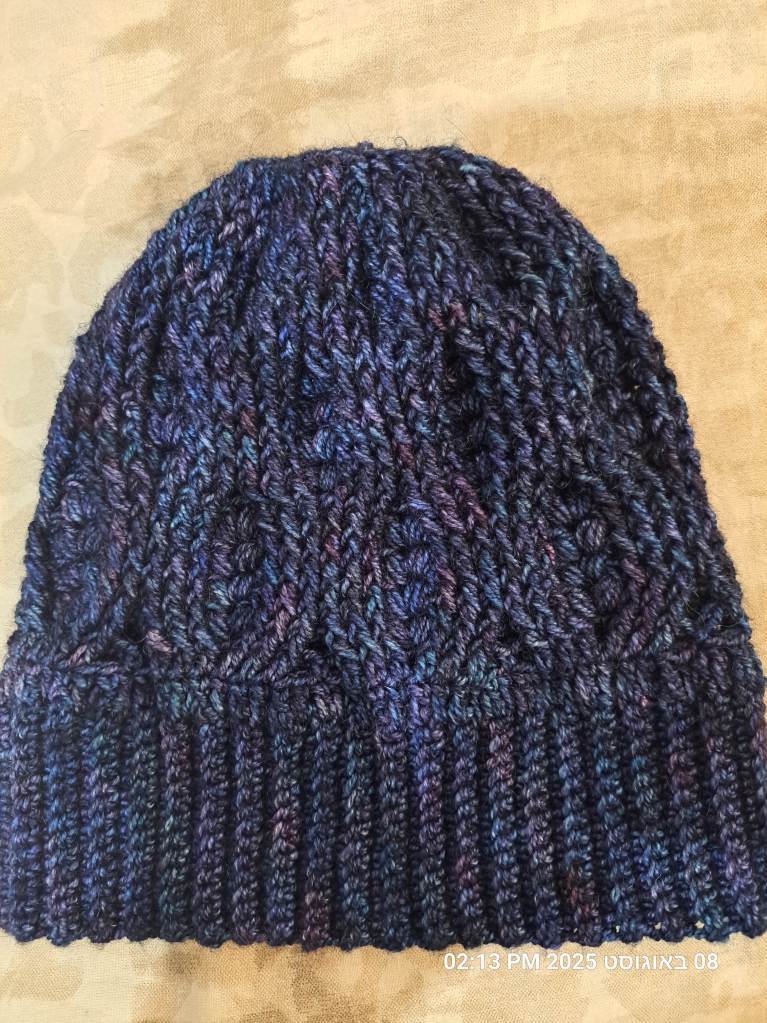
As a treat to myself, I decided to do another quick project in one of Malabrigo’s lovely yarns: this time Dos Tierras, which I handled for the first time. It’s superwash, 4 ply yarn made of 50% merino and 50% baby alpaca. I used a 3.5 mm hook; the colorway I chose was Whale’s Road.
Dos Tierras feels and works up a lot like Rios, despite being 50% alpaca (rather than pure merino like Rios). Also, despite being DK/sport weight, it contains the same yardage (210 per hank) as the worsted-weight Rios. This means that Dos Tierras is heavier, more compact, and likely more tightly plied than Rios.
Dos Tierras comes with all the perks of other Malabrigo superwash yarns. It has a lovely hand, a nice stitch definition, and amazing color saturation. It’s even, not prone to tangling, and easy to unravel if necessary.
On the other hand, again, like Rios, Dos Tierras is a bit floppy due to its superwash treatment. In fact, it’s probably even floppier because of the alpaca content, given that alpaca is less elastic and stretchy than merino.
That’s why a hat likely wasn’t the ideal project for this yarn – something drapey, like a scarf or cowl, would work up better. But my daughter really wanted a hat from this yarn, so I tried my best to make it work.
After completing the stretchy brim (single crochet in back loop), I tried doing post cables. Predictably, this didn’t work out too well – the fabric was stiff and heavy, and the cables lay flat, so I unraveled it and did the wheat stalks pattern instead. I LOVE this pattern, but again, I felt it would turn out nicer and squishier with a non-superwash yarn, possibly some lovely single-ply like Malabrigo Worsted.
Sometimes, you fall in love with the yarn you work with. Sometimes, you develop a love-hate relationship. This was my story with Alize angora gold batik ombre.
I had this yarn cake sitting in my stash for years, from before I switched almost 100% to using all-natural, biodegradable yarns. It’s 80% acrylic, 20% wool fingering/fine sports weight yarn that comes in 150-gram cakes containing 825 meters.
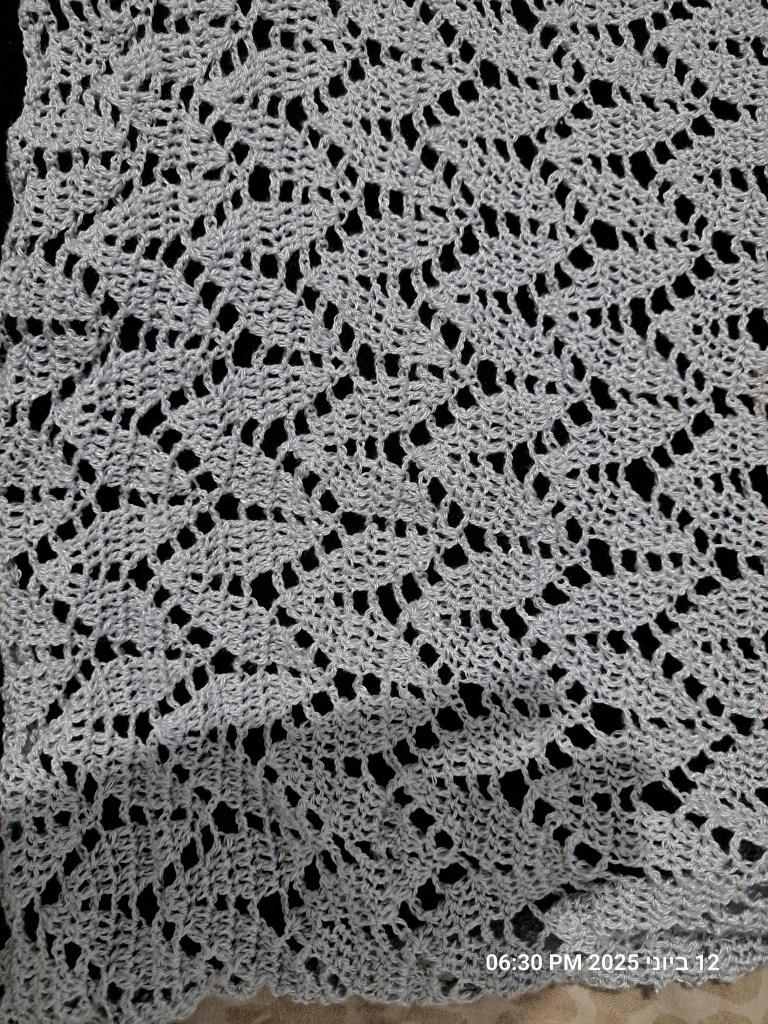
I used color 7295 (eggplant/muted purple) and a 2.5 mm hook. Used this pattern from Pinterest, but my tunic/top came out a lot more flared than in the picture.
[A close-up of the details on the body]
It’s a long gradient yarn, which means that it’s suited for one-item projects worked in a single piece, like top-down tunics or light cardis, shawls, or scarves that show the whole extent of the beautiful slow color shift.
You can start working from the center (in which case you start with the lighter shade) or from the outside, like I did (and then you begin with the darker shade).
Pros:
Gorgeous gradual color change, nothing like the blobs of color you often get with variegated yarns
Drapes nicely
Economical: one cake goes a long way
Cons:
Mostly acrylic; doesn’t feel very nice on the fingers – especially if you’ve been spoiled by gorgeous yarns like Malabrigo!
Itchy against the skin; I wouldn’t use it for a scarf or cowl
Brushed yarn, which means the fibers snag on each other. Almost impossible to frog, so be extra careful when working with it.
Overall, I’m not a fan and probably won’t buy this again.
Recently, I’ve been browsing quite a lot of the AITA subreddit. You come across some interesting stories, like this take from a stay-at-home mom:
“It’s the hardest, yet most rewarding job in the world. It is work though and I feel like I should get at least some compensation for all that I sacrifice. My husband doesn’t feel that way at all, though.
I decided to draft up a list of the stuff that I do around the house. Daycare, cleaning, cooking, etc., and after the tykes were put down I presented it to him and explained that I would like to be have a separate bank account and be paid (min wage). I figured that was completely reasonable, but apparently not.”
So… should stay-at-home moms be paid? I don’t think so.
Now, I’ll be the first to admit that SAHMs are often taken for granted and not appreciated enough, even by themselves. I remember myself as a young mom with two toddlers, milk goats, a bunch of chickens, and a dog to take care of, constantly questioning whether I’m doing enough. Which, now I think about it, was crazy and kind of sad.
I also know from experience that stay-at-home parents are vulnerable and disadvantaged financially. It’s not just about the money you don’t make while you dedicate yourself to raising your children. It’s about employability. While you’re busy changing diapers and picking up toys, your professional qualifications are slipping away. Any degree you have might become less relevant with a ten-year gap on your resume. If you ever seek paid work again, you can’t pick up from the point where you left off as a college graduate or young professional. You have to start from scratch, and no one will be lining up to hire you.
Still, I don’t believe a stay-at-home mom should get money from her husband. I find this degrading. It reduces their relationship from life partners to boss-employee.
A husband and wife are one unit. Any money that one of the spouses makes belongs to both, and both should have equal access to the bank account unless there’s a good reason to do otherwise. The law agrees: in divorces, money earned by either spouse during the marriage is typically considered community property.
The stay-at-home mom from the Reddit thread above has access to the family’s money, but said she feels guilty using it for “stuff that’s just for me, like manicures or going out with my friends.”
This, I think, is the core issue here. Provided manicures and occasional outings are within this family’s budget, the mom should feel zero guilt giving herself these little pick-me-ups. She is an equal partner in the household, and shouldn’t need pin-money from her husband to validate that.
Of course, this raises questions. Has the husband ever made her feel bad about spending money on herself (as long as she doesn’t overspend)? Is he a financial control freak? Or does she simply feel uncomfortable using the money she didn’t put into the account? That’s the matter they should discuss and resolve.
The wife bailed out on their earlier agreement to put the baby in daycare when she refused to return to work once their baby was 6 months old. She realized she needed to be with her child.
So far, that’s perfectly natural. Many couples who planned their careers pre-kids underestimate the powerful way a tiny baby tugs at a mom’s heartstrings. At 6 months old, mom and baby are still practically one unit. The baby may still be exclusively breastfeeding. It’s VERY common to look at your tiny tot and realize that your priorities have changed.
The issue is with how the mom handled this situation. As the marriage partner who wanted this lifestyle change, she should have been ready for every effort to make it work. This doesn’t seem to have been the case at all:
She quit her job. She took care of baby during my work hours and wanted me to take care of cooking dinner on weekdays and cooking, cleaning and baby care on weekends because “stay at home mom deserves breaks too.”
The original poster states he had been working 80 hours a week. That’s like two full-time jobs! It’s insane and unsustainable for any length of time. I’m not sure what his field of work is, but assuming he makes more than minimum wage, the family could have probably gotten by with him working fewer hours.
This is the point where the wife should have said, “Honey, being home with Little One is the most important thing in the world to me right now. I’m ready to compromise on material things to make it happen. I’ll give up my car/ make a more frugal meal plan/ cut down on unnecessary purchases/ get baby’s things second-hand/ happily accept a staycation or camping instead of an expensive holiday.”
Or, “Let’s consider moving to a smaller house in a less expensive area.”
Or, “Let me look into flexible work from home options to contribute to our finances.”
Did she say that? If she did, the original post doesn’t mention it.
Next, it seems like the wife expected the husband to devote practically every moment at home to housework and chores “because stay-at-home moms deserve a break too.” I’m very sorry, but that’s not how this works.
Yes, everyone deserves a break, but it’s only fair that the stay-at-home parent takes on the larger share of housework, especially once the kid is past the newborn stage. If she gets a break anytime the husband is around, when does HE get a break? Especially remembering he works 80 hours a week.
Finally, once she knew the marriage is falling apart because of her attitude, she should have backpedaled. She should have realized that, if they divorced, the baby would end up in daycare anyway (as in fact did happen).
I was a SAHM for many years, and today I work from home as a freelancer. My husband never worked 80 hours a week. In fact, for extended periods, he didn’t even work 80 hours a month.
I always realized that I’m making a tradeoff: less money, more time and flexibility. I made some mistakes along the way, but overall, my priorities remain unchanged: I choose a smaller income and fewer material things in exchange for a better work-life balance. I don’t assume that the universe owes me the lifestyle I could have had if we had been a family with two full-time incomes. Fact: Today’s economy is wired for dual-income families. To make it work on one income, you need flexibility, creativity, compromises, and often sacrifices.
In short, this man didn’t divorce his wife because she wanted to be a SAHM. He divorced her because she was exploiting him and running him into the ground. It looks like the wife dismantled her own marriage with her selfishness and entitlement.
Following the recent developments in our area, I thought I’d just pop in, say hi, and let everyone know we’re fine.
We’ve had our share of dashes to the bomb shelter at 4 a.m., but overall, we’re OK and hoping for some deep-rooted changes in the area after all this is over.
The threat of the bloodthirsty IRGC, which has vowed multiple times to annihilate Israel, has hung over us like a black cloud for years. I was often scared, not of war, but of what may happen if our government sits on its hands for the sake of temporary false calm. In a way, it’s a relief to know we’re tackling this menace now.
In the meantime, we’re trying to go on as normally as possible. Everything is closed, we don’t dare to venture too far from home because we need to stay near the familiar route to the bomb shelter, but we’re de-stressing as much as possible with books, crafts, board games, cooking, baking, digging in the ground, and hanging out with our animals.
I’ve been MIA for a while again throughout a super busy period – but I did have some downtime to finish this top, on which I’ve been working for over a year (with breaks for other projects).
Materials: Six 25-gram, 210-meter balls (total of 150 grams and 1260 meters) of Pure Silk by Ice Yarns, a 100% silk lace weight yarn, and a 2.5 mm hook.
This specific yarn has by now been discontinued (although some retailers still list what’s probably leftover stock), so I’ll just focus on what it’s like to crochet with pure silk yarn in general. Silk/wool or silk/cotton blends are far more common; working with 100% silk is a whole another experience.
First, the softness. Silk feels amazing against the skin and is 100% non-irritating and non-abrasive. Suitable for all skin types, even the most sensitive. Silk is hypoallergenic and naturally mold- and fungi-resistant. It’s also very gentle on the fingers and won’t chafe even when you’ve been crocheting for hours.
Second, the drape. Silk drapes incredibly and has quite a bit of stretch if you use a relatively large hook. This top wears amazingly: it hugs the body without being too tight and has zero stiffness. This, of course, is also due to the fact that I worked with laceweight yarn: the thinner the yarn you have patience to work with, the more delicate and drapey crochet garments will come out. (Sidenote: The crafters who say crochet garments never turn out as nice as knit ones usually forget that crochet creates a thicker fabric, so you HAVE to work with thinner yarns for good drape and a comfortable, not too thick garment.)
Third, the sheen. This isn’t noticeable in the photos, but when light hits the fabric directly, you’ll see a lovely, muted sheen, subtle and elegant.
Silk also has wonderful temperature regulation properties and is perfect for any weather. It keeps you cool when it’s hot and warm when it’s cold.
Now for the downsides: silk yarn can be pretty slippery, and keeping your tension (I.e., achieving even stitches) could be a challenge. Stitches tend to be looser and less uniform, which creates a poorer stitch definition, meaning your pattern won’t look as crisp as when you work with wool or cotton.
Silk yarn also tends to split, so a rounded hook would work best. Finally, it frogs so easily that you can accidentally rip out half a row if you drop your project or don’t fold it carefully enough in your bag when you aren’t working on it.
And, of course, we have to mention the price. Silk is highly labor-intensive, which makes it expensive. A whole garment from pure silk yarn can hurt the wallet! That’s another pro of working with lace weight yarn: a little goes a long way.
If you’re keen on diving into a crochet project with pure silk yarn, you can try the lovely Malabrigo Mora (which, however, is substantially thicker than the yarn I used here, being fingering rather than laceweight) or look up silk yarn on Colourmart.