Pippi Longstocking

Image result for pippi longstocking

Pippi Longstocking is one of the most inspiring literary characters I know. She is always positive, fearless, endlessly creative, knows no boundaries and doesn’t believe in the word “impossible”. And something else: she never, ever wants to grow up.

While obviously an adult, with adult cares and burdens, I often find myself wanting to be a teeny bit like Pippi, and wishing my children to be a little like her, with her boundless optimism and disdain of rules. This proves even truer as our family grows and I need to apply more and more creativity to get through a day in one piece. As of now, we are expecting our fourth baby, apparently a girl, around the end of March, and I know our lives are going to be even more of a happy mess than they are today.

‘All the children sat looking at Pippi, who lay flat on the floor, drawing to her heart’s content. ‘But, Pippi,’ said the teacher impatiently, ‘why in the world aren’t you drawing on your paper?’

‘I filled that long ago. There isn’t room enough for my whole horse on that little snip of paper.’

Gambusia fish for mosquito control

Image result

Do you suffer from a pesky local mosquito population? Granted, it’s less of an issue in the northern hemisphere at the moment, but if you dread the coming of spring due to an unreasonable quantity of mosquito bites, here’s a solution for you: set up an outdoor tank or pond with a few gambusia fish, also known as mosquitofish. Read more here:

“Many sources suggest combating mosquitoes that lay their eggs in ornamental ponds by introducing a few predator fish, usually gambusia. It certainly works, but around here we have taken this a step further. We set up an outdoor fish tank on purpose to attract mosquitoes, the eggs and larvae of which will serve as a feast for the fish. The local population of mosquitoes is thus reduced.”

Simple Living With Children

There’s just something about simple living and homesteading that chimes in especially well with home education. When a lot of your time is spent doing down-to-earth things which people have been doing for millennia, it’s so much easier for a child to jump in and participate, than if one’s life is segregated and chopped into many little high-techy cubicles. People of all ages enjoy doing fun and productive things such as planting seeds, gathering food, digging in the earth or taking care of animals.

Read more in my latest Mother Earth News post:

Some home economics is still taught in kindergartens and schools, though it went out of fashion – but even if there were a lot of home economics classes, the best place to learn things like that would still be at home, where cooking, sweeping the floors, sewing, mending, knitting and working in the garden occur as part of our day-to-day lives. A little child learns a lot simply by observing an apron-clad mother, and later by participating in simple tasks.

Raising heritage chicken breeds


Prior to our Great Chicken Adventure, I was utterly unaware of the wealth of heritage breeds out there, with their variations of size, shape, color, plumage, temper, and various characteristics. A chicken is a chicken, I figured; any will cluck and lay                   eggs – so why invest in heritage breeds?

Read more in my latest Mother Earth News post:

“Unlike hybrids, pure-bred heritage chickens breed true. If you start with a flock of, say, Wyandottes, a few years down the road you will still have a flock of Wyandottes, with largely the same qualities of egg production, growth rates, adaptation to climate, and appearance (though you can improve your flock by hatching eggs from your finest, best-looking, hardiest specimens). With mutt chickens, you can always expect surprises.”

Finally some rain

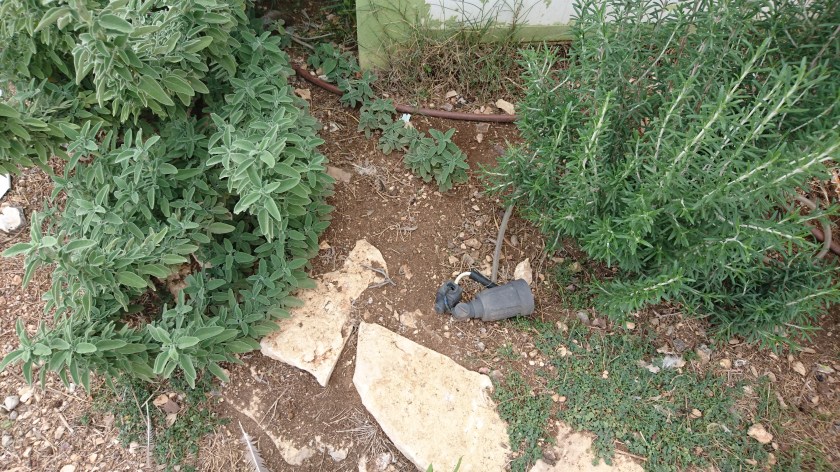
We finally have had some rain, and my little herb garden is really happy.

DSC_0411

Rosemary and sage – it has taken them a while to begin spreading, but now they are thriving.

DSC_0412

Hyssop – much better fresh than dried.

DSC_0413

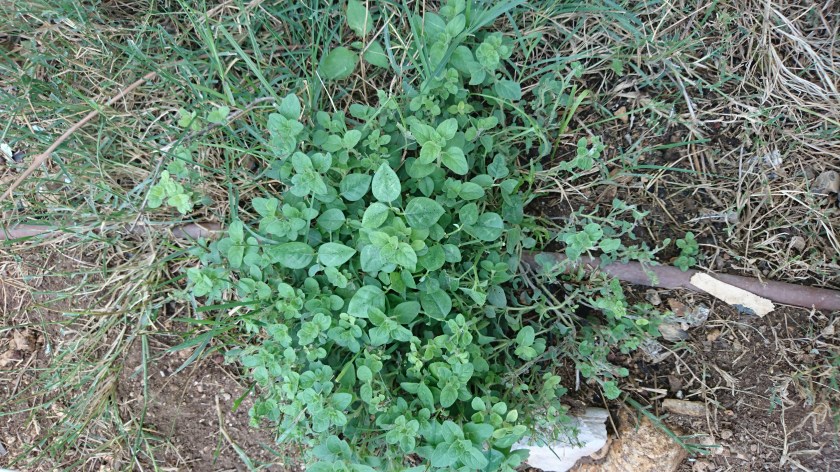
And mint. It’s really about to cover the whole patch!

No-Flour Oatmeal Cookies

DSC_0408

Nothing beats oatmeal cookies for a quick and easy snack, and these, a recent experiment, containing no flour or baking powder, are sure to become a favorite recipe. Word of caution: whenever I cook or bake, I’m basically winging it, so if you’re into exact measurements, sorry.

Go ahead and take:

1-1\2 cup of whole or rolled oats

1\2 cup dried, shredded, unsweetened coconut meat

A generous handful of raisins or dried cranberries

A dash of cinnamon

3 heaped tablespoonfuls of coconut oil (and, really, I must digress for a second, because I always feel like I can’t sing the praises of coconut oil enough. It’s delicious in all kinds of baked goods that I want to keep dairy-free, and makes lovely, crisp cookies and mouthwatering, flaky pie crust)

1\2 cup honey, date sugar, or whatever your preferred sweetener is

Mix everything thoroughly in a bowl; it’s best to knead with your hands.

Add 1-2 eggs, just enough to make a sticky mixture.

Take a wax-paper-lined cookie sheet. Pick up small portions of the cookie mixture (about egg-sized) and flatten them thoroughly with your two hands. Place the cookies on the sheet, evenly spaced, and pop into the oven for about 10-15 minutes on medium heat, just until the edges start to turn golden-brown. Do not overbake.

Enjoy with a nice hot cup of tea or cocoa, or with a glass of cold milk.

Top Cheap and Healthy Foods

Image result for beans and pulses

The more financially challenged a family is (I deliberately avoid using the word ‘poor’, as I believe poverty is as much a state of mind as of the pocket), the higher proportion of its budget is directed towards buying food. It makes sense – you can scrimp on entertainment, clothes, and all sorts of frills, but everyone needs to eat.

Some things are really no brainers when it comes to food choices: avoid prepackaged ready-to-eat stuff, soft drinks, and anything that isn’t food in its basic, natural state. But what if you really need to take this a step further? What foods are the best bargain, financially and health-wise?

Whole, dry pulses and grains – beans, lentils and peas of all kinds have provided a source of protein and nourished healthy populations all around the world for millennia. Combined with barley, rice, bulgur, corn, etc, these create dishes with an amino acid balance that needs only a little animal protein to make a well-rounded, low-cost diet. Learn how to prepare grains and pulses the right way by soaking and/or fermenting them.

You can get a lot of food out of a few bags of lentils, peas and beans, and when properly stored, they will keep almost indefinitely.

Oats – oats are very nutritious and make an excellent breakfast cereal, much better than any cold cereal you can buy. Get your oats whole and roll them yourself for longer storage and to get the most of their health benefits, and pre-soak for maximum digestibility.

Eggs – containing the most effectively bioavailable protein in human nutrition, eggs are filling, nourishing and incredibly versatile. They also have the advantage of being almost universally cheap. Of course, it’s a million times better to consume home-grown eggs with a healthier fatty acid profile and essential vitamins, but even a store-bought egg is a source of wholesome protein when you can ill afford anything else.

Organ meats – the general public has a refined taste when it comes to chicken and turkey, and prefers clean, white meat, breast being the most popular. Stuff like liver, hearts, stomachs, etc, falls by the wayside, and can often be got very cheaply – all the better for you! Organ meats contain plenty of iron and B12, and, of course, are an excellent source of animal protein. They can figure in a variety of soups, stews, casseroles and other dishes.

Vegetables – if you have a productive garden of your own, you’re in luck. If not, you still rely on what you buy – and though fresh vegetables are an essential in a healthy diet, they can be tricky on the budget. Prices go up and down according to season and other factors, and even when you get a really good deal on certain veggies, there’s only so much you can buy, and they won’t store forever. Learn to buy what is cheap and in season, rather than have a fixed idea of what you’re going to eat.

Plain dairy products – commercial dairy products are controversial, but if you don’t keep a dairy animal, plain unsweetened store-bought dairy products are still a good bet, and are usually affordable. Stick to whole milk, plain yogurt, naturally processed cheese and unsalted butter.

Canned goods – don’t automatically dismiss all that comes from a can. Some canned foods are very nutritious – such as canned tomatoes, beans, tuna, sardines, and more – and sometimes you can get very good deals on them, so keep your eyes open.

Whatever you do, don’t be tempted to make your meals more palatable or filling by the addition of refined sugar and highly processed vegetable oils. It will only mess up your blood sugar and satiety signals, and will ultimately make you hungrier.

Good luck in finding the best way to feed your family healthy, inexpensive food – I know this can be tricky, but the rewards are well worth it.