Spring, an exciting thing

I spent some time in the garden this morning (while I really should have been getting the house in order for Pesach, but never mind) and as you can see, the sage is in full bloom and the first beans are hopefully poking their heads up.

My tomato seedlings look a bit puny,but I hope they will improve as we get more sunlight hours.

Moreover, we already have our first two broodies of the season! So hoping for some chicks soon.

DSC_0121

Our neighbor’s dog has had a litter of puppies. My kids are delighted. Here you can see the mother dog looking on intently (but not at all in a hostile manner) as Israel is gently touching one of her babies.

The garden is coming to life!

apricotblossom

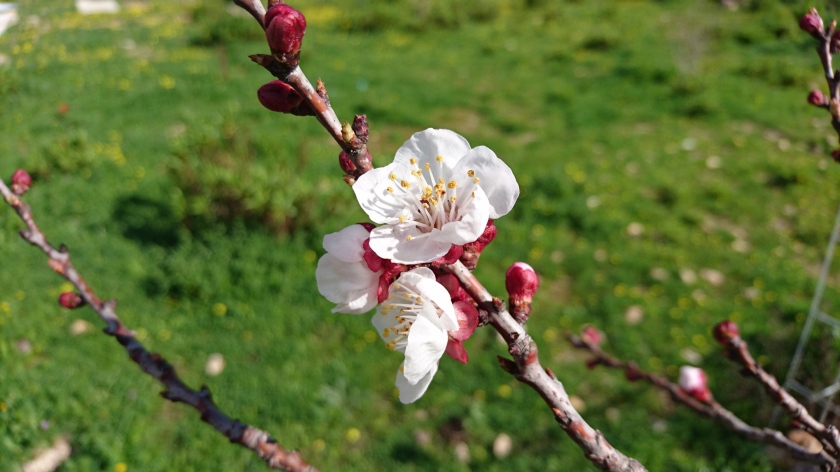
After a long time asleep, our trees are finally coming back to life! This week I was excited to see these beautiful snowy-white apricot blossoms. It is a young tree, only about 4-5 years old, but last year it bore excellent fruit. Other trees are stirring awake as well, the rosemary and sage are in bloom, and I have a bunch of tomato seedlings started indoors, from seeds we had never tried before, which promise especially large tomatoes (I don’t recall the exact name at the moment. It’s written on the packet). We ordered some and thought we might as well give it a go this year.

Overall, spring is here in earnest: a beautiful and exciting season, full to burst with juices of life but, alas, also of necessary chores such as getting the house in shape for Pesach, which prevents me from being outdoors as much as I would have liked in this glorious weather.

Melons

ripemelon

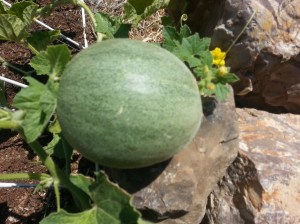
Above is one of the melons we grew this season. We only grew a couple of vines for the experiment, from seeds we saved a couple of years ago from an especially delicious specimen (which we bought at the store, by the way). We planted rather late and the melons sure took their time to ripen, but the wait was definitely worth it. The fruit was small, but very fragrant and sweet, since we allowed it to fully ripen on the vine before picking. I think I’m going to save seeds from this one too, to plant next year.

And, yes, in the background you can see some more hot peppers! The bounty sure doesn’t stop, and I’m going to make some more hot sauce soon.

You can read more about growing food from supermarket scraps here and here.

Growing food from supermarket scraps: update

Following my previous post on saving seeds from supermarket vegetables, I’ve decided to post an update. This week we have actually harvested the first tomatoes we’ve planted from seeds which came from a supermarket tomato. They sprouted and grew fast into little bushes which produced plenty of cherry tomatoes – which, though they didn’t exactly resemble the mother plant, were highly edible.

supermarketcherries

Our melons, too, are ripening fast, though we haven’t actually tasted one yet. These were grown from seeds we had saved from an especially delicious store-bought melon, and kept for about two years.

growingmelon

Bottom line: it is possible to save seeds from supermarket vegetables, though a reputable seed company will give you better reliability and variety, and higher germination rates.

Supermarket seeds: grow fresh food from store-bought produce

Not long ago, my husband brought home a packet of coriander (cilantro) seeds from the store. They are great in soups, stews and many other dishes. Then, by a stroke of inspiration, he said, “hey, why don’t we try to make them grow?”

I wasn’t sure the seeds were viable, but we had nothing to lose, right? I tried to plant a few and, while only about 30% germinated, it was alright by me as we had so many and bought them so cheaply. A tiny packet of planting seeds would have cost us a lot more (yes, even taking into account the low germination rate).

Below, you can see one of the new coriander plants grown from these seeds. The other plants in the photos – cherry tomatoes, peppers, melons and beans – were likewise grown from supermarket produce.

All these wonderful plants were grown from scraps most people toss into the garbage without a second thought. 

There’s no doubt it’s always better to purchase high-quality seeds from a reputable company. This way you know exactly what you’re getting and the germination rate, with proper handling, is high. Supermarket vegetables are often hybrids, so saving and planting seeds from them can have unpredictable results. But I still think supermarket-produce seeds deserve a chance. They are very cheap, readily available, and most likely you already have some on hand. There’s certainly no loss (except for a little work and some garden space) in trying, and it can be a fun experiment.

I haven’t actually collected a harvest from these supermarket-originated plants yet, but when I do, I plan to write a follow-up post and tell you whether the produce was any good and how much it resembled the mother plant.

Collecting dew: another step in water conservation

There’s a lot of talk about collecting rainwater as a frugal and ecology-conscious way to reduce water waste, and that’s certainly a good thing and a project we hope to take up in the future. I do have to say, though, that in Israel we don’t get any rain to speak of approximately from May to October. What we can do in the summer months, without any special equipment, is collect dew.

Our system is simple. We have a plastic awning at the entrance to our home, and when I step out early in the morning I can see puddles of water around it. By placing buckets in strategic locations, and then combining their contents, we get roughly a bucket of clean water every day this way. We primarily use it in the garden, but if we used cleaner containers I wouldn’t hesitate to drink it. It’s easy, useful, doesn’t cost anything and could turn out very important in a survival situation. I expect we could harvest a lot more water if we set up a water catchment system all around our roof, too.

The dew we collect is used daily to water our garden. Our peppers already look very promising!

I have noticed that dew is especially abundant when a cool, quiet night follows a hot day. We have many such nights during the summer, as we live up in the hills and usually experience very pleasant temperatures once the sun sets. In Israel, and in other countries with an arid climate, dew collection can be done on a larger scale and play an important role in water conservation.

Gardening in hot, dry climates

cherryseedlings

I am always filled with admiration whenever I read about homesteaders up north, with their short growing seasons, long winters, early frosts and heaps of snow many months out of a year. I sometimes feel like a softie for living in a country where the land never freezes and we get a light snow maybe once every winter.

However, gardening in a hot, dry climate – often with water shortages – comes with its own set of challenges. We don’t get any rain for approximately six months out of a year – usually from May to October. A heat wave, if not properly managed, can kill plants as surely as a hard frost. Here is what my husband and I do to make our gardening venture successful.

Plant what grows well locally. This is true for every climate, of course. I would really love, for example, to grow some bush berries – blackberries, raspberries, blueberries – but it’s simply too hot for them here to grow and produce well. On the other hand, grapes thrive in our climate and produce superb fruit, so we have six young vines which, we hope, will start yielding next year.

In my vegetable garden, the tomato, pepper and melon plants are enjoying the heat, and herbs such as mint, sage and rosemary grow prolifically year-round.

Conserve water. Even when water isn’t scarce, it is expensive, and we must carefully evaluate every drop we put into the garden. We have a drip irrigation system for our trees, and love it. It saves us work, conserves water and is very efficient. In our vegetable garden, mulching and planting in partially shaded areas (still, however, giving the plants enough sun to thrive) help save water as well.

Many local-growing trees – such as grapes, figs, pomegranates, almonds and olives – require very little watering once they are mature and have a well-developed root system. It’s wise to take this into account when choosing what to plant.

We don’t have a lawn – keeping one just wouldn’t be sustainable – and we steer clear of tropical plants that require extensive watering, such as hibiscus or bananas.

Stay indoors during the hottest hours. In the long, hot days of summer we do all our garden work – watering, weeding, pruning, and so on – in the early morning or in the evening, before or shortly after sunset. We put in new plants in the evening, just before nightfall, to give them the best chance to survive the trauma of transplantation. This way, we avoid the health hazards of sun exposure. When we do have to spend some time outside around midday, we minimize damage by applying sunscreen and wearing wide-brimmed hats.

Keep an emergency water source. In our area we frequently experience water shortages during the summer. You can imagine what I felt one morning, as I went out to water the garden and discovered that the hose just isn’t running. It was an extremely hot day and, if the water flow hadn’t returned in a few hours, all of our plants would have died. We are wiser now. We have a large fish tank outside (for eco-friendly mosquito control), and we can partially empty it for emergency watering if need arises.

Protect young plants. I start many plants from seed indoors, because it’s hard to keep the soil outside moist enough for the seeds to germinate. A few weeks ago, when I transplanted my tomato and pepper seedlings outside, I knew the harsh midday sun might kill them, so during the first days I shaded the plants from noon until about 3 P.M. I did it simply by putting a wire cage over the seedlings, then pulling an old sheet over the wire and holding it down with rocks. It worked well and the plants thrived. The need for this is eliminated once the plants get hardened up a bit, in about a week or so.

On the brighter side: We do have advantages we are thankful for. In our warm climate, we can garden practically year-round, even without a greenhouse. After our summer garden is done and the cool rainy season kicks in, I plan a fall garden of greens, garlic and brassicas. Any winter frosts we might have are usually light, and most likely I will be able to protect my small garden by covering the plants.

Bottom line: in gardening, like in so much else in life, it’s pays off to play to our strengths. Wherever you live, there are plants that grow well in your area and can provide you with a beautiful, functional, easy-to-keep garden.