Top Money Savers

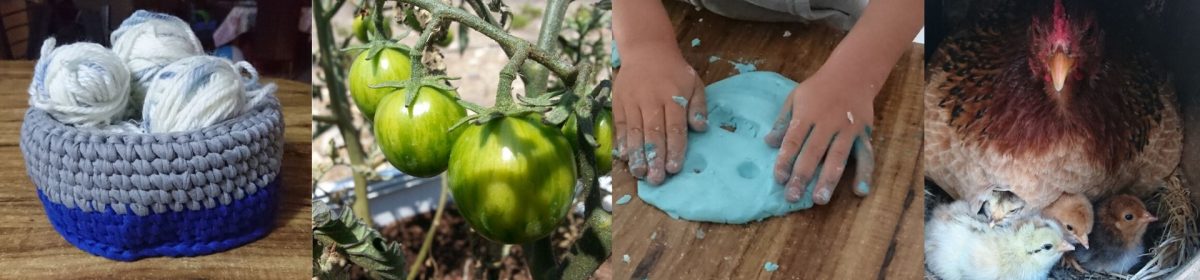
Above: growing some of your own food is excellent, but one must give it time

For those just venturing out into the field of frugality and a more self-sustainable lifestyle, here are some of the things I find most helpful:

1. Cooking from scratch. This really is a no-brainer. As a rule (though there might be exceptions), ingredients cost less than food. Flour is cheaper than bread, vegetables are cheaper (not to mention healthier!) than pre-packaged soup, and whole chickens are usually cheaper than chicken parts (and you can use the carcass for making rich soups and stocks). Dry beans are cheaper than canned ones. Oh and of course you get an even better return of your investment if you grow your own.

2. Making your own cleaning products. Apart from making and using my own soap, I also clean with a mixture of vinegar and water, and the windows, mirrors and taps come out squeaky clean. I will probably look into homemade replacements for fabric softener once my stock runs out.

3. Buying the best quality you can afford. This can be a double-edged sword, because it’s easy to get carried away. Recently, a neighbour of ours wanted to get “the best” antenna for his internet connection. Well, he got something that could probably transmit a signal from Mars. It was ridiculously expensive. We, on the other hand, did a careful evaluation and bought something adequate that does the job. On the other hand, it doesn’t pay off to buy something cheap and of low quality that will soon fall into disrepair.

4. Growing a vegetable garden and raising your own livestock. To this I would add gathering wild foods, or taking advantage of abandoned fruit trees. We do that every year.

A warning about raising livestock – it might take a lot of investment in time and money before these ventures begin to pay off, especially if you run into unexpected trouble. All the chicken owners we know have had their flock demolished by a fox, a mysterious disease or a stray dog at least once. Most goat owners lost does and/or kids because of a kidding that didn’t go as it should have, or else had to pay a large vet bill. These things are heart-wrenching and highly discouraging, apart from the cost.

5. Thrift shops and op shops. A very good idea and there isn’t much to add. There are enough people who have more clothes and things than they can ever need, want or use – and some of that inevitably trickles into thrift shops. I know, because I used to be one of those people! One of my favorite things to wear for yard work a sturdy denim skirt which was priced at a second-hand store at 3 shekels (less than a dollar). I have worn it at least 3 times a week these past two winters, and it’s perfect for working around the house and yard.

There are of course many other great ideas, such as stockpiling, mending and repairing things, revising your internet and phone bills (you might find out you’re actually paying for something you aren’t using, or paying full price when you are entitled to a discount), but time is too short to expand on each of those right now.

It seems to me this often boils down to a difference in attitude – would you rather do it yourself, or pay for the convenience of having someone else do it for you? There isn’t a right and wrong or black and white in this, it’s all a matter of priority in every specific area of your life.

What are your top money savers?

Harvesting and Using Carob

carob powder

Although it isn’t quite carob season yet, I’m already gearing up for it, especially now that I have a nice new food processor which is going to make turning the pods into powder a breeze! Those dark brown pods are just loaded with nutrients, they are naturally sweet, which means that when using them in baking you can use less added sugar, and best of all, they can be picked for free!

Read more about harvesting and using carob in my latest Mother Earth News post:

“Carob trees grow all over Israel (and in similar climates), and the dark brown pods can be picked in the summer. They keep extremely well, so you can pick a big bunch and then process it at your convenience. Make sure the pods you pick are ripe. They are supposed to look and feel dry and to come off easily from the tree. Choose the biggest, shiniest, healthiest-looking pods.”

Image above: carob powder in the process of making.

When you are just swamped

Image result for overwhelmed mother

You don’t remember when you’ve last had a night of uninterrupted sleep. You haven’t washed your hair in three weeks. Your friends send anxious messages asking if they’ve offended you somehow, because you haven’t returned their calls for ages. There’s a dark unrecognized sticky puddle under your fridge that you are going to tackle as soon as you have the opportunity – and you’ve been saying this for two months at least.

It seems you are on a treadmill, running and running and never getting anywhere.

Congratulations! You are a Mom to little ones.

This is often the picture of my day-to-day life. Sometimes toddlers can actually be even more intense than newborns. So it’s not like things don’t get done… but admittedly, very little gets done, and this little costs a major effort. The two things that get me through right now are the following:

1. Appreciate the small things. You’ve washed the dishes? Emptied the garbage can? Wiped the bathroom mirror? Great! So what if these aren’t major projects or fancy meals you can show off at the end of the day (because, you know, a sink can refill itself in the span of an hour around here). You still deserve to be appreciated for your efforts in keeping a clean, livable home.

2. Take advantage of the little snippets of time. If the baby is settled down on the rug with a couple of toys, you know you probably don’t have hours to rearrange your closet. But you do have five minutes to take the washing off the line or water the house plants.

And, finally, this too shall pass. From my experience babies get a lot better at entertaining themselves once they start crawling. And, in the more distant future, they might find the company of other people to be more exciting than their mother’s. So we had better enjoy this while it lasts.

Coping with chicken loss


There are few things more painful to me as a chicken owner than the untimely loss of one of the flock. Our chickens are all lovingly hand-raised, and it’s enough to drive one mad when a sneaky predator gets past one’s defenses, or when a disease you can do little about makes its rounds in the coop.

Still, I guess that this knowledge, this acceptance of the fact that there will be some losses, is what enables us to bounce back and keep raising chickens.

From my latest Mother Earth News post:

“Losing animals is an inevitable part of raising them. No matter how careful and diligent you are, at some point you will have to deal with saying goodbye – and not just due to old age, either – to some members of your flock or herd. This is heartbreaking even if your animals were meant to end up as dinner at some point. So much more if you treat your livestock somewhat like pets. I remember one time years ago, crying and telling my husband I’d rather give it all up and never keep anything living but plants again.”

Have you brushed up on your survival skills?

Once in a while it strikes me how singularly fortunate we are compared to past generations: so many of the things we take for granted would have been unthinkable luxury, or even science fiction, a mere 20 or 30 years ago. Truly we live in a time of plenty… yet on the other hand, the future feels so precarious that every time I watch the news (and believe me, this doesn’t happen often), I feel like checking that my pantry is full and that we have a good supply of drinking water in case anything happens. I wish we were more self-sufficient when it comes to food and energy.

Read more in my latest Mother Earth News post:

“It all seems to be asking the following question: if the world is turned upside down and we can no longer rely on the fancy tools of modern man, do we stand a chance?

Well, do we? Honest introspection leads me, and many others, to conclude that we are less resourceful, resilient and capable than our forefathers. We do less things with our hands. We walk less on our feet. We don’t exercise our minds as much, because the convenience of the Internet is just too alluring. Many times, when struggling to remember a piece of information, I open up Wikipedia at once rather than strain my memory.”

Wild Children is here!

coverfront

The big day is here! Wild Children, my newest fiction release, is now up and available for purchase in print and on Kindle.

The novel is set in a dystopian world where reproduction is strictly controlled and transgressions punished. Those who are born without a permit grow up on the fringes of society and are cast out into the wild abandoned lands at the age of twelve.

A boy is born despite a law that states he has no right to live. His mother loves him, though he puts her entire family in danger. Circumstances force her to give up her son, but nothing can tear the love out of a mother’s heart.

The book should appear to lovers of post-apocalyptic fiction, pioneer life, and survival in the wild.

Also, my publisher is still looking to give away a few review copies (print+digital in the US, digital only in the rest of the world), so drop me a line through the contact form or in the comments if you are interested.

What is learning?

Above: images of spontaneous learning which takes place around here on a daily basis.

Some time ago, I was really pleased to come across this article, which speaks about a new research showing that early academic achievements aren’t necessarily beneficial to a child’s learning process in the long run. Actually, the same principle has been discussed 25 years ago in the excellent book Better Late Than Early.

Not long ago, we were at a social gathering with another family. Their children, aged 5 and 3, dazzled us all with a display of their mathematical and foreign language skills. Turns out that such things are now taught in private preschools. To me, however, it sounded more like parroting than actual learning, encouraged for the parents’ bragging rights rather than for the children themselves.

Of course it’s possible to argue that each child learns at a different pace, and we’ve all heard of prodigies who have learned to play the piano at the age of 3, wrote advanced poetry by the age of 5, etc. However, here we are talking about a roomful of 3-year-olds who are all sat down in a circle and drilled until they memorize counting until 30, or the names of the days in the week in English (we’re talking about children whose mother tongue is Hebrew, of course).

Naturally the daily drill is sugar-coated by fun, games, colorful flashcards and lots of positive reinforcement (clap hands! Clap hands! What clever little children!). However, I believe putting an emphasis on this kind of achievement hinders the child-led learning, free thinking and free play which are so important for young children’s physical and mental development. Furthermore, the children are being robbed of the delight of learning for its own sake, of the thrill of discovery. They do what they do for rewards, attention, peer competition or in order to please their parents and teachers.

Some will say that these are musings of a lazy parent who is unwilling to teach her children anything. I disagree. Encouraging children to memorize facts and rewarding them for it with sweets or stickers is easier than promoting their independent efforts to explore what interests them, let alone finding time to answer their many questions about life and the world we live in.