The moment I realized food can disappear

Photo by Patrick Winzler on Pexels.com

When I was a very young child during the Perestroika, I once walked into a grocery store with my mom. The Soviet Union was on the brink of collapse, and the shelves were practically empty. I think it was then that I realized basic things we take for granted, like food in stores, can disappear.

Fast forward to today, I appreciate my well-stocked pantry full of canned goods, dried legumes and grains, hygiene products, toilet paper, candles, and basic medical supplies. Although, thankfully, we haven’t faced a full-blown collapse scenario yet, that stockpile really came in handy during times like COVID lockdowns and shortages caused by war.

Stocking up is also a great option for more trivial situations, like finding a really great deal on canned mushrooms and buying a total of 36 cans. Or when you predict prices are going to soar and take advantage of the last days or weeks when some products are relatively affordable.

Another big bonus of being well-stocked is not having to go shopping as often. When I run to the supermarket, it’s typically because I’m out of milk or other perishables, not dish soap, coffee, or shampoo.

I also have nice stashes of items that aren’t survival-oriented per se, but come in really useful, like printer paper, craft supplies, glue, and (guilty!) yarn. Keeping ourselves, not to mention fidgety kids, entertained during a shelter-in-place scenario is a challenge, and it’s nice to know you can always find something creative to do.

If you have animals, you’ll also want to make sure you have enough food for your furry or feathery friends. I get slightly anxious when the sack of chicken feed runs low, even though technically I know chickens are omnivores and could survive on leftovers for a few days.

The main thing that helps me keep my stockpile organized is the FIFO rule: first in, first out. I make sure to move the older packages to the front so I use them first, even if it means rearranging a whole shelf.

What about you? Do you stockpile, and what do you think you should keep more/less of around?

Are we prepared to survive in a cashless society?

Photo by Pixabay on Pexels.com

Recently, I’ve read about the Israeli government pushing to cancel 200-shekel bills, as part of a long-term drift toward a 100% cashless future. I was aware that large-scale transactions in cash have been limited for some time now, but until this moment, I kind of overlooked the final goal of abolishing cash altogether.

This is an alarming trend.

Going cashless will hurt the most vulnerable, like seniors and technologically challenged people. Or think about a woman in an abusive marriage, who can’t access a bank account or credit cards. Those little bits of cash she manages to stash away may be her only path toward an emergency escape.

When you have no access to physical money, you can instantly become completely destitute if the government decides to freeze your account for any reason, like protesting mandatory vaccination. Abolishing cash means stripping away a large part of our independence, freedom, and privacy.

In Israel, the official pretext for limiting cash is cracking down on criminal groups. But a capable government should have ways of fighting organized crime without cutting into the rights and freedoms of law-abiding citizens.

“Stash up cash” is common preparedness advice. If there’s a natural disaster, war, or a massive cyber attack, if the power or WiFi are out and people can’t access banks or use their credit cards, physical money may be the only way to buy food and other essentials. In a country like Israel, with so much instability, canceling cash is an extremely short-sighted move.

All of this makes me think: how can you prepare for an emergency situation or a long-term crisis, with cash being no longer available?

Precious metals like silver and gold can be a huge advantage in this situation, since they’ve kept their intrinsic value for thousands of years. Foreign currencies may likewise be useful. [As a side note, governments that want to chip away at people’s freedoms may also crack down on the possession of precious metals and other valuables.]

In a more long-term scenario, some societies can band together and establish alternative currencies. I won’t mention crypto, because again, I’m talking about situations where people are offline or off-grid.

Finally, let’s not dismiss the power of barter. Fresh produce, non-perishables, and various supplies can all be bartered, as can skills. People who are good with their hands may have many options of exchanging services for foods and other necessities.

During WWII, my grandmother survived by unraveling old wool garments people brought her and knitting or crocheting new items out of the salvaged yarn. She would accept food as payment. I hope none of us ever have to face a similar crisis, but it’s still wise to invest in skills and resources that might help us survive tough times.

***

P.S.: Tomorrow evening marks the start of a new year in the Jewish calendar. I wish all my Jewish followers Shana Tova and hope for a better, more peaceful year ahead.

Is stability still possible?

financial sustainability

These days, my heart is just breaking. It’s breaking for all the people who have been separated from their families as the skies closed. For all the people who lost their businesses. For the older folks who were active and hardy and kept in good shape, mentally and physically, by going to exercise classes, swimming, and traveling, and are now stuck in their homes, deteriorating by the day and unbearably alone if they have no nuclear family living with them.

It’s heartbreaking that children will have to start school next year burdened with restrictions that are far too heavy for their age, and other children who will be left out without adequate resources for at-home learning.

It seems we are saying a reluctant goodbye to job security, financial security, pension security, any-kind-of-security as stocks are plummeting and pension funds losing value as we speak. I am heartbroken for all the people who lived wisely and made all the right choices, and still find themselves financially (among other ways) vulnerable today.

This was also the core of my latest Mother Earth News post.

“What does this mean? I won’t say anything radical like “money is worthless now” or “ditch the money economy.” I’m a firm believer in personal finances, putting money aside, and planning for the future. 

But I also believe that the coronavirus crisis has shown us that stability, security, and wellbeing depend on much more than money. “

Now is the time to ask ourselves: how self-reliant are we? How prepared are we for another event of extended lockdown and empty store shelves? Do we have barterable skills we can use in lieu of money if the latter loses some of its value? Do we belong to a supportive community of people who can be counted on to help each other out when the you-know-what hits the fan and starts flying in all directions?

Read the rest here.


Crocheting through tough times

Lately, I have found myself putting things off: a visit to the bank, the doctor, the post office… “I don’t have to do it today. There’s time. Maybe in a week or two…”

Then I caught myself: why? What is going to happen in a week or two? Will the coronavirus go away? Will it be safer to go out and about?

Not likely. The you-know-what has hit the fan and is now flying in all directions. I’m afraid the world as we used to know it is no more.

A few days ago, we had a huge local demonstration of small business owners – restaurant owners, tour guides, dance instructors – who were all hit hard by COVID and now demand that the government gives them a financial boost to keep their businesses afloat.

I understand their plight, I really do. I know what it’s like to be financially desperate. However, I believe that no amount of handouts will enable businesses to operate if they don’t adapt to the new situation (Zoom lessons, takeout instead of sit-down meals, etc). And it often sounds like that: people don’t want to adapt. They want things to go back to normal, refusing to admit that normal has flown out of the window.

Even if we are lucky and the coronavirus disappears (which doesn’t seem likely), the impact of the past months has already hurled the world into a deep recession with a wide ripple effect. To get through it, we must be resilient, resourceful, and flexible.

In the meantime, there’s yarn: the best escape whenever things are stressful.

DSC_0751

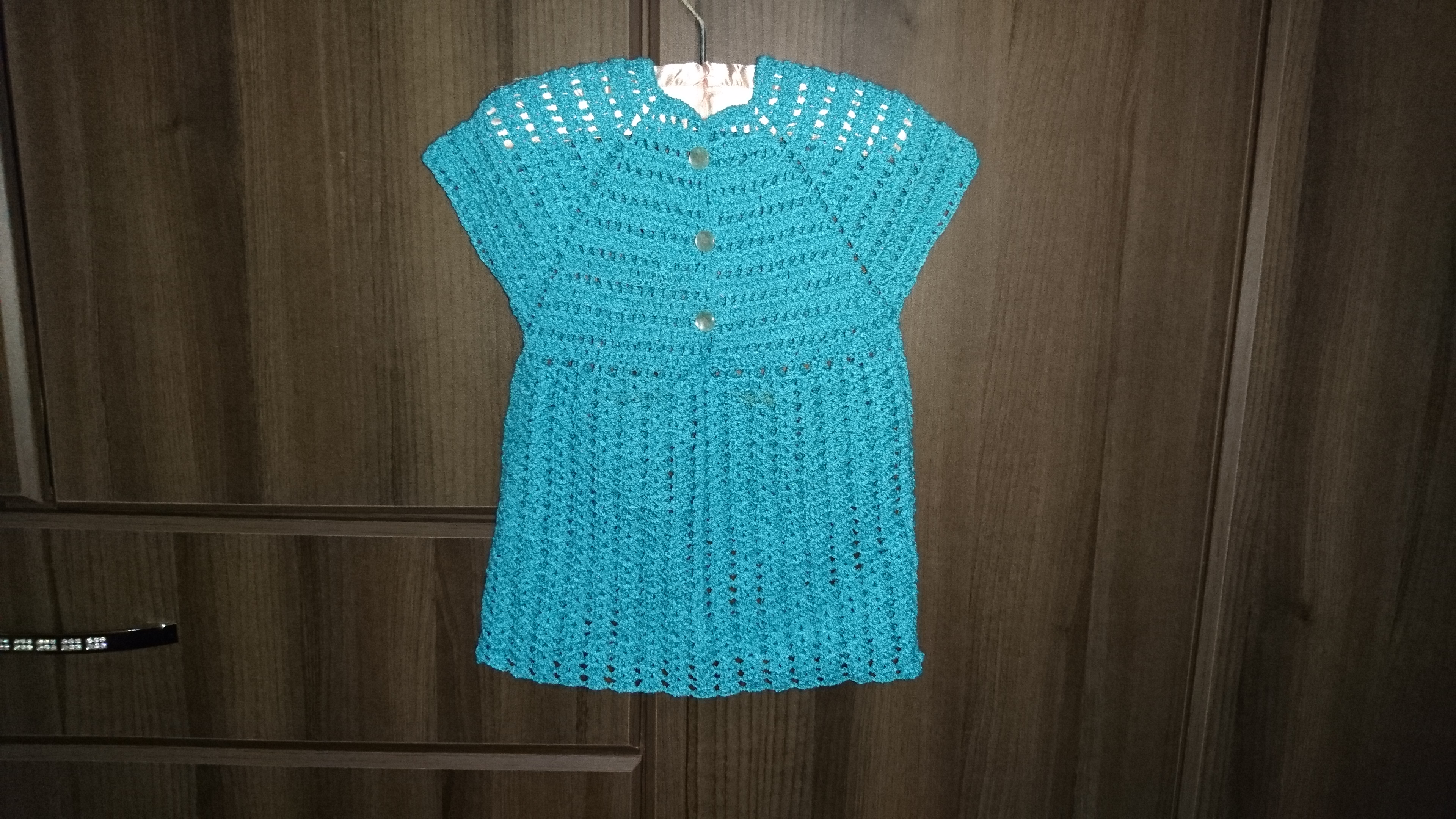
My latest make, a little crochet tunic for Hadassah. It was meant to be a dress, but I ran out of yarn and, as it was one of the oddments of a vintage stash, had no way to buy more.

DSC_0750

Nevertheless, I like it, and so does the recipient. I put some vintage buttons at the back. Love the open raglan top – such a useful design.

I hope you are all using your favorite wholesome destressing outlet, whether it involves gardening, fabric and yarn, baking, or any other thing you can do away from dangerous crowds.

Power Outage

Today I got an early start in the morning and was sitting in peace and quiet in front of my laptop, working on a project for a client, when the power suddenly went out. Since I have a problem with my laptop battery that I didn’t make a priority to fix, the screen instantly went black, not allowing me to save my work.

A call to the electric company let me know that there was an unexpected accident and the power supply would return in 3-4 hours. Thoroughly bummed out, I went ahead to straighten up the kitchen in preparation for breakfast. 

The power eventually returned and I completed my project and sent it off, but this was a throwback to the good ‘ol days when we lived in a place where this could happen any moment, and for much longer. I remember 72 hours without power, during which we did our best to eat everything that spoils and I was careful not to open my freezer so that it wouldn’t thaw.

I love living in a place with a steady electricity supply, but today’s incident reminded me how much we have to improve in preparing for emergencies.

In our old home, we took care to keep our mobile phone power banks charged and our freezer always stocked with ice bottles so that it would thaw more slowly. A laptop battery would most certainly be fixed earlier. There was a communal backup generator we could fuel and hook up to if need be.

And, from electricity my thoughts jumped to preparedness in general, which is something we really should gear up for again. A life of convenience lulls you into a sense of security which may, unfortunately, be false, as the covid-19 pandemic showed us all, turning our world upside down and giving it a thorough shake that totally messed it up.

***

From Your Own Hands: Self-Reliant Projects for Independent Living

A radical homesteader from Connecticut who prefers to call himself Xero says, “Consumerism to a large degree only exists because it profits off of our own loss of skills. Over the last hundred or so years people have undergone what I see as a horrifying loss of survival skills.

Without these skills, without the ability to survive on one’s own, one must depend on already manufactured, and continuously manufactured goods and services to stay alive. These goods and services cost money. In order to get said money, one must submit to paid labor. Sometimes one can find labor that is fun and fulfilling, but that doesn’t represent the majority of folks, especially on a global scale.” 

Hunkering down

IMG_20200308_211324_347

I am honored to say that my latest Mother Earth News post has been included in the magazine’s online newsletter. If anything I have to say is even a bit helpful to a single person across the world at this tough time, it is ample reward for me. 

It appears that the you-know-what has really hit the fan now. When I wrote my post in the link above, the restrictions imposed by our government were not yet as stringent as they are at this moment. Right now, people around here are permitted to leave their houses only for absolute necessities (buying food and hygiene products, medical treatment, etc) or for a short walk with their dogs. There are strict social distancing rules and it only looks like the restrictions will become harsher still in the very near future. Tens of thousands of people who live alone will be celebrating Passover in isolation – a heartbreaking but necessary measure.

Personally we are hunkering down right now and operating on the assumption that everyone on the street is a covid carrier, just in case. There has been an alarmingly high number of confirmed cases in our area, and some people in our family are at an increased risk due to respiratory issues, so we definitely take every measure to protect ourselves.

The worst part of it all is the uncertainty. Although we fully approve of the government-mandated quarantine, and believe it should be enforced even more strictly than it is now, there’s no knowing whether it will be enough. This is a new virus which is, apparently, remarkably contagious and adaptable. Several studies point to the conclusion that the incubation period of the covid-19 may be a lot longer than previously supposed. So if the quarantine is lifted too soon we might see a new wave of contagion.

I think that right now we are all keenly feeling our vulnerability. At the start of the social distancing measures, Prime Minister Netanyahu promised there would be no food shortages. Well, there are. Yes, you can still go into a supermarket and fill a cart, but many products are in insufficient supply, such as fresh produce, eggs, and milk. It is natural and very predictable.

I can tell you I am going to make a lot more effort with my vegetable garden this spring and summer – now is a great time to start a garden and I know a lot more people are giving it a try. I also plan to hatch a few extra chicks if possible this season. I would like a couple more laying hens myself, and I predict backyard chickens, other poultry, and even goats will become a lot more popular in smaller towns.

My opinion is that many people are beginning to internalize that the lifestyle of universal abundance and cheap disposable goods might not be as stable and reliable as we have grown to take for granted. Many have remarked to me how lucky I am, working remotely from home as a fiction editor and writer, that my employment opportunities have been largely unaffected by the covid pandemic. Yes, I am grateful, but people should also keep in mind – I know I do – that money may very well lose some of its value in times of crisis. Stocks are falling. Many people are experiencing devastating losses in their retirement funds that have been tied up in stocks – imagine saving up and being financially prudent all your life, only to have everything collapse because of external circumstances no one can control! It’s a huge wake-up call for all of us to examine our lifestyle and priorities.

There is no better time to invest in building skills and resources that will be valuable regardless of what happens to the money economy – growing food, foraging, upcycling, various repairs and handiwork, and a robust barter and small local business system that will be much more reliable in times of crisis.

For the time being, we are doing our best to keep safe (and sane!). I wonder what kind of world we will all emerge to once we can leave our homes again. I suspect there will be substantial changes and it is better to be prepared.

Unseasonably warm crochet cardigan

DSC_0550

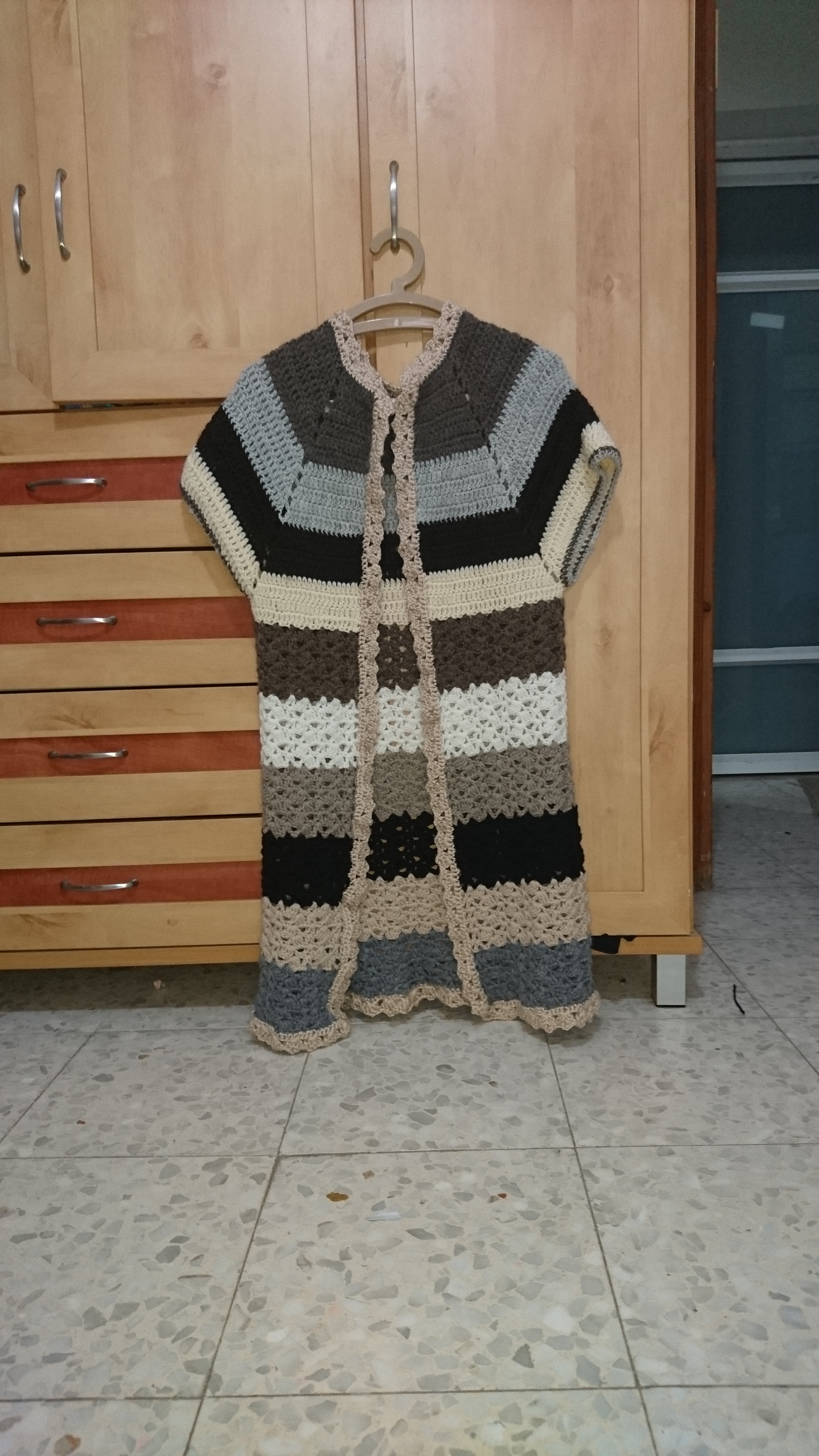
This was my last winter project for this year – a top down raglan cardigan made from alpaca yarn. I love the satisfaction of throwing something over me that feels almost like a blanket – but I suppose I will get to enjoy it next season, as it’s already getting too warm here for stuff like that. I’ll probably attach a couple of nice big buttons.

Now on to summer projects – lacy tops, table runners, baskets, bags, and more. Always more ideas than time!

On another note, we are doing OK in the midst of all the craziness that is taking over the world. We are, of course, privileged to have a house with a private yard and a nice balcony with a beautiful view, so despite the lockdown we never really feel confined. There’s always plenty of outdoor work going on, whether it’s hanging out the washing, weeding, or mucking up the chicken coop.

DSC_0541

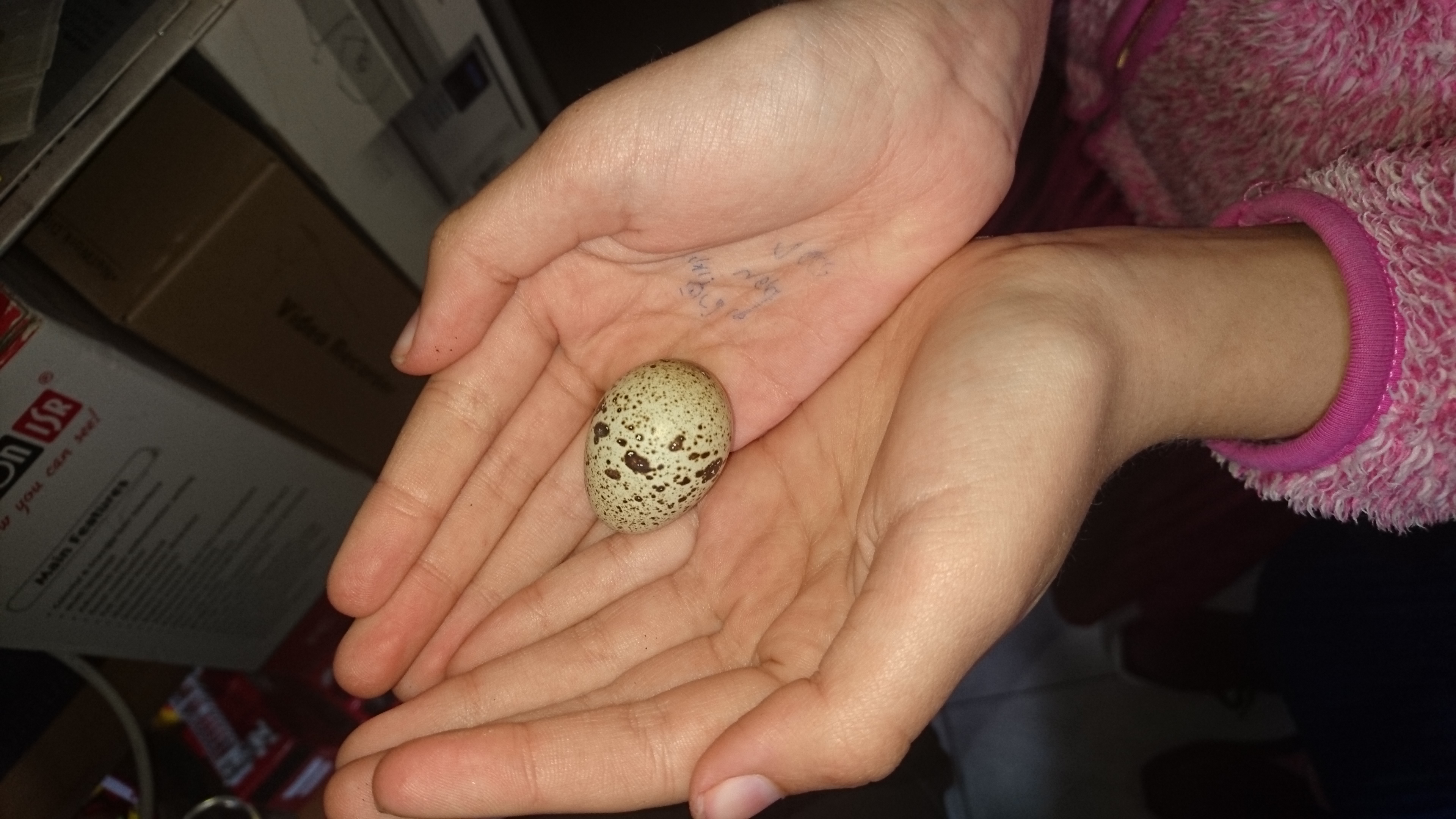
One of our recent projects has been raising a pair of Japanese quail Shira got for her birthday. The female just laid her first egg a couple of days ago. Japanese quail rarely go broody, but we’ll probably try to incubate once we gather enough eggs.

Stay safe, everyone. These are scary times we live in, but I have never felt so connected to friends all over the world. We are truly all in this together, and I am optimistic that it shall pass and we’ll emerge on the other side stronger and more resilient than before.