Hold On to Your Kids: book review


Hold On To Your Kids: Why Parents Need To Matter More Than Peers is a book with an important message (the headline itself, I think, speaks volumes!).

By Briana LeClaire:

“The overarching theme of the book is ATTACHMENT. To whom are your children more attached? Are they attached to you, their parents, and other adults? Or are they attached to their peers? To whom do they look for guidance? Whose star have they hitched their little wagons to?”

“My son is so independent,” a neighbor proudly told me once, “he has so many friends! As soon as he gets back home, after lunch, his friends come to visit him or he visits them, and he plays together with them until it’s time for supper. He hardly needs me at all!” Want to guess how old the boy was? Only 4. And the situation described above was seen by his mother as something most natural and desirable.

There is a perspective of my own I would like to add: while the authors of the book admit that attachment between parents and children, especially young children, is vitally important, and that early enrollment in daycare and preschool is more likely to make children peer-oriented (that is, dependent upon their friends in the development of social connections, goals, values, morals, language and habits), they also say that the most obvious (and, they confess, most desirable) solution – that of young children staying at home, usually with their mothers, is in most cases an impractical, outdated measure.

Their suggested solution is creating an attachment between the child and the “parent substitute” – babysitter, daycare worker, teacher, etc. While, of course, an invested and caring daycare worker is better than a detached, unaware one, I do not think a parent-child-like connection between the child and the care provider is possible or even healthy. There are too many children per caretaker and, above all, nobody can love your child like you do. Also, there is absolutely no guarantee the caretaker/teacher passes on values and messages you approve.

I vividly remember a 3-year-old niece who kept talking to us about her preschool teacher, whose name was Ruthie. That child was evidently engrossed by Ruthie and talked about her a lot more often than she mentioned her parents. Perhaps it is better that the child was so connected to her teacher, rather than her peers, but the fact remains that Ruthie (however capable of creating the attachment) did not care about the child in the same way. It was not her child, after all. At the end of the year, the child and her teacher would part, never to meet again. Is it really good for a child to give her heart to a teacher in such a way, when we know it is to be only a temporary relationship?

Even grandparents, aunts and uncles (the relationship with whom is permanent) are not supposed to be more than auxiliary figures in child-rearing. They can provide help, plenty of help, but the biggest chunk of the job of child-rearing (in time as well as authority) should belong to the parents.

Rather than say it’s impractical for young children to remain under the care of their mothers, it is better to stress the importance of such a measure, and to encourage families to stick to it as much as possible. You know how it works: when you are convinced something is truly important, and that there is really no equally good substitute, you will move mountains to make it happen. Of course, for some parents it will not be possible to keep their child at home, and then damage-minimizing tactics, as described in this book, are in order.

While I do not think mothers at home should be directly funded by the government, I do believe that  significant tax reduction for fathers in single-income families would be a fair measure. Let people keep a larger share of their own fairly earned money and provide for their family. It would ultimately save the government a lot of money on all sorts of programs that fight violence, bullying in schools, teen pregnancy and drug abuse, and other ailments of our society.

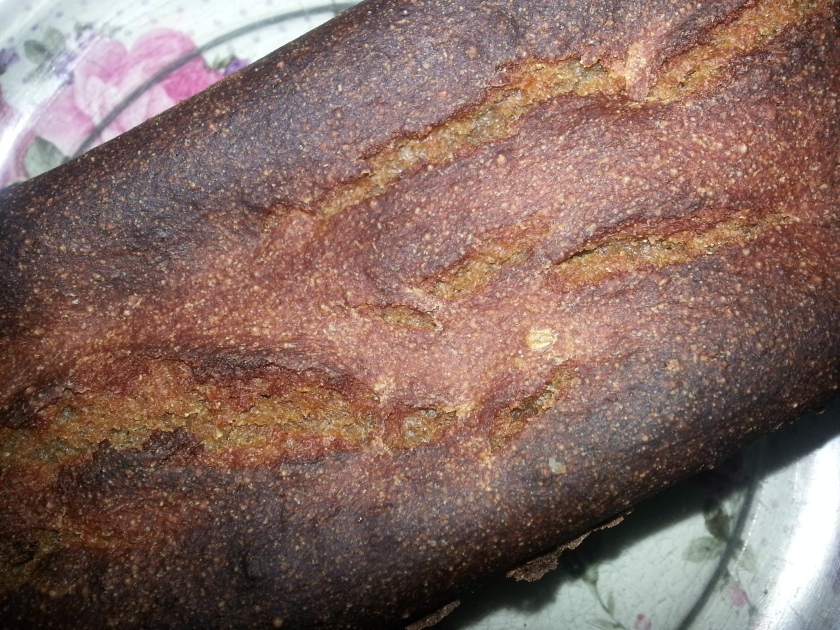
My first sourdough loaf

20161226_095511

I have wanted to try making sourdough bread for a long time, and last week I’ve finally taken the plunge. I used simple instructions for sourdough starter that called for nothing but flour and water, and was a little skeptical at first, leaping with joy when I saw the first foamy bubbles – hurray! It’s working! I’ve captured myself some real wild yeast.

By day five, my starter acquired a prominent yeasty smell and I decided it’s time to dive into baking. I used whole rye flour, opting for sticky dough that is stirred rather than kneaded. After proofing the bread for about 8 hours in a warm kitchen, I eased it into English cake tins and let it stand a couple hours more before popping it into the oven.

Unfortunately, I left rather too much room for rising, forgetting that rye bread, especially sourdough bread, does not rise that much. As a result I got flat and, let’s face it, sorry-looking loaves, but the taste was very satisfying – full, complex, a little sour, with a very pleasant chewy texture. It was delicious warm, covered with melting butter, and was definitely worth the effort and waiting.

I saved a bit of the dough for next time’s starter and froze it, because bread-making happens somewhat sporadically around here. I hope next time I get a loaf that is good-looking as well as great-tasting.

A friend of mine, who makes delicious sourdough bread in the way of a little kitchen business, tells me that her secret to great-tasting bread is in the flour: she buys whole rye and spelt in bulk, soaks and sprouts the grains, then oven-dries the grains and only then grounds them into flour which she uses for bread-making. For practical reasons (my oven is tiny) I can’t do the same, but I still think I did pretty well for a first-timer. I’m excited about this venture into the world of traditional slow-rising breads.

Fenugreek: A WonderHerb

Hilbe, a spread/dip made of Fenugreek seeds or leaves, is a staple of Yemenite Jewish cuisine, and is usually eaten at one or more of the Shabbat meals. It goes amazingly with pita bread. The recipes vary, and can include garlic, lemon juice, and various herbs and spices.

Fenugreek itself has some wonderful nutritional benefits, being rich in calcium and magnesium – and also some very special health properties. It has a beneficial effect on blood sugar regulation and is known as a milk-supply booster for nursing mothers. I had taken Fenugreek capsules in the past, when I reckoned I needed to build up my supply, and I reckon they helped a bit, but nothing very dramatic. However, after a Shabbat of enjoying homemade hilbe spread in very moderate amounts, I suddenly felt a very prominent increase in my milk supply, something I didn’t even think of or aim for (since my baby was almost one year old and I figured we have a pretty steady supply-demand thing going). I suppose this effect was due to pre-soaking the Fenugreek seeds for a couple of days, thus allowing the special plant components to activate.

I think that’s really worth noting, as capsules are so much more expensive – and, apparently, less effective – than the real thing. I’m not sure you can buy Fenugreek everywhere, though. In Israel, the seeds are available in health food stores, and the leaves can be found at certain markets in season.

Here is the recipe we used:

– about 1\3 cup dry Fenugreek seeds. Place in a bowl of water for 48 hours, changing the water every day. The seeds will swell considerably.
– a bunch of fresh coriander, about 3\4 cup shredded
– 2 big cloves of fresh garlic
– juice of one lemon

– salt and pepper to taste

Once the Fenugreek seeds are soaked and drained, place everything in your food processor. Blend thoroughly and add water as needed, to reach desired consistency (thicker/thinner, however you like it). Once finished, it should have a refreshing characteristic smell, and look bright green, sort of like this:
Image taken from here.

A word of warning: hilbe has a dominant smell; some like it, some don’t mind, some wish they could do without it. The smell can later come out in your sweat, or even in your baby’s diaper. The Fenugreek capsules don’t smell when you take them, but the smell comes out with a vengeance later through all your pores.

Recently I’ve decided to try growing some fenugreek from seed, to see if the fresh leaves are as good or better as the dried ones we use in various dishes. So far it’s proving very easy to grow – I just made a shallow trench in one of the garden beds, threw in some dry Fenugreek seeds from the store, and almost all of them sprouted. Once the leaves are big enough to use I’ll be sure to let you know how it has turned out.

Nourishing Traditions and breastfeeding

Image result for nourishing traditions

Disclaimer: this post focuses only on the section on infant feeding in “Nourishing Traditions”, which is just a small part of the book.

As I approached the section on infant feeding in Nourishing Traditions, I was looking forward to a detailed survey of breastfeeding practices in traditional cultures, including perhaps a comprehensive list of foods which are thought to be beneficial for nursing mothers, plus detailed suggestions of milk-boosting diets, meals, beverages etc.

I was disappointed. At the beginning of the chapter, the author says that the importance of breastfeeding your baby “cannot be overemphasized.” However, I felt that the rest of the chapter contradicts this statement by concentrating mostly on recipes for homemade baby formulas, and by providing some advice which is outright detrimental to successful breastfeeding.

Are homemade “natural” formulas better than commercial formulas? Perhaps. Let’s even assume so. But no formula will ever come close to breastfeeding, either in nutritional content or otherwise. Mother’s milk is the food God designed for babies; cow’s milk is the food God designed for calves. It’s as simple as that. Cows’ or goats’ milk protein is unlike the protein in mother’s milk and is less well suited to human infants. Yes, it is possible for a baby to grow up just fine on formula, but on all points – nutritious, emotional and immunological benefits, protection from exogenous diseases, convenience and price – the score of breastfeeding is way higher. Therefore, as I see it, it’s definitely worthwhile to do everything possible to ensure that the baby is breastfed.

The author flatly and unequivocally states that the optimal duration of breastfeeding is “six months to a year”. This essentially means that some babies should be completely weaned as early as six months of age – which is just plain wrong, both according to the current position of the WHO, which states that

Exclusive breastfeeding is recommended up to 6 months of age, with continued breastfeeding along with appropriate complementary foods up to two years of age or beyond”

– and according to wisdom of most traditional cultures. As a matter of fact, I find it astonishing that a book which takes such an obvious stance of learning from traditions of various people around the world blatantly ignores the fact that in traditional cultures, breastfeeding normally continues well beyond one year and certainly beyond six months! In the Jewish tradition, the standard length of breastfeeding is two years.

The statement, “remember that babies should be chubby” (page 601) really grated on my nerves. Is there no room for diversity, no role for heredity to play in the baby’s body build? This expectation from two tall lean parents to produce a fat little butterball baby, makes mothers anxious about their milk supply when in fact they have plenty, and causes them to rush to supplement with formulas and artificially fatten up their babies.

When I came to the final page, titled “Tips for Successful Breastfeeding”, I was dismayed to find much of the same counter-productive advice you often hear from doctors whose knowledge on breastfeeding comes close to zero. Yes, good nutrition and proper rest play an important role in maintaining adequate milk supply. But the author neglects to mention that the most important factor in boosting milk supply is nursing on demand, which usually means often. Again, where is the analysis of traditional practices such as attachment parenting, baby-wearing and co-sleeping, which all encourage frequent nursing?

It isn’t that I think everyone should go the attachment parenting way. Parents are perfectly within their right to offer pacifiers and insist that the baby should sleep in their own room from day one. But if we’re talking about optimizing the chances of successful breastfeeding, people should make their choices with open eyes.

How about this: “If you have any qualms or fears about not having enough milk, assemble the ingredients for homemade formula…” not “check if you really have cause for concern”; not “contact a lactation consultant and/or a La Leche League representative”, not “nurse more often.” Prepare to give formula!! According to the author, “having the supplies on hand can be enough to give you the peace of mind that allows your milk to keep flowing”. Well, you know what? This very strongly reminds me of the well-meaning doctors and nurses who tried to persuade us to keep a can of formula at home, “just in case”. Does having formula around help to keep the milk flowing? I’m sorry, but I’m not buying that.

 Supplementing may be necessary sometimes, but it is just about one of the most critical steps towards diminishing milk supply.

And this: “Lack of adequate milk supply sometimes does occur, especially as baby grows and his appetite increases.”  Yes, sometimes during a growth spurt it may seem as though the milk supply is inadequate. However, by nursing more often, eating well and resting, milk supply can usually be increased. Mother and baby are hormonally tuned in to one another. Infant suckling stimulates milk supply. Lack of adequate supply doesn’t just “occur” (it’s maddening that a serious author implies that a basic bodily function like lactation just stops or decreases out of the blue). It has reasons which can often be traced to things like abrupt night weaning, introduction of solids, spending time away from your baby, giving a pacifier, a new pregnancy, etc.

I’m not saying that mothers who couldn’t breastfeed, for whatever reason, should feel guilty. But I do think that authors should feel guilty if their advice might have undermined breastfeeding for thousands of women.

My final conclusion? Eat the apple and spit out the seeds. “Nourishing Traditions” is a fascinating book with lots of insightful material and valuable advice, and it is kept at a place of honor on my shelf and often referred to. However, on this matter of breastfeeding I quite plainly disagree with a lot of what the author has to say.
Myrtle berry jam

Following my previous post on myrtle’s culinary uses, I have been experimenting with myrtle leaves and berries some more. I guess I’m just really tickled that there is a berry which grows well and prolifically in our area – and it’s free for picking!

I have tried to search online for myrtle berry jam recipes but couldn’t find anything definite, except that on one site I’ve read the berries are used in mixed fruit jam, generally along with apple. I cooked up a small experimental batch with about 1:1 ratio of myrtle berries and apples, sweetened to taste. After cooking, I ran it all through a food processor and got a beautifully colored, unique-tasting jam which I’m sure will be great as yogurt or granola topping, on toast, or even as roll or pie filling (if I make a larger batch).

The astringency of the berries is almost gone after cooking, and the only improvement suggestion I’d give myself for the future would be to strain the cooked berries and discard the seeds, which have a somewhat coarse texture and slightly bitter taste.

Left: myrtle berries; right: apple and myrtle berry jam. 

A collection of posts

For those who might have missed them, here are my most recent Mother Earth News posts:

goat

Choosing a Milking Goat

“Many assume that a “good milker” means an animal with high milk yields. In fact, the milk yield forms only one part of the milker quality equation, the other two parts being the state of the goat’s udder and teats, and the animal’s temperament.”

Natural Winter Skin Care

“Winter is here, and with it cold, dry air, sharp winds, and chapped, cracked skin. This can be a real pain, especially for those of us who still have to tend to outdoor chores every day. Last winter I suffered from a very bad case of red, dry, painful hands and spent a fortune on expensive medical-grade creams and lotions, but this was before I fully discovered the wonders of coconut oil and shea butter and the satisfaction of making one’s own simple skin care products.”

Make Chicken Waterer From Old Bucket

“In the past we provided water for our flock of backyard chickens using all sorts of dishes, bowls, pans and buckets. These were stepped in, pooped in, upturned, and in general quickly resulted in a messy coop and thirsty chickens. The problem was exacerbated when we had to leave home for a couple of days – we could heap up the feed, but the water just wouldn’t last.

Then, after some experimenting, my husband made a simple, cheap, DIY waterer using an old paint bucket and a few waterer nipples.”

Myrtle: the kitchen discovery

myrtle

Myrtle is very common in Israel and in the rest of the Mediterranean as well, its hardiness and evergreen freshness making it a perfect choice for decorative hedges. It also has a significance in the Jewish faith, being one of the four species used in celebrating Sukkot (Feast of the Tabernacles).

It was only very recently, however, that we discovered that the myrtle berries – and leaves too – are actually edible. We are still experimenting with this, but in general the leaves may be added to soups and stews in a way similar to laurel leaves, imparting a subtle flavor and aroma (remove before eating), while the ripe berries can be likewise used in stews, sauces, meat, chicken, fish and even grain dishes. They have a fruity, slightly astringent flavor.

Myrtle berries are quite ripe when they are dark purple to black in color, which happens around here as late as November-December. Places where myrtle hedges are used for decorative purposes are good locations for picking; I can’t imagine anyone would object. Myrtle would be a good choice for planting on one’s property as well. It’s a hardy shrub which always looks fresh and smells delightful.

Besides flavoring various dishes, I have read that myrtle berries can be made into jam or steeped in alcohol to make a drink traditionally produced in Sardinia. We haven’t tried this yet but might experiment in the future. Myrtle also has some unique health properties, in particular for treatment of respiratory conditions and skin health. Here is a simple recipe for making myrtle oil at home. If I try this out, I will let you know.