Exciting announcement

Just a short post: I’m very happy to say I’ve joined the Mother Earth News blogging community. Now, in addition to posting here, I will also contribute to the MEN blogs from time to time. I’ve been a newsletter subscriber for years, so you can imagine how tickled I am to have been invited to join as a blogger.

My first post is already up on Homesteading and Livestock. It was written for those who consider taking the plunge into chicken-keeping:

“Our chicken-keeping path started a little backwards: First, we dreamed and wished to start raising chickens for a long, long while. Then, my husband came home one day with a box of baby chicks in his arms; and then we figured out how to build a coop and make it safe and comfortable for our new feathered friends.”

IMG_8505

You can read the rest here.

Why government won’t support homesteading: an opinion

Our society used to be mostly agricultural. It revolved around the nuclear and extended family, a close-knit community where people usually lived their whole lives, the family farm, the village, the artisan tool-maker, and everything small-scale and personal. For better or worse, the Industrial Revolution put an end to that kind of life and propelled us to a world where manual work is scoffed at, and agriculture is seen as something menial or boring.

Yet this did nothing to change our nature. As living beings, we were made to interact with other living beings. It is good and healthy for us to tread earth, smell flowers, pick fruit off trees, take care of animals, and make occasional escapes into wilderness. People who live in small apartments in big cities can find an outlet for this healthy instinct by growing plants in pots, keeping an aquarium and a cat, and venturing out to the country from time to time. The words “farm”, “country”, “rural”, “pastoral”, “village” still bring up pleasant nostalgic associations (compare them with the associations you get when you hear the words “factory”, “industry”, “rush hour”, “traffic” or “highway”), and some people even find out that they are inherently incapable of living the city life anymore, and drop their perfectly good jobs in order to cultivate a piece of rural land, such as in Marcel Pagnol’s splendid novel Jean de Florette.

We still yearn for the simple, cyclic, gentle and healthy rhythm which can be found in nature, the earth, and the seasons.

Some time ago, I picked up the Israeli Shabbat leaflet “Olam Katan” (“Small World”) and was genuinely interested by an article which suggested that modern technology and means of transportation make small-scale farming/homesteading possible even for people who don’t want to, or can’t make this their main source of livelihood. It is entirely possible, the author argued, for a family where both spouses hold a regular job to also keep a small homestead on, say, on 1 square km of land. Such a homestead can include a barn with 3-4 dairy goats and a dozen chickens, a small vegetable garden, and some fruit trees. Furthermore, it was argued that Israel has enough unexploited land which is suitable for agriculture. Such land, according to the author, could be divided into small homestead plots and handed out or sold inexpensively to anyone who would like to start a homestead or a sustainable small-scale farm. Thus many more people can live a healthier, closer-to-nature life, while also creating a strategical advantage for Israel by preventing Bedouin clans from illegally taking over empty lands.

While I would like, and am ready, to believe that a small-scale farming/homesteading revolution is possible, I also think the only way for it to happen is by individual people making the change in their private lives. I don’t think it will ever be encouraged or supported by the government, for many reasons. Here are just a few:

1. The government will never, not in a million years, hand out land or sell it cheaply (if it did, I’d be the first to stand in line!) – it will reap big bucks by selling land to big contractors, who in their turn will reap their big bucks by erecting tall buildings with cramped over-priced apartments.

2. Small-scale farming/homesteading will never be encouraged on a government level because commercial-scale farmers hold too much power.

3. A family living on a homestead will very likely have a rewarding, satisfying life; the more they grow, the less they will buy, not only in the way of food, but also in other areas. Shopping will no longer be needed as a recreation. They will move away from the temptation of big stores and shopping centers. In the evening, they will hurry home to milk their goats and water their tomatoes. Such people, for psychological and logistic reasons, are more likely to buy only what they need, which means the government will lose money by way of taxes each of us automatically pays when we buy in a licensed store. People who succeed in their little homestead venture might also discover they like it so much they will possibly opt for a less demanding, lower-paying job and enjoy a more relaxed lifestyle – and then the government will lose money by way of income tax. Some economical guru up there is bound to figure it out, and the government will never – not in a million years – agree to lose money, even for the sake of promoting a healthier and happier society.

4. A homesteading/small scale farming network will encourage the development of a local, sustainable market based on barter and small unregistered sales – the government won’t want this to happen because this will, again, mean less taxes.

However, it is a joy for me to know that other people, like me, indulge themselves in dreams of a world where families work together, more food is produced locally, and giant chain stores are cheated of part of their profit because people realize they don’t need so much stuff.

Gardening in hot, dry climates

cherryseedlings

I am always filled with admiration whenever I read about homesteaders up north, with their short growing seasons, long winters, early frosts and heaps of snow many months out of a year. I sometimes feel like a softie for living in a country where the land never freezes and we get a light snow maybe once every winter.

However, gardening in a hot, dry climate – often with water shortages – comes with its own set of challenges. We don’t get any rain for approximately six months out of a year – usually from May to October. A heat wave, if not properly managed, can kill plants as surely as a hard frost. Here is what my husband and I do to make our gardening venture successful.

Plant what grows well locally. This is true for every climate, of course. I would really love, for example, to grow some bush berries – blackberries, raspberries, blueberries – but it’s simply too hot for them here to grow and produce well. On the other hand, grapes thrive in our climate and produce superb fruit, so we have six young vines which, we hope, will start yielding next year.

In my vegetable garden, the tomato, pepper and melon plants are enjoying the heat, and herbs such as mint, sage and rosemary grow prolifically year-round.

Conserve water. Even when water isn’t scarce, it is expensive, and we must carefully evaluate every drop we put into the garden. We have a drip irrigation system for our trees, and love it. It saves us work, conserves water and is very efficient. In our vegetable garden, mulching and planting in partially shaded areas (still, however, giving the plants enough sun to thrive) help save water as well.

Many local-growing trees – such as grapes, figs, pomegranates, almonds and olives – require very little watering once they are mature and have a well-developed root system. It’s wise to take this into account when choosing what to plant.

We don’t have a lawn – keeping one just wouldn’t be sustainable – and we steer clear of tropical plants that require extensive watering, such as hibiscus or bananas.

Stay indoors during the hottest hours. In the long, hot days of summer we do all our garden work – watering, weeding, pruning, and so on – in the early morning or in the evening, before or shortly after sunset. We put in new plants in the evening, just before nightfall, to give them the best chance to survive the trauma of transplantation. This way, we avoid the health hazards of sun exposure. When we do have to spend some time outside around midday, we minimize damage by applying sunscreen and wearing wide-brimmed hats.

Keep an emergency water source. In our area we frequently experience water shortages during the summer. You can imagine what I felt one morning, as I went out to water the garden and discovered that the hose just isn’t running. It was an extremely hot day and, if the water flow hadn’t returned in a few hours, all of our plants would have died. We are wiser now. We have a large fish tank outside (for eco-friendly mosquito control), and we can partially empty it for emergency watering if need arises.

Protect young plants. I start many plants from seed indoors, because it’s hard to keep the soil outside moist enough for the seeds to germinate. A few weeks ago, when I transplanted my tomato and pepper seedlings outside, I knew the harsh midday sun might kill them, so during the first days I shaded the plants from noon until about 3 P.M. I did it simply by putting a wire cage over the seedlings, then pulling an old sheet over the wire and holding it down with rocks. It worked well and the plants thrived. The need for this is eliminated once the plants get hardened up a bit, in about a week or so.

On the brighter side: We do have advantages we are thankful for. In our warm climate, we can garden practically year-round, even without a greenhouse. After our summer garden is done and the cool rainy season kicks in, I plan a fall garden of greens, garlic and brassicas. Any winter frosts we might have are usually light, and most likely I will be able to protect my small garden by covering the plants.

Bottom line: in gardening, like in so much else in life, it’s pays off to play to our strengths. Wherever you live, there are plants that grow well in your area and can provide you with a beautiful, functional, easy-to-keep garden.


Weaning, attachment and separation

The following article was included in my e-booklet, Nurturing Hands. 

I have yet to have the experience of weaning a baby off breastfeeding; the first time, my milk just dried up because of subsequent pregnancy, but as my child was 15 months old and used to a wide variety of foods, that was alright. The second time, I went on nursing over two years, and somehow, very gradually, without my knowing how it happened, one day my daughter was weaned. I admit I was very grateful for it happening this way. Weaning is a bittersweet experience for me, even after a long and satisfying nursing relationship. I can only imagine what it must be like to intentionally wean a child who cries and frets and demands to be comforted in the best way they have known since birth, and to deny this comfort which it is in my power to give.

I realize sometimes babies or toddlers must be weaned, for a variety of reasons (medical, psychological or practical). It can, hopefully, be done gradually in order to minimize the stress and discomfort. I do feel compelled to speak out, however (at the risk of sounding judgmental), against a practice I noticed among some mothers I know – that of abrupt weaning of an older baby or toddler who is deemed “too old” to nurse, by the simple method of the mother disappearing from home for a week or so.

First off, the modern society’s idea of weaning age does not correspond at all with Jewish tradition. In the Jewish tradition, it is a matter of course that a child is nursed at least until 2 years old, and breastfeeding is quite common and acceptable until even later. In practice, today most babies are weaned off the breast at less than 1 year old (only to be given a bottle of formula in exchange).

A neighbor of mine went for a week-long vacation abroad with her friends, leaving behind her son (then 10 months old) in the vague hope that maybe he will give up on breastfeeding by the time she is back. That hope proved futile. “I don’t know what to do with him,” she complained irritably a day after returning home, “he cried and nursed all night. I didn’t get any sleep!” I had to bite my tongue to keep from retorting. How could she be surprised?

As far as this baby was concerned, his mother, who was always there to take care of him and nurse him, suddenly disappeared for a whole week – an eternity in a baby’s terms – snatching away his best source of comfort and nutrition. He had experienced the trauma of losing his mother, without any possible alleviation in the form of understanding she will be back eventually, because a 10-month-old is unable to grasp the concept of Mom going on vacation. To him, when Mom is gone, she is gone. There is no difference, as far as he is concerned, whether she is on vacation or dead. She is simply not there.

The same thing was done by several other women I know, always saying things like, “oh, he’ll be fine”, “I really need a break from it all”, “I need to wean her because she’s embarrassing me in public” and even “I need to wean because I want to get pregnant again”.

Now, I realize all babies go through the stage when they break out crying as soon as they lose sight of their mother (we’re just past that stage at this time, actually), and learn that she will come back eventually, whether in several minutes (if Mom goes to the bathroom) or several hours (if the baby is in some sort of day care). Now, if you know me, you know I’m all for home education or at least for keeping children at home well past the toddler years, and don’t think an enforced separation from Mom on a daily basis is good for the baby or toddler. Sometimes there really is no choice, however, and families adjust. A week-long separation, though, is really much too long for a baby, in my opinion. In their little minds, they are actually becoming accustomed to the idea of losing their mother forever. See quote from here:

Infants may develop attachments to other members of the family or carers, who can take mother’s place for a while. But if mother does not return soon, some infants can become quite distressed, with crying and an increase of behaviors designed to bring the mother and infant together again. If the separation lasts for some days, the first state of crying and “protest” may be replaced by a mood of quiet unhappiness or despair. In the first two or three years of life an infant has no adult sense of time, and since explanations cannot be understood, the infant seems to despair of the mother’s return, in a kind of grief or mourning reaction.”

For this very reason, quite apart from breastfeeding, I personally would never voluntarily separate overnight from a child who does not yet have good verbal communication skills and a more-or-less consistent sense of time – in other words, a child under 3 or 4 years old. It is simply impossible to explain to a very young child that “Mommy will be back in a couple of days”, and without such understanding, the enforced separation is, as far as the child is concerned, nothing short of abandonment.

I realize that sometimes, such an abrupt separation is unavoidable (in the case of sudden hospitalization, etc). But I would not put a child through such trauma for the sake of a vacation, or in order to wean as quickly as possible (which, above all else, may result in plugged ducts and mastitis for the mother). It’s far better to make an attitude switch and vacation with the baby, and wean, if weaning is necessary indeed, slowly and gradually.

Just one final word: time passes so quickly. The baby who cries when his mother goes into the bathroom will sooner than you know turn into a 4-year-old who is quite happy at the adventure of staying with Grandma and Grandpa for a couple of days. There is no need to rush. Be with your baby; you will never regret it, and really, everything else can wait.
Making carob powder

The pods of the carob tree are rich in minerals and vitamins, and can be utilized to make tasty, naturally sweet powder that is often used as a cocoa/chocolate substitute. Now, I personally can always tell the difference between carob and chocolate, but I still like the taste very much and think it’s great in brownies and other baked goods. As a bonus, unlike cocoa, carob is naturally sweet, so when using it I can cut back on added sugar.

Carob trees grow all over Israel (and in other similar climates) and the dark brown pods can be picked in the summer, for free, if you know where to look. They make a tasty, chewy snack right off the tree – only beware of the little hard seeds. They also keep extremely well, so you can pick a big bunch and then process it in parts at your convenience.

Make sure the pods you pick are ripe. They are supposed to look and feel dry and to come off easily from the tree. To make sure, break one in half and taste it. Pick the biggest, shiniest, healthiest-looking pods.

Wash the pods and boil them for around 30 minutes to soften them. This way they will be easier to de-seed. Cut them lengthwise with a sharp knife, remove the seeds, break into pieces and place on a cookie sheet. Dry in the oven on low heat – really low, as you don’t want to burn them (it will give the powder a bitter tinge), or in the sun. The pod pieces should be really crisp.

roasted carob

Throw your dried carob pieces into the food processor. Once you have mostly powder, sift to remove any chunks that are left, then return them into the food processor and repeat. I know my end product isn’t really like commercial carob powder – I could have used a finer sieve, but I didn’t bother. I know it will be quite good enough in my brownies.

powdered carob

Once the powder is ready, it can be stored in a tightly closed glass jar for a long time.

Making money from home

Our desire for financial independence, coupled with our wish to have a quiet, gentle, non-money-driven life and a mother at home for the children, has led us down the path of exploring simple,  self-reliant living. A simple life is not necessarily a cheapo life, but it is conductive to saving money in many ways.

We home-educate, so we don’t have daycare or schools fees. I breastfeed, so we never had to buy formula. By regularly checking out thrift stores, we have a reliable source of clothes and household goods, very cheaply. We only have one car, which saves us gas, maintenance and insurance. Our entertainment is simple and usually involves visiting with friends or local, free day trips. Finally, we are currently working on the important aspect of food self-reliance, by raising our own chickens, foraging for free edible goods, and establishing a vegetable garden.

Nevertheless, while saving money is a cornerstone of debt-free living on a small income, sometimes it isn’t enough. Maybe you’re going through a period of increased expenses. Or maybe you just want to make a little extra that would go towards financing a project you’ve long dreamed about. For us, I guess, it’s a bit of both right now, and I’ve been brainstorming some ways of making money from home:

Childcare – this isn’t something I would personally do as a first choice, because frankly, with my three children I’ve got quite enough to be getting on with. But providing childcare is probably the most popular and reliable means of generating extra income from home among stay-at-home mothers around here, either as all-day care for babies or picking up children from school, feeding them lunch and watching them for a couple of hours.

Private tutoring – a foreign language, a proficiency at music or dancing, superior knowledge of mathematics, or any special skill can all be converted into a side income by providing private lessons at your home or in your neighbors’ homes, at your convenience. Of course, if you have little children you will need someone to watch and entertain them while the lesson is going on. Or, if they go to bed early enough, you might teach while they are asleep.

Coaching and counseling – I have done nutritional counseling and coaching, one on one and in group settings, right in my living room. With young children I haven’t been able to do it on a regular basis, but I look forward to having more time, and hopefully more space, in the future. Any kind of coaching or counseling can be done from home, though again this might not always be compatible with full-time parenting of little ones.

Selling your surplus produce – if you have an established homestead, with a seasonal surplus of vegetables, eggs, milk or animals, you can sell what you produce. The key is to find customers for what you offer. We tried doing that with fresh eggs last year – we had more than we could use, but people just weren’t interested. So we decided to thin out our flock a bit to make it more sustainable, and lo and behold! People just lined up to buy productive hens for their back yard, and asked us to contact them if we have more birds for sale in the future. It sure was a nice surprise. This year we hope to raise some extra chicks to sell at the end of the season.

chicks1

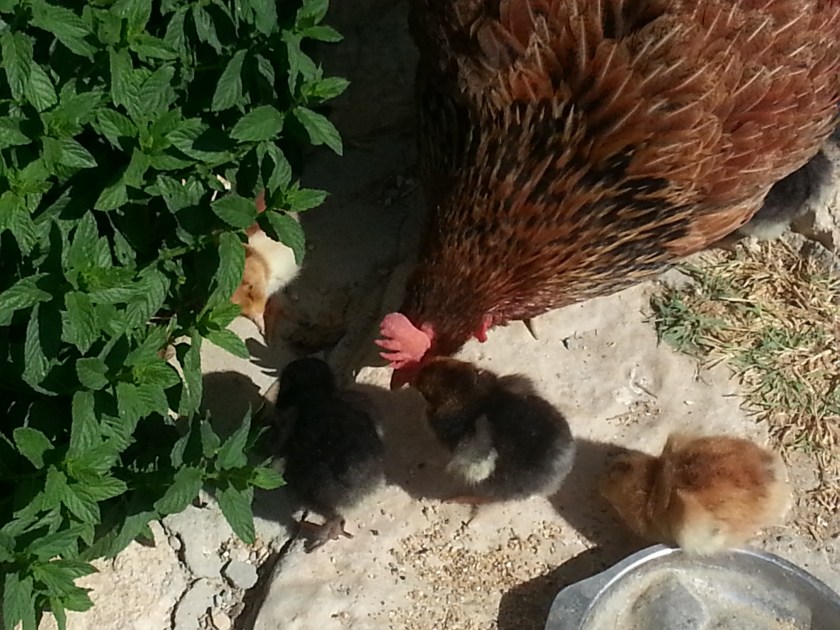
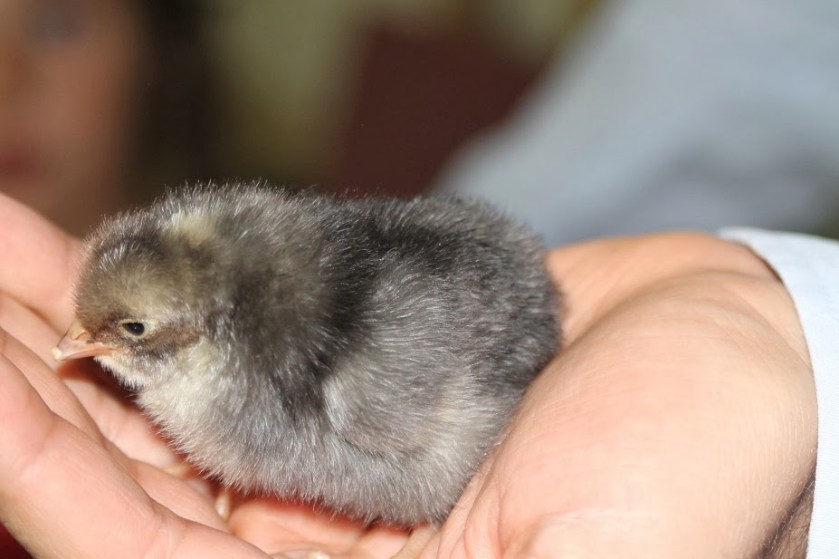
Above: Black Brahma/New Hampshire chicks, which will hopefully grow into nice big birds, to be sold at a good price at some point

Selling things you make – women around here and all over the world sell their homemade bread, baked goods, candles, soaps, body care products, home-sewn baby slings, toys and nursing covers, and more. It’s possible to expand this into a group tutorial: for example, people who have bought your artisan bread and liked it might be willing to pay for acquiring the skill of making it on their own. It is possible to advertise in local newspapers, and Etsy has opened a whole new world of possibilities for hand-crafters.

Selling your art – if you are the artsy type, your hobby might just redeem itself financially and become a source of income. Around here we have painters, glass-blowers, and jewelry-makers. Again, group tutorials might be an attraction as well. If I had the possibility, I’d love to learn beading. A friend of mine, Jenny, set up a successful home business selling her cute painted rocks.

Writing – I write fiction, love it and hope to get a publishing deal someday, but I realize it’s a long, slow process with lots of competition and I can’t put all my eggs in one basket. So I’m also looking at possibilities of writing articles, website content, and doing English/Hebrew translations.

These are just a few ideas I’ve come up with. I’d love to hear yours.

Processing prickly pears

Prickly pear season is here, and my husband got a big bunch very cheaply, from someone who picked them off the hedge on his property. When he came home with the loot, I foolishly forgot that the prickly pear is – well, prickly – and carelessly grabbed one. I had a quick, painful reminder of the fact that the prickly pear, actually the fruit of the opuntia cactus, is full of tiny fiberglass-like spines called glochids, which very easily get embedded in the skin and are very difficult to dislodge. Soaking my hand in warm water helped get most of them out, though, and I carefully proceeded to look for a pain-free way of utilizing this unusual fruit.

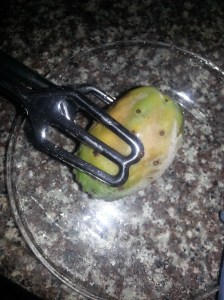
Rule number one: don’t touch the skin of the prickly pear with your bare hands. Wear thick gloves or, as I did, use tongs. 

pricklypeartongs

While holding the prickly pear down with tongs, use a knife to cut off the edges (“top” and “bottom”) of the fruit. Then cut several slits, length-wise, in the skin and pry it off with the tip of the knife. It’s a little tricky at first, but you’ll get the hang of it.

Briefly wash your peeled prickly pear under a running tap, to make sure any glochids that might have stuck to the fruit are washed away. You don’t want them in your tongue!

At this point you can eat the prickly pears fresh, or juice them. To make juice, I first mashed the fruit with a potato masher, then strained the whole mess. The juice is great as part of cold beverages, and can also be made into syrup or jelly. The remaining seeds, mash and peels make a great treat for chickens (or, if you don’t have chickens, they can be composted).

mashpricklypears

Mashing the prickly pears

I do have to say, though, that the whole process is somewhat labor-intensive: a whole lot of fruit gives comparatively little juice. Since the season of the prickly pear is short, it’s alright as a once-a-year project, but I wouldn’t do it on a regular basis.

pricklypearjuice

Above: prickly pear juice, for a refreshing cold drink or for making syrup or jelly. I love its bright orange color.Â