Time passes more quickly than I can grasp, and before I knew it, we’re in 2025 already. We’re having a pleasant, warm winter, and the weather has been so nice that our newest pullets have actually started laying already!
Although the weather doesn’t feel very winter-y, it’s still cool enough for my beloved laceweight wool crocheted scarves. I’m working on another triangular scarf/shawl in Malabrigo Lace (review coming when it’s done, hopefully before summer rolls around).
Regionally, it seems like things are starting to calm down a bit, too. Although you never know what the future may bring, I’m optimistic in looking forward to a period of relative calm.
An exciting announcement: Yours truly has started writing for Emergency Prep Guy, a great resource for preparedness and survival. Check out my contributions here.
For me, fall officially starts when I go into the chicken coop, and it looks like a bird got eaten there – mountains of feathers everywhere. Then I count heads and feel reassured when I realize my hens are only going into molt.
Molt, which usually happens as chickens regrow new high-quality feathers before the cold weather hits, is hard on chickens. They use lots of extra protein for those new feathers, so they’ll typically stop laying eggs. Laying might resume once they’re done molting, or stop altogether until the days start growing longer again, unless you use artificial lighting in your coop. I don’t do that; I believe my hardworking hens deserve to take some time off egg laying.
Watching a chicken lost a large part of its feathers can be alarming. From a sleek-looking creature with beautiful plumage, it very quickly turns into a half-plucked bird that then begins to look like a hedgehog as the feather shafts start growing out.
The Chicken Chick has a comprehensive article on molting and how to help your beloved birds through it. Your chickens will benefit from a protein boost during this time, which will help them regrow feathers more efficiently. Switching to higher-protein feed is common advice, but I usually supplement their normal diet with protein-rich snacks like cooked eggs, pumpkin and sunflower seeds, fish scraps, and occasionally even some cat food. Chickens are omnivores, so as long as you vary their diet, they should be fine.
You should also do your best to reduce stress for your birds when they’re molting. This isn’t a good time for a lot of handling, moving your flock to a new coop, or introducing new birds.
Don’t let molt bother you – within a few weeks, your birds should regrow their feathers and become their pretty selves again. Please feel free to share any tips for sailing through the molt season!
Fall is here, and we all know what this means: fewer eggs for the next several months for us backyard chicken keepers.
I don’t use artificial lights in the coop and let the girls get some well deserved rest. Since I usually prefer to go without than buy eggs from the store, I tend to choose recipes that call for fewer eggs – or use creative substitutes in baking.
When it comes to baked goods, eggs basically add three things: moisture, cohesion, and fluffiness. If you just omit eggs, a cake will likely fall apart or be too heavy. Fortunately, you have several substitute options.
#1 Nut butter or tahini. Peanut butter, almond butter, and tahini will bind your batter together and add a delicious earthy flavor.
#2 Applesauce. This classic substitute for eggs adds a lot of extra moisture.
#3 Banana. Mashed banana acts similarly to applesauce – but that banana flavor definitely comes through!
#4 Ground flaxseed. I’ve yet to try this, but many foodies suggest grounding flaxseed or chia seed with a bit of water to create a sticky paste you can add to baked goods in place of eggs.
#5 Aquafaba. Now THIS is something I’m definitely going to try at the first opportunity. Rumor has it that you can whip the liquid from a can of chickpeas, and that it acts similarly to egg whites. I’ll let you know how it works out for me!
In the meantime, I’m wishing everyone a happy fall – and a happy new year and Gmar Chatima Tova to all my Jewish readers.
Lately, someone on social media commented that they can never use farm-fresh eggs, no matter how much they would like to, because they’re so dirty and full of gunk. As you may imagine, I couldn’t just scroll by. It seemed almost tragic to me that someone should miss out on the goodness of farm eggs because of an unfounded prejudice, or because they chanced to run into a dirty dozen.
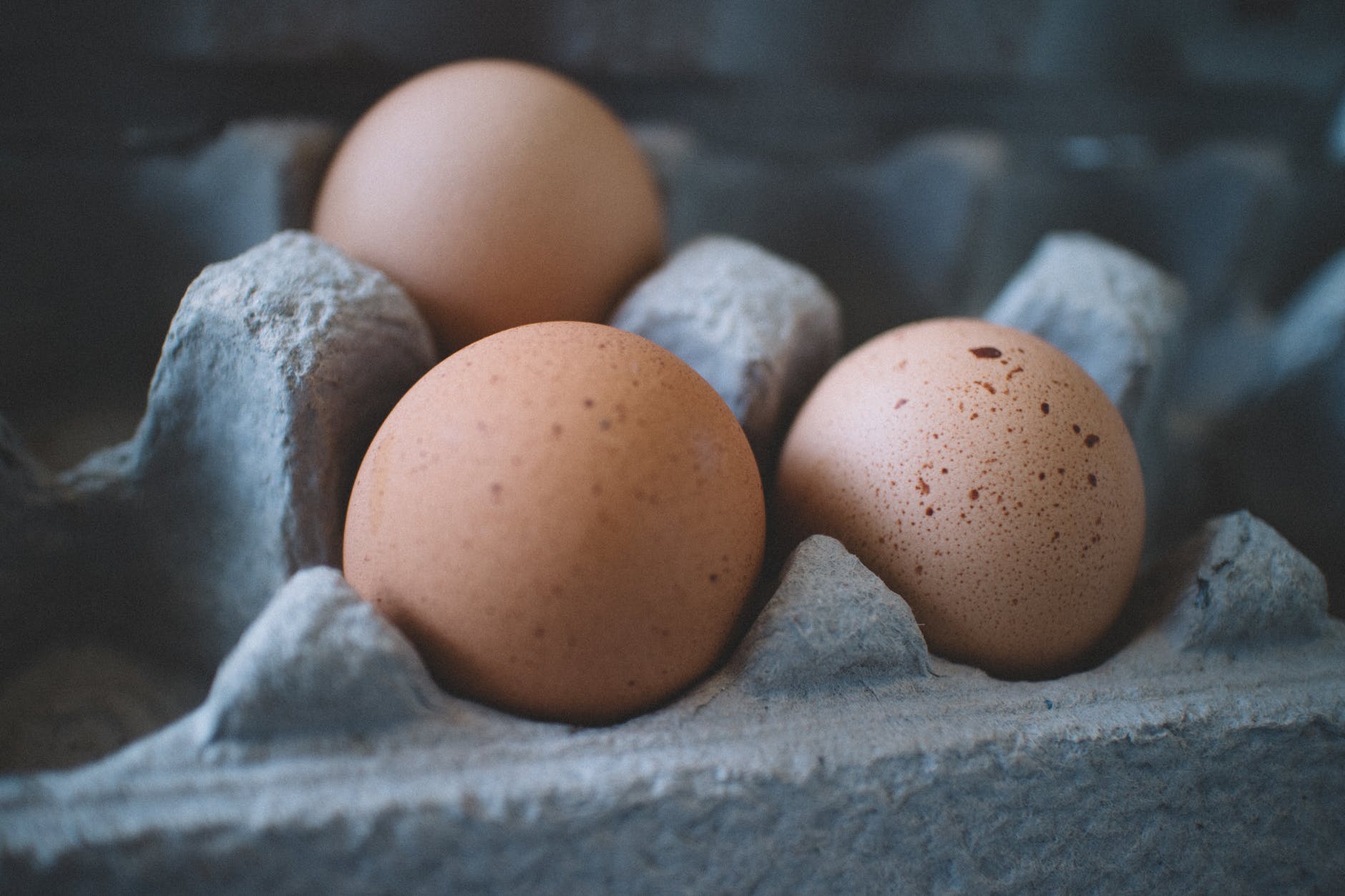
My family has consumed mostly home-grown eggs for over ten years. For the most part, our eggs are absolutely pristine. The picture above shows the eggs as collected – I never wash eggs because the eggshell is porous, and washing can push any contaminants into the egg.
I often pull the eggs straight from under a hen and hold them against my cheek because they’re so nice and warm (yep. Really! It’s one of the weird things I never thought I’d admit). You can bet I wouldn’t do that with an egg that isn’t perfectly clean.
Of course, we do get the occasional dirty egg, especially on rainy days. But overall, our eggs are lovely and clean. There’s just absolutely no reason why farm or homegrown eggs should be dirtier than factory eggs.
In some cases, though, farm eggs may end up extra dirty because ofú:
a) A very crowded coop and not enough nesting boxes
b) not enough lining in the nesting boxes
c) letting eggs pile up
All of the above can lead to eggs breaking and making a mess over any other eggs next to them. I have one nesting box for 3-4 layers, I line the boxes with plenty of straw, and I collect eggs at least once a day. It makes for nice, fresh, clean, and healthy eggs.
Disclaimer: even clean eggs may carry contaminants. I advise only consuming thoroughly cooked eggs, regardless of their source.
OK, here’s the long version. I’ve raised many chickens over about a dozen years now, and not one of them could resist a bit of Styrofoam packaging or a stray construction panel with Styrofoam insulation.
Chickens will go for Styrofoam even when they have fresh pasture
My chickens consume a diverse diet of layer feed, kitchen leftovers, and pasture. They choose Styrofoam over their feed, vegetable peels, fresh grass, and any food you can imagine. No, they won’t only eat Styrofoam, given the choice, but they’ll eat it before anything else.
It seems this isn’t an anomaly. Chicken owners all over the world report the same thing: their hens and roosters can’t resist Styrofoam. If I ever publish an updated edition of The Basic Guide to Backyard Livestock, I’ll be sure to include this phenomenon.
What do chickens find so appealing about Styrofoam? Its texture, I suppose. It’s easy to peck at, and when it scatters, it looks like crumbs. But surely when they taste it they should be disappointed?
Compared to humans, chickens have very few taste buds, so they don’t respond to taste the same way we do. However, they generally have an innate ability to choose nutritious foods. Styrofoam doesn’t quite fit the profile, though.
Will Styrofoam harm your chickens? I can only speak from experience. For years, I have tried to discourage my birds from eating Styrofoam. I offered distracting treats and shooed them away. I herded them out to patches of succulent fresh grass teeming with bugs. To no avail. If Styrofoam is available, they’ll come back to nibble on it. So far, my flock hasn’t sustained any visible damage.
Naturally, eating Styrofoam can’t be good for chickens. Theoretically, Styrofoam could impact a bird’s crop and cause suffocation. The only practical way to deal with this problem is to avoid leaving any Styrofoam lying around.
Do your chickens go crazy over Styrofoam too? Tell me in the comments.
Last week, we had a sad incident, in which a fox got two of our chickens. I admit I have grown a little careless, as I wasn’t aware there were any foxes in the area.
From my previous experience with foxes, I knew they never give up until they’ve eaten all the chickens in a coop OR until they realize it’s impossible. I knew my old coop wasn’t fox-proof. And I knew I didn’t want to race outside with a hammering heart every time a hen started clucking.
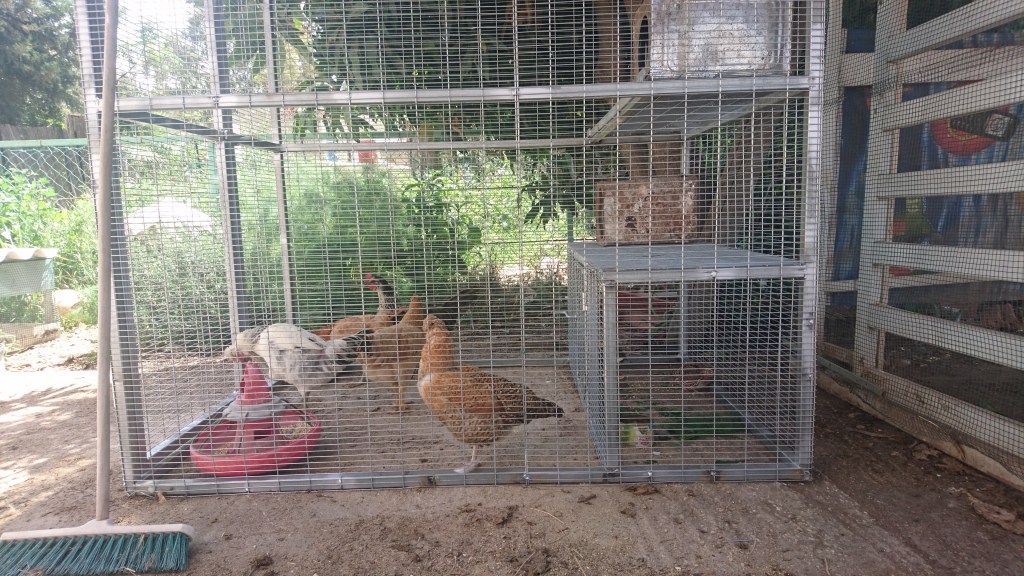
So for a week, I overnighted my chickens in boxes inside the house, and meanwhile, I commissioned a secure and convenient stainless steel coop.
New home for the hens!
Although it isn’t as pretty as some of the rustic style coops I’ve admired on Pinterest, it’s by far the best coop I’ve ever had. I can’t believe how much I paid to have it made, but I’m happy 😊
A housewarming party 🎉
It has two handy shelves for nesting boxes, and a lower section for our quail that can also work as a secure space for a broody hen (of course I would put the quail elsewhere).
Now I’m just waiting for this fox to come again so I can laugh at it 😁
During the previous couple of weeks, we’ve had such lovely sunny weather that I was finally tempted to go out and start planting some things. Yesterday and today, we’ve had a sharp overturn toward torrential rains and howling winds, and now I’m afraid all my poor seeds will be washed out. Reminder to self: never trust the weather at this time of year.
What I’m happy about is having had time to line my chicken coop with a nice, thick layer of dry leaves prior to the rains. I expand on this in my latest Mother Earth News post:
Using dry leaves for chicken coop bedding has numerous advantages:
1. It’s free: just grab a bag and haul all the leaves you want.
2. Leaves are plentiful and readily available
3. It will entertain your chickens: a bag of leaves will always contain tidbits like seeds, grass stalks, bugs, and other edibles your chickens will enjoy unearthing.
Our chickens pick up the cue of longer days and generally resume laying around February, even though it’s still cold. The young pullets hatched at the end of last season – say, September or October – are generally ready to start laying in February or March.
I can hear some of you laughing hysterically, saying “Cold? You guys don’t know what cold is”. True, we rarely get any snow, but the shorter winter days still affect our egg production. Come spring, I look forward to:





 Domestic Felicity