Happy 5th birthday

IMG_20200109_172135_186

I know it sounds like such a cliché, but I absolutely find it hard to believe that Israel is 5 years old already. It really seems like yesterday that he was born, despite all the many things that happened in between.

I remember the day of his birth so well. It was Friday, and he was born just a few minutes before Shabbat – I just barely had time to call my mom and let her know she has a new grandson.

Then a week later, on the day of the brit (circumcision) we got snow that lasted all weekend. I remember sitting next to the gas heater, so happy with my new baby, just watching the snowflakes falling and falling. His two big sisters had gone out to play in the snow – something you have to do when you get snow in this country because you know it won’t last.

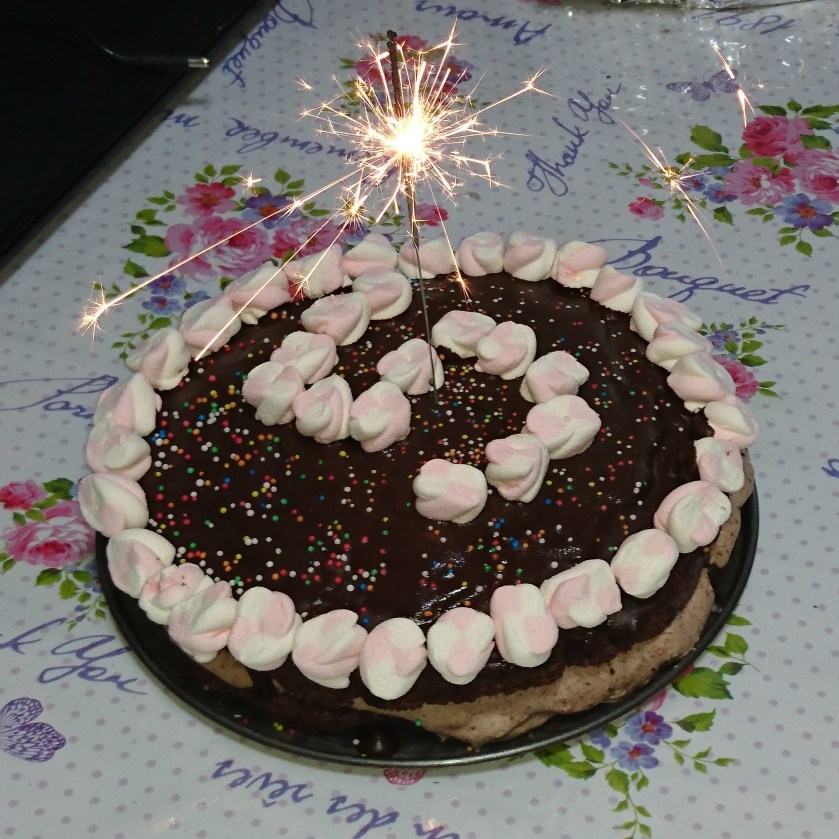
Coincidentally, Israel’s birthday is just 8 days (and 6 years) apart from his eldest sister’s. Yes – another birthday, Shira’s, coming up next week! I’m already looking up cake ideas and we’re going to put up even more balloons.

Between the rains

DSC_0417

After a big rain and with the prospect of more wet days this week, we are trying to make the most of a bit of sun that has popped out. There’s a little stream currently running near our house – a heaven for kids with rubber boots.

DSC_0418

More water.

DSC_0419

Chickens enjoying a break from being damp and miserable.

I know I must have said this countless times, but I’m such a sun person Israel is the perfect place for me to live in. Nevertheless, for now we are mobilizing all our indoor resources to keep productive and happily occupied:

– Paper, crayons, watercolors, pencils

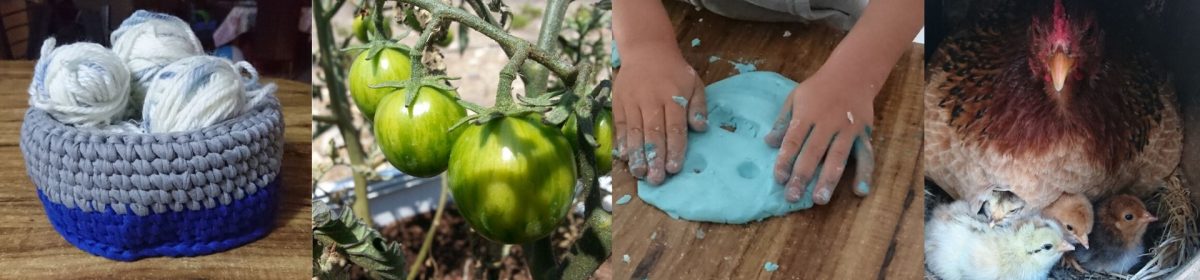
– Modeling clay and slime (the latter not my favorite but my kids love it)

– Yarn

– Board games: monopoly, scrabble, puzzles

– And of course lots and lots of books!

Stay warm and cozy and don’t forget to make yourself a nice cup of tea. Longer, warmer days are on the way!

Hanukkah and hiking

IMG_20191222_175438
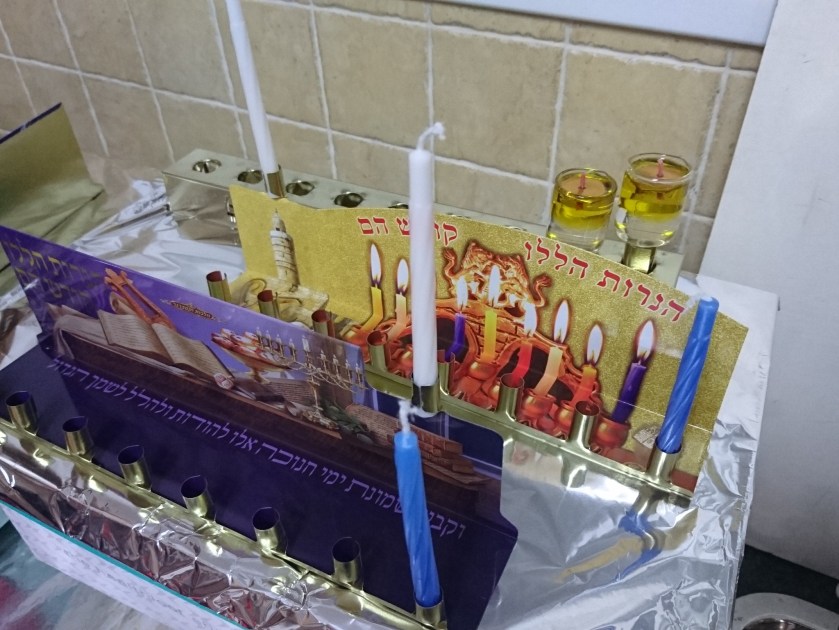
First Hanukkah candles 

We lit the first Hanukkah candle yesterday, and of course, couldn’t resist the temptation to make something fried (I always declare that I won’t, and the kids always talk me into it).

DSC_0377

Then today we went for a little hike in the area where we live. The weather was beautiful, and the cyclamens and crocuses are beginning to poke out!

Wishing a happy Hanukkah to all my Jewish friends, and an enjoyable holiday season to the rest of ya’ll!

A picnic lunch

It was a lovely, sunny day, and since Hadassah got up from her nap early, I hurried to pack a lunch and we took a short bus trip to the local park.

DSC_0338

Check out those eggs!

DSC_0339

The ducks got me confused at first, but I was told they actually belong to the guys in the picture below. They are apparently supposed to lay a clutch of 25 or so before the male begins sitting (I like this arrangement).

DSC_0341

This beautiful peacock ate from my hand before flying off. I do so miss having peafowl. Wish we had more space!

DSC_0342

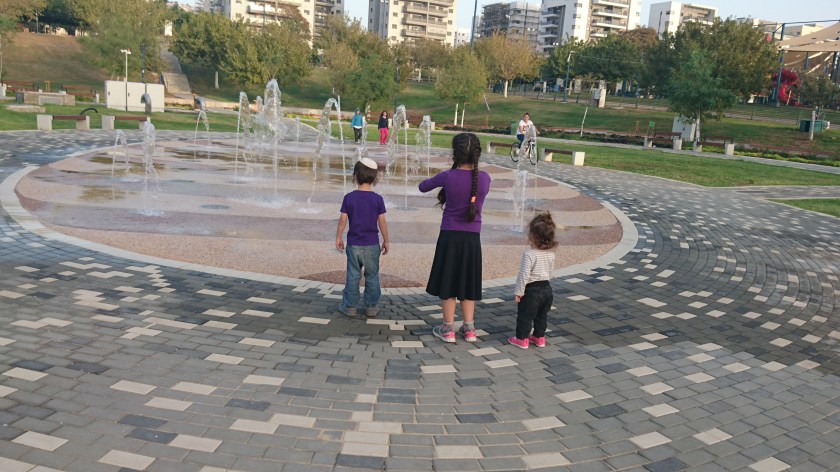
A fountain.

DSC_0344

I’m so glad we were able to fit this trip in before the long spell of rain we’re supposed to have soon.

Hope everyone is having a lovely day!

Helpmate vs. Enabler: Discerning the Difference

Image result for couple sunset

“And the Lord said: it is not good for a man to be alone. I will create a helpmate for him.”

The actual Hebrew words for helpmate here are “ezer k’negdo”, meaning “a helper against him”, which creates a sort of cognitive dissonance: how can a helpmate be against one?!

There are many interesting tractates on this verse, but an explanation I find beautiful in its simplicity is as following:

Consider marriage as a seesaw. If two people sit on the same side with one always attached to and behind the other, the seesaw won’t move. It will only function if the other person steps over to the opposite side, creating a dynamic balance.

The image of the wife as a helpmate evokes a beautiful picture of a godly and hardworking man and a woman who stands behind him and supports all his endeavors. So far, it’s all sweet and simple. But the Torah doesn’t just exist to guide us in simple situations. It is universal and everlasting.

Consider the following scenario: a husband becomes addicted to video games. He is perpetually glued to the computer screen and refuses to turn away from it even at mealtimes. Instead, he demands that his wife should serve him sandwiches which he can eat while playing.

If a wife is supposed to always defer to her husband, she will serve him those sandwiches out of misguided respect and submission. Does this make her a good helpmate? Nope, it makes her an enabler of bad behavior.

A real helpmate will tell her husband, respectfully but in no uncertain terms, that he will get no assistance in his destructive habits from her. She will refuse to support his addiction and will insist on a normal functioning family.

The Jewish sages have written, “A good woman does her husband’s will”. Does this mean that a wife simply caters to her husband’s every whim? No, that would be doing them both a disservice. Certainly, there’s nothing wrong with complying with a reasonable request (“could you make pea soup for lunch, please?”), but what if the husband says, “I don’t want you to visit your parents anymore, ever again”? In that case “doing the husband’s will” would mean encouraging good tendencies, turning his will towards positive things (like making him understand that he cannot cut his wife away from her family).

We are all imperfect flawed human beings walking the bendy road of improving and growing, in the hopes that when we finally meet our Creator, we will be able to testify with a clear conscience that our time in this world had not been in vain. Living in a marriage is one of the ultimate hardcore tests of this personal growth (but that doesn’t mean one should put up with abusive patterns for the sake of “personal growth”). Even if you love your spouse and have a healthy, loving marriage, it’s easier to live alone than together, to make one-sided decisions rather than work as a team.

No one can be charged with the impossible task of changing one’s spouse because real change can only come from within. However, it is not healthy, loving, godly or spiritual to bend to character tendencies that are clearly flawed. Being a good helpmate does not always mean going the route of minimizing conflict. It does not mean complying with laziness, rudeness, disrespect, irresponsibility, or passive aggressive behavior.

In my case, the most obvious way such misguided rigidity of principles manifested was the area of our family finances. I believed that my calling was to close my eyes and cling to my husband on his end of the seesaw, even as our family was freefalling into a bottomless pit of financial crisis. I believed I was supposed to act and think like my husband’s decisions about money were the Voice from Mount Sinai, rather than what they were: human reasoning that could, and often WAS, flawed. He might not have liked to admit it, but what he, and my children, really needed was not for me to keep “trusting” his reasoning even as I reached deep into the corners of the freezer for some leftover flour to make a loaf of bread with. My job back then, though it took me way too long to recognize, was to jump on the other side of the seesaw and call out, “Hey, this isn’t working! We have to figure out something different!”

It sounds less nice than “I trust you implicitly and you are the supreme hero of the universe and I’m backing you no matter what you do because that is my spiritual calling”. But sometimes having another’s back means giving them what they NEED, rather than what they want. And what our entire family needed was for me to be more proactive about earning money and handling finances.

This didn’t happen overnight or without some sharp growth pains (which included some serious ego-deflating, because if you have never been held accountable in your life and suddenly you are, it might not fly very nicely). But it is definitely happening and our lives are so much better for it.

A decade in the West Bank: a recap

DSC_0447

When I was a bride on the point of my wedding, my future husband and I were looking for a quiet rural place where we could raise our children close to nature and away from busy roads and packed streets. There are such places in Israel, but they are either remote or hugely expensive. In an act of thinking outside the box, we explored the possibility of hopping over the ’67 border, or “the green line”, into the Judea and Samaria area, also known as “The West Bank”.

It was not a political statement (at least not initially). We did believe, and still do, that Jews have the right to live in every part of the Promised Land as it appears in the Bible. Otherwise, all Israelis are nothing more than greedy colonists and might as well pack up and leave. But it was not what led us to move to the settlement of Kedumim and later, when that, either, did not answer our rural dream, to the surrounding outposts.

We soon found out that our motives in living remotely were vastly different from almost every other person we came in contact with. While we essentially wanted a homestead and complete privacy, our neighbors emphasized community and “doing things together” (which did not sit well at all with me as an individualist, and which in my opinion led to lots of gossiping and people sticking their noses into each other’s tushy).

Israeli farmers and settlers have historically been forced to band together for safety reasons. Independent farms are few and far between. We have not been able to attain this dream; perhaps we never will, now. Living among the rolling hills and picturesque views was lovely while it lasted, but it came with a cost.

One was safety. I don’t have statistics, but tragedies happen all the time. People die in car accidents. Hospitals are always full. But this can’t compare to the palpable feeling of pure evil walking all around you, of knowing that there are monsters in human skin who are out there to kill you and your children just for who they are.

During our time in the Shomron, we came in contact with two incidents of such evil: the attack on the 11-year-old Ayala Shapiro, whose family were our neighbors, which left her with severe burns that had maimed her forever; and the murder of Rabbi Raziel Shevach, who was likewise our neighbor in the last place we had lived before leaving the area.

I don’t run a political blog, but no, civil casualties during armed conflict are NOT the same as a terrorist who deliberately sets out to kill innocents, and the more helpless and weak they are, the better. During the massacre of the Fogel family in Itamar, the scum of the earth monster who had already murdered the parents and two of the children was about to walk out of the house when the 4-month-old baby, whom he hadn’t noticed before, started crying in her crib. He went back and stabbed her to death.

During our last four years in the settlements we lived in what you’d call the “hardest core” outpost. People there were no fuzzy sunshiny “let’s all get along” types. We were publicly shamed for doing business in the neighboring Arab village. But you can bet your life none of those isolated “fanatics” would have walked into a random Arab home to kill babies.

One thing I have realized most strongly was that the Shomron is an integral, indispensable part of Israel. I used to be able to watch the sunset glimmer on the surface of the Mediterranean Sea from my living room window. That’s how tiny our country is. Look at the map and see what is left once Judea and Samaria area is subtracted – a narrow strip of land along the shore, vulnerable and impossible to defend.

Many people, in Israel as well as around the world, labor under the delusion that if we just retreat to the ’48 borders as defined by the UN, all will be peachy and the Hamas and Hezbollah will drop their guns and rockets and we’ll all sing Kumbaya together around a campfire. Sorry, folks, not gonna happen. Those who hate us and want to kill us in Maale Adumim hate us and want to kill us in Tel Aviv. By the way, don’t you find it funny how Jerusalem, where Jews have lived thousands of years ago and which had never been without a Jewish presence, is so strongly disputed, while Tel Aviv, which is a historically recent creation, is not?

Quoting the Bible as the document that gives us the right to this land might not be accepted by all, but without it, what are we actually doing here?

But I digress.

Many settlements are like small towns with no clear political affiliation. People there mostly just go about their business and live like in any other part of the country. Where we lived it was different. The place had all sorts of legal obstacles to its development. There were often problems with electricity and running water. There were no shops, post office, bank, doctors, etc, within walking distance.

This lack of accessibility, even more than the clannish segregated social structure, was what I found most frustrating about my life on that area. Without a car or reliable transportation means, I was utterly dependent on DH for every little thing. If we had run out of milk and he didn’t feel like driving to the grocery store, too bad, we’d just have to do without milk. Every trivial errand turned into a huge logistic challenge.

The decision to leave did not come about in one day. Besides being attached to the area, we couldn’t afford to move anywhere else (forget that we could barely afford to maintain our own house, as it was).

I suppose the overwhelming feeling I had experienced in those days was simply exhaustion. I was tired of never feeling quite safe, of not being able to count on having simple necessities like running water, of everything being such a logistical nightmare, from checking emails to running to the grocery store, of being utterly dependent on my husband for every trivial little thing.

I feel extremely lucky that my mom had a home to offer us. Things are so much easier for me today that I sometimes feel like I cheated. I was certainly a lot more fortunate than others in my situation. Not everyone has generous family ready to help them out of lousy circumstances.

My heart is still with the courageous souls braving a thousand risks and inconveniences each day of living where I used to. I will always feel a strong emotional bond to that part of the country. However, there’s no denying I’m a lot happier and mentally healthier here.

The sea glass journey

c185248006d540d39d957f3e54f874ea

Following my latest post, I would like to elaborate a little on the sea glass analogy – how the process of roughing it we all go through in life will, ideally, smooth our prickly edges, sand down any uncomfortable bumps, and turn a tossed-off shard of glass into something new and beautiful.

This doesn’t happen, however, without the waves hurling and swirling the piece of glass, throwing it against the sand and rocks at the bottom of the sea.

Again and again. You can bet it isn’t always comfortable. You can bet it hurts.

When we just start out in life, we tend to be very optimistic, very driven, a bit naive, and extremely opinionated (a typical example is teens looking down on their parents and thinking they are so much cleverer and understand things so much better). This also, naturally, makes us a little unforgiving.

That’s why I love old people. They’ve seen it all. They have a much more balanced view on life. They have the wisdom that only comes with experience.

In my case, the opinionated thing manifested most strongly in the family model I yearned for: wife at home, homeschooling the dozen children and baking bread. Husband working diligently to provide for the family. Everyone enjoying the mutual fruit of these labors in harmony, peace, love, and respect.

You know what, I still happen to think it’s a really, really good model and it’s absolutely wonderful when it works. I envy people for whom it did. But though I did always nominally acknowledge it might NOT work, I was a little in denial of how often it actually doesn’t.

That’s why, when we were hit with a period of unemployment, then another, and another, then lost our house and a humongous sum of money – all due to decisions in which I had little to no say – I got myself sick with worry and stress.

My thought process at that time went like this: “It shouldn’t be this way! My husband should be more diligent about providing for the family! He should be more careful with money! The people who owe him money should step up and repay the debt! It isn’t fair!”

Let me tell you something, it can drive you crazy, thinking and talking about things others should and MUST be doing differently, while you can do little to nothing to influence them. It makes you feel small, helpless, and anxious, not to mention resentful and bitter.

To make matters worse, for a long, long time I was held back from even attempting to improve the situation by my own misguided beliefs: that by offering constructive advice, let alone actively attempting to earn money for the family, I would be humiliating my husband and expressing my distrust in his leadership. I refused to acknowledge that my husband was just a man, with fallible thinking just like mine, and that ALL of us sometimes need a tug in the opposite direction to balance us out.

That’s the true meaning of the “ezer k’negdo”, by the way: it’s usually translated into English as “helpmate”, but it’s so much more than that. It’s “k’negdo”, meaning, on the opposite side. The wife who is a perfect submissive helpmate that enables her husband’s failings is not much of a helpmate at all. The REAL helpmate gets on the other side of the seesaw to throw her weight there and get things moving. She offers balance!

So as I wore myself down with anxiety, I wasn’t really a piece of sea glass yet. I was just a prickly shard stranded on a rock somewhere, crying about how life wasn’t going the way it was supposed to. At some point, however, I realized I have two choices: I could either retain my nature as the sharp glass shard by being stuck on that rock and getting nowhere, or…

… I could roll with the waves and let the water and sand smooth me out.

I could rant and rave about how my husband should try harder to find a job, or I could look at employment options myself.

I could grumble about the way my husband managed the family finances (pouring money into risky ventures, lending to untrustworthy people who never repaid the debt, etc), or I could become more proactive about managing my own bank account (I always had my own, but for many years it just sat inactively).

I could keep being inflexible, stubborn and unforgiving, or I could learn some kindness, maturity and humility and realize that sometimes, things just don’t work quite the way we want them to.

I made the choice. I jumped into the waves and let them start shaping me into a lovely, smooth piece of sea glass.

Today, I live in a safe, comfortable place where my children and I have all necessary facilities within walking distance. I still garden, bake and raise chickens, but I also work and pay the bills. I have accepted the fact that I can’t expect anyone, not even my husband, to take care of me, because I choose to be a mature adult woman rather than a woman-child held hostage by her own beliefs.

I have also realized I actually like the piece of sea glass, smoothed and rounded at the edges by the waves and coarse sand it had had to endure, much better than the original glass shard, which was pretty and flashy but would cut anyone who came too close. Oh, and it was much more brittle than it realized, too.

Is my journey done? I sincerely hope not! Life is a dynamic thing. I can only try my best to move upward.