Collecting dew: another step in water conservation

There’s a lot of talk about collecting rainwater as a frugal and ecology-conscious way to reduce water waste, and that’s certainly a good thing and a project we hope to take up in the future. I do have to say, though, that in Israel we don’t get any rain to speak of approximately from May to October. What we can do in the summer months, without any special equipment, is collect dew.

Our system is simple. We have a plastic awning at the entrance to our home, and when I step out early in the morning I can see puddles of water around it. By placing buckets in strategic locations, and then combining their contents, we get roughly a bucket of clean water every day this way. We primarily use it in the garden, but if we used cleaner containers I wouldn’t hesitate to drink it. It’s easy, useful, doesn’t cost anything and could turn out very important in a survival situation. I expect we could harvest a lot more water if we set up a water catchment system all around our roof, too.

The dew we collect is used daily to water our garden. Our peppers already look very promising!

I have noticed that dew is especially abundant when a cool, quiet night follows a hot day. We have many such nights during the summer, as we live up in the hills and usually experience very pleasant temperatures once the sun sets. In Israel, and in other countries with an arid climate, dew collection can be done on a larger scale and play an important role in water conservation.

Why government won’t support homesteading: an opinion

Our society used to be mostly agricultural. It revolved around the nuclear and extended family, a close-knit community where people usually lived their whole lives, the family farm, the village, the artisan tool-maker, and everything small-scale and personal. For better or worse, the Industrial Revolution put an end to that kind of life and propelled us to a world where manual work is scoffed at, and agriculture is seen as something menial or boring.

Yet this did nothing to change our nature. As living beings, we were made to interact with other living beings. It is good and healthy for us to tread earth, smell flowers, pick fruit off trees, take care of animals, and make occasional escapes into wilderness. People who live in small apartments in big cities can find an outlet for this healthy instinct by growing plants in pots, keeping an aquarium and a cat, and venturing out to the country from time to time. The words “farm”, “country”, “rural”, “pastoral”, “village” still bring up pleasant nostalgic associations (compare them with the associations you get when you hear the words “factory”, “industry”, “rush hour”, “traffic” or “highway”), and some people even find out that they are inherently incapable of living the city life anymore, and drop their perfectly good jobs in order to cultivate a piece of rural land, such as in Marcel Pagnol’s splendid novel Jean de Florette.

We still yearn for the simple, cyclic, gentle and healthy rhythm which can be found in nature, the earth, and the seasons.

Some time ago, I picked up the Israeli Shabbat leaflet “Olam Katan” (“Small World”) and was genuinely interested by an article which suggested that modern technology and means of transportation make small-scale farming/homesteading possible even for people who don’t want to, or can’t make this their main source of livelihood. It is entirely possible, the author argued, for a family where both spouses hold a regular job to also keep a small homestead on, say, on 1 square km of land. Such a homestead can include a barn with 3-4 dairy goats and a dozen chickens, a small vegetable garden, and some fruit trees. Furthermore, it was argued that Israel has enough unexploited land which is suitable for agriculture. Such land, according to the author, could be divided into small homestead plots and handed out or sold inexpensively to anyone who would like to start a homestead or a sustainable small-scale farm. Thus many more people can live a healthier, closer-to-nature life, while also creating a strategical advantage for Israel by preventing Bedouin clans from illegally taking over empty lands.

While I would like, and am ready, to believe that a small-scale farming/homesteading revolution is possible, I also think the only way for it to happen is by individual people making the change in their private lives. I don’t think it will ever be encouraged or supported by the government, for many reasons. Here are just a few:

1. The government will never, not in a million years, hand out land or sell it cheaply (if it did, I’d be the first to stand in line!) – it will reap big bucks by selling land to big contractors, who in their turn will reap their big bucks by erecting tall buildings with cramped over-priced apartments.

2. Small-scale farming/homesteading will never be encouraged on a government level because commercial-scale farmers hold too much power.

3. A family living on a homestead will very likely have a rewarding, satisfying life; the more they grow, the less they will buy, not only in the way of food, but also in other areas. Shopping will no longer be needed as a recreation. They will move away from the temptation of big stores and shopping centers. In the evening, they will hurry home to milk their goats and water their tomatoes. Such people, for psychological and logistic reasons, are more likely to buy only what they need, which means the government will lose money by way of taxes each of us automatically pays when we buy in a licensed store. People who succeed in their little homestead venture might also discover they like it so much they will possibly opt for a less demanding, lower-paying job and enjoy a more relaxed lifestyle – and then the government will lose money by way of income tax. Some economical guru up there is bound to figure it out, and the government will never – not in a million years – agree to lose money, even for the sake of promoting a healthier and happier society.

4. A homesteading/small scale farming network will encourage the development of a local, sustainable market based on barter and small unregistered sales – the government won’t want this to happen because this will, again, mean less taxes.

However, it is a joy for me to know that other people, like me, indulge themselves in dreams of a world where families work together, more food is produced locally, and giant chain stores are cheated of part of their profit because people realize they don’t need so much stuff.

Gardening in hot, dry climates

cherryseedlings

I am always filled with admiration whenever I read about homesteaders up north, with their short growing seasons, long winters, early frosts and heaps of snow many months out of a year. I sometimes feel like a softie for living in a country where the land never freezes and we get a light snow maybe once every winter.

However, gardening in a hot, dry climate – often with water shortages – comes with its own set of challenges. We don’t get any rain for approximately six months out of a year – usually from May to October. A heat wave, if not properly managed, can kill plants as surely as a hard frost. Here is what my husband and I do to make our gardening venture successful.

Plant what grows well locally. This is true for every climate, of course. I would really love, for example, to grow some bush berries – blackberries, raspberries, blueberries – but it’s simply too hot for them here to grow and produce well. On the other hand, grapes thrive in our climate and produce superb fruit, so we have six young vines which, we hope, will start yielding next year.

In my vegetable garden, the tomato, pepper and melon plants are enjoying the heat, and herbs such as mint, sage and rosemary grow prolifically year-round.

Conserve water. Even when water isn’t scarce, it is expensive, and we must carefully evaluate every drop we put into the garden. We have a drip irrigation system for our trees, and love it. It saves us work, conserves water and is very efficient. In our vegetable garden, mulching and planting in partially shaded areas (still, however, giving the plants enough sun to thrive) help save water as well.

Many local-growing trees – such as grapes, figs, pomegranates, almonds and olives – require very little watering once they are mature and have a well-developed root system. It’s wise to take this into account when choosing what to plant.

We don’t have a lawn – keeping one just wouldn’t be sustainable – and we steer clear of tropical plants that require extensive watering, such as hibiscus or bananas.

Stay indoors during the hottest hours. In the long, hot days of summer we do all our garden work – watering, weeding, pruning, and so on – in the early morning or in the evening, before or shortly after sunset. We put in new plants in the evening, just before nightfall, to give them the best chance to survive the trauma of transplantation. This way, we avoid the health hazards of sun exposure. When we do have to spend some time outside around midday, we minimize damage by applying sunscreen and wearing wide-brimmed hats.

Keep an emergency water source. In our area we frequently experience water shortages during the summer. You can imagine what I felt one morning, as I went out to water the garden and discovered that the hose just isn’t running. It was an extremely hot day and, if the water flow hadn’t returned in a few hours, all of our plants would have died. We are wiser now. We have a large fish tank outside (for eco-friendly mosquito control), and we can partially empty it for emergency watering if need arises.

Protect young plants. I start many plants from seed indoors, because it’s hard to keep the soil outside moist enough for the seeds to germinate. A few weeks ago, when I transplanted my tomato and pepper seedlings outside, I knew the harsh midday sun might kill them, so during the first days I shaded the plants from noon until about 3 P.M. I did it simply by putting a wire cage over the seedlings, then pulling an old sheet over the wire and holding it down with rocks. It worked well and the plants thrived. The need for this is eliminated once the plants get hardened up a bit, in about a week or so.

On the brighter side: We do have advantages we are thankful for. In our warm climate, we can garden practically year-round, even without a greenhouse. After our summer garden is done and the cool rainy season kicks in, I plan a fall garden of greens, garlic and brassicas. Any winter frosts we might have are usually light, and most likely I will be able to protect my small garden by covering the plants.

Bottom line: in gardening, like in so much else in life, it’s pays off to play to our strengths. Wherever you live, there are plants that grow well in your area and can provide you with a beautiful, functional, easy-to-keep garden.


I miss dairy goats

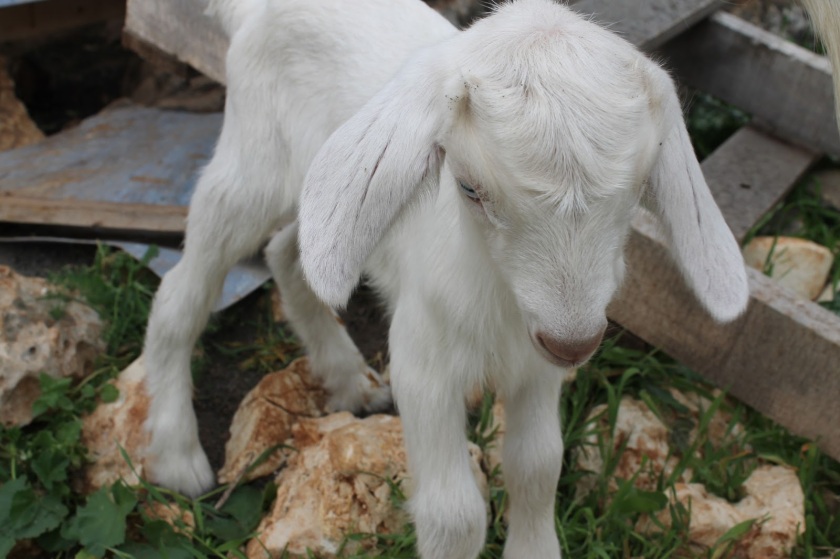
We used to keep dairy goats, and the milk, cheese and yogurt were really fabulous. Unfortunately, we were forced to give up on goat-keeping because of a combination of several factors: our goats repeatedly escaped and caused damage, and we knew we must either invest in a sturdier barn and extensive fencing or let them go. Since we were on the point of moving and everything was so uncertain, we chose the latter option. However, I do miss these cute, fun and useful animals and wish and hope we can have some goats again someday.

Also, we do love dairy products of all kinds, and milk, cheese and butter form a large slice of our grocery store bill every week. I sure would love to eliminate this expense – not to mention gain healthier, more wholesome, better tasting dairy products.

IMG_9927

Above: a goat kid born to one of our does two summers ago. His mother was a wonderful milker, prolific and patient

Because dairy animals of any kind are a major commitment, however, I don’t want to rush things. I know I want to go back to keeping dairy goats, and I know my husband does too, and I have a feeling that G-d is leading us in the right direction and it will happen eventually, at its proper time. And with the proper considerations, too:

  1. Housing. A goat barn needs to be sturdier than a chicken coop, with the possibility to lock the goats in if needed, and provide adequate shelter. There’s no way I’m ever getting into goat-keeping again without a very solidly made barn and goat run!
  1. Fencing. Goats are notorious for leaping over fences. If there’s even a slight possibility of doing so, they will find their way into your neighbors’ flower beds and get you in a very unpleasant situation (ask me how I know). Be a responsible neighbor and keep your animals securely fenced.
  1. Pasture. How much you can rely on pasture to feed your dairy animals will depend on the extent of your acreage and your climate. In Israel, the lean season is the summer, when everything is parched and dry. In colder climates winter is the hardest season. When you don’t have adequate pasture, you will need to buy hay and that can get expensive. You can also supplement the diet of your goats by giving them fruit and vegetable peels and weeds from your garden.
  1. Commitment. Once you have a dairy animal, it needs to be milked daily. If you need to be away for a day or two, you must make arrangements with someone to come and do the milking for you (though we could work around that by letting the goat kids have all the milk while we were gone). Also, if you have a high yield of milk, you will need to dispose of it by making cheese, yogurt, etc, on a daily basis, and this may be inconvenient at times. If you have several goats who produce a lot of milk and you skip a day of cheese-making, you may find your refrigerator overflowing with milk.
  1. Breeding. Unlike chickens, goats need to be bred to be productive; that is, a goat will not produce milk until after she’s kidded. You will need to breed at least once a year, and if you’re very small-scale, like us, keeping a buck may be inconvenient, in which case you will need to make arrangements to take your does to be bred, or borrow/rent a buck on a temporary basis. We have done it in the past, and we were lucky enough to have a friend within a short distance who had a good breeding buck and was willing to host our does for their “honeymoon” and then bring them back, but not everyone is so fortunate.

So are we getting back into goat-keeping anytime soon? Honestly, I don’t know. It will depend on our budget, time, how much longer we stay at this house, and more factors all of which are very uncertain. But I do have a feeling my milking and cheese-making days aren’t over, and that one day, two or three dairy does will make a valuable addition to our little homestead and take us one step further down the road to self-sustainability.

Garden update

As we’re just starting out (with baby steps) on our gardening journey, we aren’t expecting an outstanding harvest from the garden this season. So far, it’s more of a learning experience for us – we want to find out what grows well in our area, what works, what doesn’t, how to deal with pests, how often and how much to water, etc. And of course, we’re having a lot of fun – and learning loads – along the way.

We have very heavy, dense clay soil, so we splurged and bought some bags of garden soil which is lovely, but expensive. In the meantime, I have started a compost pile using kitchen scraps, garden clippings and manure from the chicken coop. It’s small, but I’m adding to it constantly and hope that in a few months, it will provide us with some valuable fertilizer. I know I should probably water and turn it more often, but hey, it’s organic material. It will break down, right?

We also have tons of rocks, so clearing even a bit of space for planting involves lots of rock-picking. I’ve utilized some of the larger, prettier ones for garden beds, as you can see below.

tomatobed

My little cherry tomato and pepper seedlings are now outside, and growing like weeds with plenty of water and sunshine. I do provide shade for them during the hottest hours of the day, from about midday till 3 PM. I do it simply by pulling an old sheet over their wire cages (I put the cages in to discourage cats and chickens from digging around the plants) and holding it down with rocks. I expect the need for that will be over once the plants mature a bit and put in deeper roots.

Our pepper plants (thriving and putting out flowers!), cherry tomato seedlings, and sage. 

We’ve also planted more herbs: sage, rosemary and spearmint. I love the smell of mint when I water it at the end of a long, hot day. And I have some coriander started in pots. We use a lot of coriander in cooking and it loses its freshness very quickly, so it’s really something that pays off to grow ourselves.

Gardening is more enjoyable than I ever thought it would be!

Foraging for edible goods

There’s an ongoing debate about whether growing your own food in your backyard is really profitable (in terms of money – there’s no doubt it’s healthy, educational and satisfying). If you are aiming for a productive vegetable garden that will reduce your grocery bill, it is important to stay focused on the goal, as with the prices of seeds/plants, potting soil and water, the scale really may tip.

Fortunately, no such considerations exist when it comes to foraging for wild-growing bounty – whether actually wild plants or domesticated species that grow in your area with little to no help from anyone. There’s no excuse not to pick up good food that is right there for the taking!

Every fall, our family gathers olives to pickle, from trees that had been once planted by someone but are now untended. There’s also a bounty of grapes, pomegranates, figs and carobs – all plants that grow well locally, require minimal water and care, and keep producing almost without effort once they are up and going. There are also old, productive pecan trees most people don’t bother with, because they like their pecans shelled and neatly packaged.

Figs are my favorites – they are easy to pick and process, delicious eaten fresh or made into jam or pie filling, and I love them dried, too, though I have not yet been able to gather enough for drying.

figs

Photo: the first figs of the season are ripe, and there are plenty more to come!

Furthermore, in many urban neighborhoods there are citrus trees planted for decorative purposes, which are actually insanely productive. Most people don’t bother picking those oranges and grapefruits because they somehow think the effort is beneath them or just not worth it. A year and a half ago, we spent a memorable morning picking miniature oranges. Though January, it was a warm day, and I was fagged soon – no wonder, as my son Israel was born a little more than 24 hours later! The oranges kept in the refrigerator for several weeks without spoiling, and they were still in perfectly good condition when I finally recovered from giving birth and found the time to make jam out of them.

Another local fruit to be picked around here for free is the prickly pear, an introduced species that has done so well in Israel it has become one of the symbols of the country. It grows practically everywhere, and its season is almost here now. Those who live in Western US and Mexico are surely familiar with it as well.

In every area of the world there is some wild food growing free for the taking, to be enjoyed by all who can appreciate the thrill of getting delicious goodies with very little effort: greens, fruit, nuts, berries, mushrooms. So why not pick up a basket and go exploring? Lots of fresh produce is waiting out there, all for free.

By the way… I am now on Earthineer. You can find me there as SmallFlocksMom. I’d love to connect with you! 

Small-scale farming in Israel: reclaiming the land

In the course of history, many Jews have become very much detached from their Biblical agricultural past with its complex laws connected to seasons, years and the Holy Land. In modern Israel, agriculture was reclaimed to a certain extent, but it is generally highly commercialized, industrialized and mass-scale. The urban and suburban areas are very densely populated, leaving people little space for home gardens and a personal connection to the land.

There is, however, a rising movement – in particular among Orthodox Jews living in the less populated areas of Israel – of small-scale, organic, family-run farms, oil presses and wineries, belonging to people who have seized the opportunity to till their own gardens, pasture their own sheep, make their own wine, and embrace – with modern innovations that make life easier, of course – the Biblical version of living off the land.

view

Image: typical view of terraced hills and olive trees 

And of course there are people like us, who don’t really aim towards doing anything on a commercial scale, but want to grow or raise a significant part of their own food, and see this as an opportunity of being good stewards of the land and resources we were given.

So what makes an Orthodox Jewish homesteader or farmer in Israel different from any other homesteader or farmer? Generally speaking, it’s adherence to the Halacha – the Jewish Law – with the specific Biblical rules and regulations pertaining especially to the land of Israel.

Disclaimer: what I have written below describes the relationship between the Jewish farmer, the Jewish law and the land of Israel in the broadest terms; if you wish for detail, there is plenty of further information out there. We are not a rabbinical authority, nor are we mistake-proof.

Shabbat – No working the land, moving plants, picking or watering is allowed on the Shabbat day, which starts on Friday at sunset and lasts until Saturday nightfall. An automatic drip system is a good gardening solution, but we don’t have that in parts of our garden, and we have to water manually there. Last week, a tomato plant died because we had a very hot Saturday and couldn’t water until nightfall, by which time it was much too late.

The Sabbatical year – Unlike the Shabbat, which is observed by Orthodox Jews around the world, the Sabbatical year applies to Israel only. Every seventh year, the land is supposed to rest, which means no tilling, no planting, no working the land in any way. Gardening in containers is allowed, as is basic plant maintenance (such as, watering the trees so they’ll survive) and, with certain restrictions, picking produce. It is also possible to nominally sell the land to a non-Jew just for the year, which makes it possible to work it as usual, but the latter is less practical for backyard gardeners and owners of small homesteads.

Tithing – Jews are required to give a tithe out of their agricultural produce. This means that even if we grow one single tomato, we are under obligation to set aside part of that tomato. Since it is impractical to seek out needy people and offer them one slice of a tomato, backyard tithes are usually just set aside and respectfully disposed of.

The firstborn male – when we kept goats and had one of our does kid for the first time, with a little buckling, we were surprised to discover that this little male goat does not in fact belong to us, but instead should be given to a Cohen (priest). However, since we do not have a Temple today and much of the original function of priesthood had been temporarily lost, such a gift cannot be really used (butchered, purposefully used for breeding, etc). Too late, we found out that what we were supposed to do was nominally sell part of the pregnant doe to a non-Jew, to avoid such a complicated situation. In the end the little buckling was shipped off to a petting zoo.

Regional conflicts and safety – Because of the ongoing Jewish-Arab conflict in Israel, the Jewish homesteader or farmer living on an isolated hill somewhere, or in the middle of the desert, is in a precarious position. To put it bluntly, if you hear an intruder in your farmyard in the middle of the night, you have no way of knowing whether their principal purpose is stealing your sheep or murdering your family. Therefore, the only reliable way for Jewish farmers and homesteaders to protect themselves is to shoot first and ask questions later. Fortunately, after the Shai Dromi acquittal, the law is on the side of honest men who take up arms to protect their lives and property.

Some will say that such local, small-scale homesteading and farming ventures are impractical, labor-intensive and complicated, and that it’s simpler and cheaper to just buy what you eat from big farmers, or import produce, but I disagree. Money is not everything, and nothing beats the satisfaction of eating real food grown by real people living on the land they love.