Today is my birthday – as well as the birthday of my latest book, Cursed Earth, the first installment in my new fantasy series, Storm of Elements. Cursed Earth features an outcast with dangerous powers, tangled conspiracies, ruthless pirates, and an inexplicable phenomenon that threatens to destroy the world.
From the book: “I can never go back to Terrenia,” Maxine said in a low voice. “If someone finds out…” “… that you have unusual abilities?” “That I’m a freak – yes, a freak – I will be facing worse than deportation.”
I started working on Cursed Earth around the time when our world blew up in our faces on October 7th. It began as a “look, I still have it all together” novel and went on as a “everything is crumbling around me, but I can still escape to a different world by making up a story” book.
I’m thankful for having written Cursed Earth. I’m thankful for the baby steps I’m taking with the sequel, even when I feel brain dead. I’m thankful to be alive. Thankful for my family, my people, and my country. And especially thankful to have made another turn around the sun.
A couple of days ago, our home was broken into. This was a devastating experience I wouldn’t wish on anyone: all my precious sentimental jewelry pieces are gone, along with a significant chunk of cash.
On the brighter side, the burglar didn’t take my laptop, which was left right there on the kitchen table, nor the wallet with my ID and credit cards. I’ve been checking my credit card charges daily, and everything seems OK so far.
Hoping to make some sense of what happened, and possibly extend a bit of useful advice to others, here’s what I learned from this incident.
One, don’t assume you’re safe. Never assume that. I’ve never dealt with a burglar before. It’s a quiet neighborhood. I walked out for exactly one hour between 10 and 11 a.m. They still got into the house.
Two, don’t assume you’d notice someone had been in the house. In retrospect I understood we experienced MULTIPLE break-ins, but I assumed I just misplaced cash until I walked in and smelled cigarettes (no one in our family smokes). Then I saw they cleared out my jewelry box. If I had been more vigilant, I could have protected my jewelry by taking it from its usual place and hiding it as soon as I noticed money disappearing.
Three, the police is useless. Burglars are virtually never caught, and you’ll never see your belongings again. That’s the hard truth.
Four, burglars typically don’t have unlimited time to search your house from top to bottom. They’ll go for the obvious places where people keep valuables and cash. Thanks to this, some of the jewelry and money we had in the house is still here.
So, from now on, (besides changing the locks and preparing to install some extra security stuff) I’ll never keep anything expensive in my jewelry box again. I’ll lower risks by spreading cash and valuable items among several hiding places. You can read some useful tips on where to hide valuables in your home here.
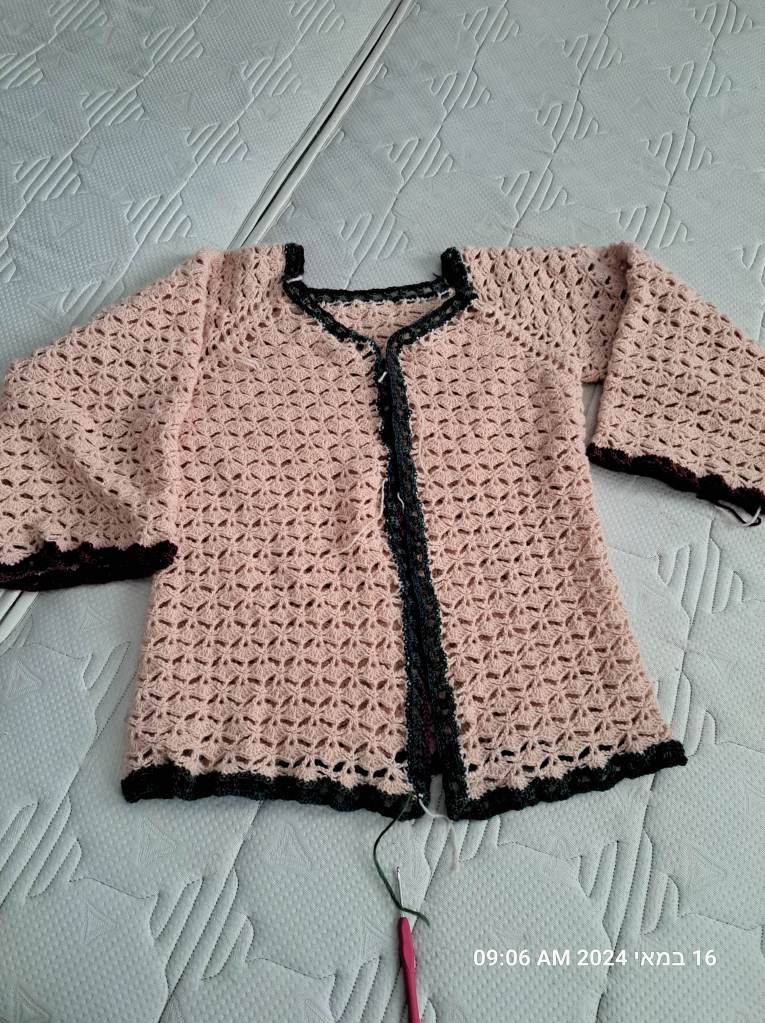
I still need to weave in the ends and attach the buttons, but I think I can finally label this long-standing project as “complete.”
About a year ago, I ordered myself to stop buying new yarn until I work through at least the larger part of the sizeable stash I amassed. This cardi answered the challenge, being made 100% from yarn I already had.
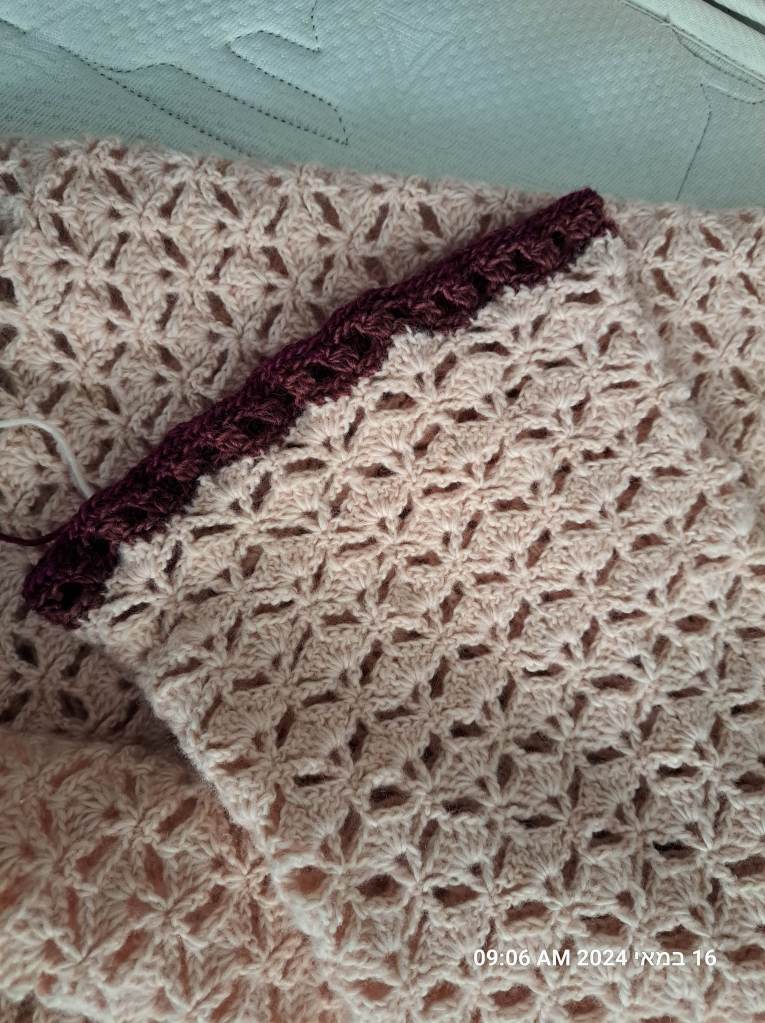
For the body, I used Leonardo yarn by Ice Yarns. It looks like they’re out of the color I used, Ecru, but I’m including the link so you can see the specs. It’s a single-ply DK weight yarn composed of 66% merino wool and 34% organic cotton, which makes it 100% biodegradable. The cotton addition also creates a slightly cooler and crisper yarn than 100% merino, which is perfect for a warm-climate area like ours.
You know I love sharing my experiences on working with different yarns, so here goes. The Leonardo is fairly soft; not as soft as Malabrigo yarns, but still feels nice and not scratchy/itchy. It has nice traction on the hook. It also has a slight halo, which makes for middling stitch definition and a real pain to unravel your work if you discover you made a mistake.
The border is made with 100% wool DK self-striping yarn I bought once on eBay, but I can’t find the link/company right now.
I’m off to choose buttons for my cozy new cardi, store it until next winter, and move on to summer projects now.
I’ve always had some difficulty with the well-known rabbinical opinion that Israel is the safest place for Jews. Living in Israel has an element of instability that’s hard to ignore.
Yet now, with antisemitism rearing its ugly head all over the world, I’ve had to reassess. From what I understand by browsing social media and communicating with friends who live abroad, Jews outside Israel feel the rug being pulled from under their feet.
Socially, today Israel is definitely safest for Jews. It’s about the only place in the world where we don’t have to deal with any restrictions in practicing our faith or contemplate hiding our identity. Politically, that’s another story. Many people are displaced and/or living under constant threat.
But the danger and instability in our world are by no means limited to Jews or Israel alone. Deranged and destructive mobs are sweeping over major cities, seeking to sabotage peace, order, culture, freedom, prosperity, and everything else humanity has been working for throughout hundreds of years. If they win, the world gets thrown back into the Middle Ages.
I believe that when the present is scary and the future seems bleak, the only thing that can, practically, give us more safety is a resilient community. For Jews, that’s either Israel or an area abroad with a population that has shown overwhelming support for the Jewish people.
If you aren’t Jewish, I’d still look for a close-knit community of people with a strong moral compass and robust survival skills. Personal weapons are good to have too. Most of the civil unrest seems to be going on in densely populated urban areas, so small towns and the countryside may be safer in the long run. If I lived outside Israel and had the resources, I may have considered investing in a long-term bug-out location.
I hope we all get see a safer world someday soon. In the meantime, I’m taking a little mental vacation by working on my fiction projects. I’m pleased to announce that my newest elemental fantasy novel, Cursed Earth, is now available for preorder. I’m also writing the sequel right now.
May we all get to see a safer world someday soon. In the meantime, take care.
I’m writing this long overdue update at a time that is both the busiest in the year (just a little over a week until Passover) and fraught with uncertainty as we expect an attack from Iran any moment.
We’ve been doing our best to prepare for a SHTF scenario: stocking on drinking water, canned foods, hygienic products, candles, medicines, and other supplies.
I’ve been cleaning the house with all I have to make sure I complete as much as possible as early as possible, in case we spend most of next week at the bombshelter.
I’m (mostly) caught up on laundry, I have cash on hand, money in the bank, and the bills paid. We also have plenty of non-digital entertainment (books, board games, craft supplies) to relieve stress if the internet connection goes down.
We aren’t panicking, but things aren’t looking too promising right now. If you’re in Israel and reading this, stay safe and on high alert. Have your self defense weapons ready if you have them.
If I can, I’ll keep preparing for the holiday in the next few days. There’s still quite a bit of cleaning to do, switching to the Pesach dishes, bedding to change, and other odds and ends.
I’ll try to update when I can. Please keep Israel in your thoughts and prayers. 🙏🏾
Photo by Miguel u00c1. Padriu00f1u00e1n on Pexels.com
When I got married, I was under the illusion that I’d have very little to do with money from then on. I’d just cheer on the sidelines and be frugal, and everything would work out fine… right?
Several unemployment periods, a bunch of financial crises, and one massive fraud (on the victim end, of course) later, I realized that sometimes, things don’t work as you mean them to.
I think my top financial tip for anyone planning to get married would be: Don’t pool everything together. Yes, we always think in terms of joint accounts and finances, but if your spouse owes money or makes a big financial mistake, it can wipe everything out clean. Having my own account has become a source of such major comfort and security I would never give it up today.
If you already have a joint account, I’d set up a separate one, or, ideally, three accounts: one belonging to each spouse and a third for joint expenses. As long as there’s good communication and no childlike offenses (“don’t you trust me?!”) it can work great.
Second, keep stashing something away. Even if it’s very, very little. Just keep adding a tiny bit to that savings pile, and you’ll have yourself a nice little emergency fund for SHTF times.
Third, know the difference between a situation in which you just need to tighten your belt a bit, and a massive wake-up call. I had wrote once about how I found myself scrounging the freezer for a couple last cups of flour. It was an awful feeling. If you’re in a situation when you have no food security, reach out for help.
And one last tip: Never work for free. Your time is precious; yes, unpaid internships are a thing in many industries, but if someone is clearly profiting off your time and not paying you anything, don’t fall for that.



 Domestic Felicity