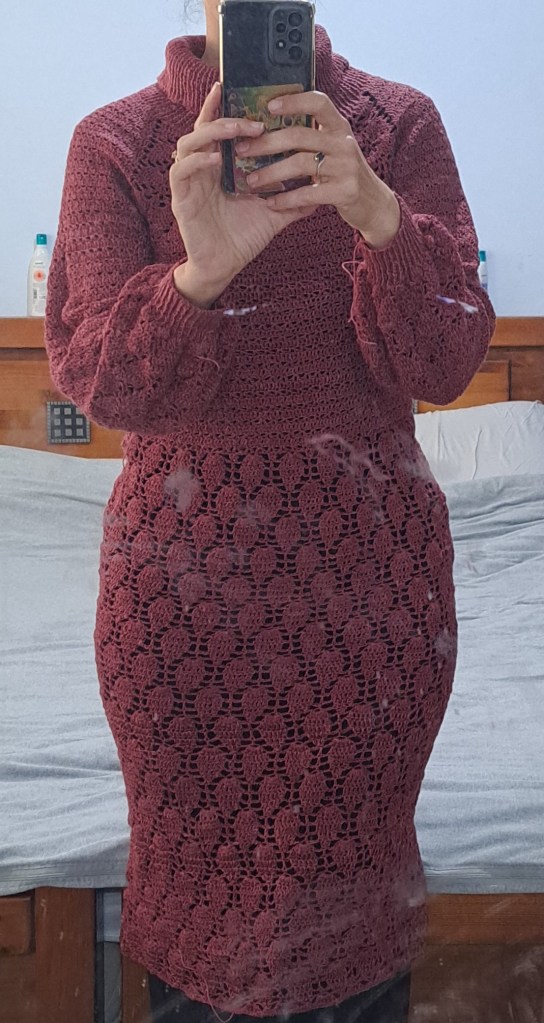
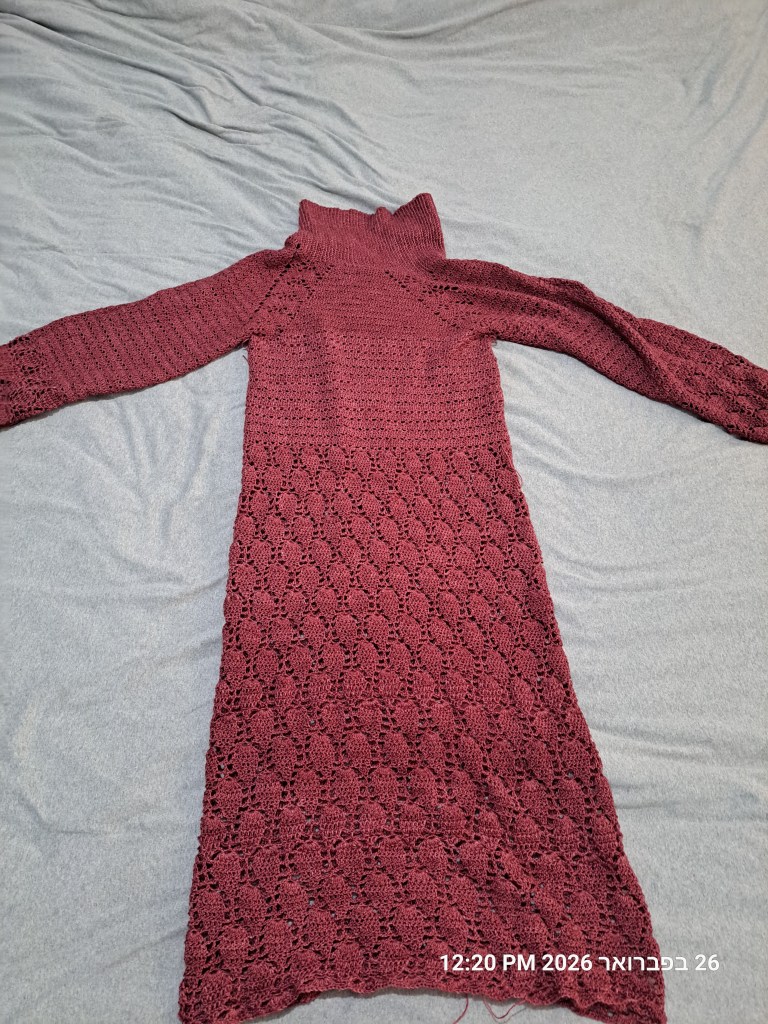
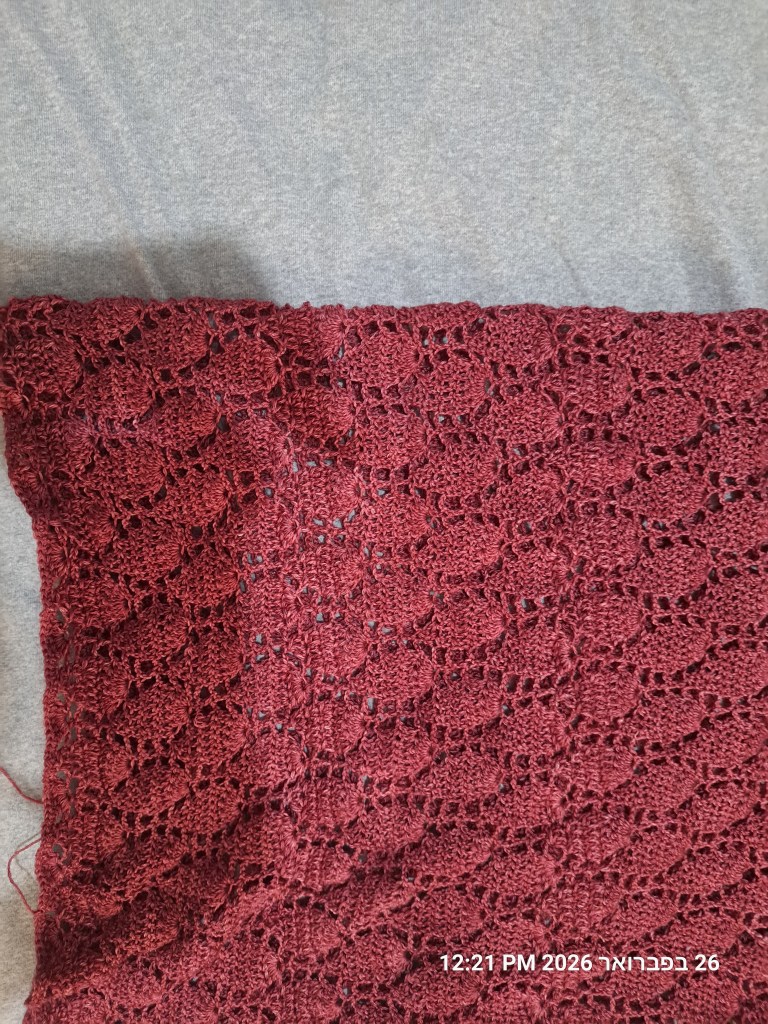
This dress has been a long-standing project I’ve worked on, on and off, for almost a year. Sure, it took a while, but was so fun to make, and the result is just what I’d hoped for: a stretchy, drapey sweater dress, not too warm, light and airy, perfect for layering.
(Yes, I’m aware I still have ends to weave in, but I couldn’t wait to share this!)
I used Silk Merino Hand Dyed by Ice Yarns, a discontinued yarn. Side note: I will no longer recommend yarns from, or link directly to, the Ice Yarns store, as they have stopped shipping to Israel. But, since I already had this in my stash, I thought I might as well use it up.
This yarn is 80% merino and 20% silk and contains 361 yards/330 meters per 50 grams, which makes it lace weight/light fingering. I used 8 hanks, or 400 grams. A 2 mm hook for the collar and cuffs, and 2.5 mm for the body.
I adapted a Pinterest pattern and freehanded the ribbed cuffs and collar. The collar was the most time-consuming part by far!
I just finished Bullshit Jobs: A Theory by David Graeber, a highly thought-provoking read. It discusses how “We have become a civilization based on work—not even “productive work” but work as an end and meaning in itself.”
In simple words, the author claims that a big chunk of jobs today is unnecessary, pointless, or at least extremely inefficient.
I’ll be the first to admit there’s a lot of truth in this. But you know what? That’s pretty privileged thinking. Many, perhaps most people I know wouldn’t mind working some silly job as long as it pays well, is fairly non-stressful, and leaves them a reasonable amount of free time.
I’ve worked on quite a few bullshit projects myself. One was writing copy for a major U.S. solar panel installer. This company decided it needed hyper-focused local SEO, with separate service pages not just for each state, but for every major town or city in each state. This translated to hundreds of pages that all followed the same template, except for a location-specific paragraph that usually included a couple of phrases on the city’s climate and topography.
Each page had to be different to avoid duplicate content on the top-level domain, so I had to reword what was essentially the same content in hundreds of variations. There are only so many times you can do this without feeling like you’re stuck in some Groundhog Day remake.
I highly doubt all that micro-localization was necessary. For most people, state-specific information is quite enough to decide whether installing a solar panel is a good idea.
And guess what? I was supremely grateful for that job. It was steady, predictable, fairly easy, and it paid decently. Those hours I spent writing about installing solar panels in Boulder, CO, or Flagstaff, AZ, translated into groceries for my family, paid utility bills, and clothes and shoes for the kids.
If someone offered me a well-paid, secure, flexible job that consisted of copying license plate numbers into Excel sheets or something like that, I’d take it in a heartbeat. For most people, a paid job is a means to an end: feeding their families. A meaningful job is a bonus.
Yes, I do agree that “Young people in Europe and North America in particular, but increasingly throughout the world, are being psychologically prepared for useless jobs, trained in how to pretend to work, and then by various means shepherded into jobs that almost nobody really believes serve any meaningful purpose.” But what’s the solution?
David Graeber doesn’t elaborate on what the alternative to BS jobs would be. He does suggest Universal Basic Income (UBI) as a possibility. For someone like me, it would admittedly be amazing. I’d never lift a finger for any sort of paid work again. I’d continue writing, of course, but would probably pivot into less commercial-minded projects.
However, while UBI sounds good in theory, it comes with a plethora of problems, not the least of which is that it would be 100% government-issued and -controlled. Thus, almost the whole population would be entirely dependent on the government’s goodwill. If those up above decided to withhold UBI for some transgression (like, say, exceeding the allowed travel limits during a pandemic), who’d stop them?
I was curious about what the author thinks of AI. When I looked it up, I was sad to discover David Graeber had passed away in 2020.
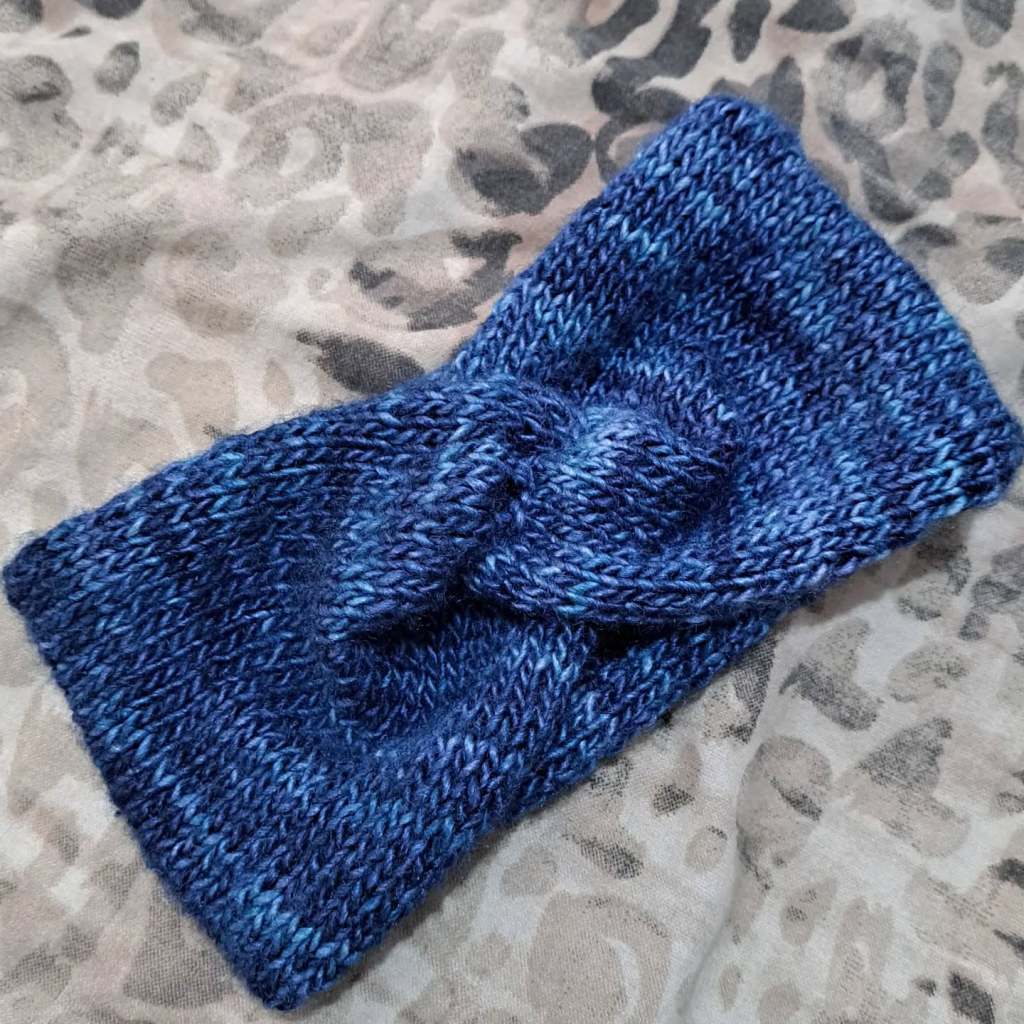
For many years, I was a crochet-only gal. I will always love crochet and consider it the more versatile of fiber arts, suitable for anything from amigurumi and sturdy baskets to delicate garments. However, these days, I’m also branching into knitting. This twisted headband, knitted entirely in stockinette, isn’t perfect – but it’s soft, stretchy, very wearable, and I’m super proud of it.
I worked with leftovers of Malabrigo Silky Merino, a dreamy yarn that’s such a delight to handle and knit (and crochet too, of course!). The technique is super simple: just make a rectangle of the desired length, then fold and sew it together using the method in the Easy Crochet Velvet Twist Headband video. That’s it!
Now, on to the next project… possibly something bigger that requires a gauge swatch.
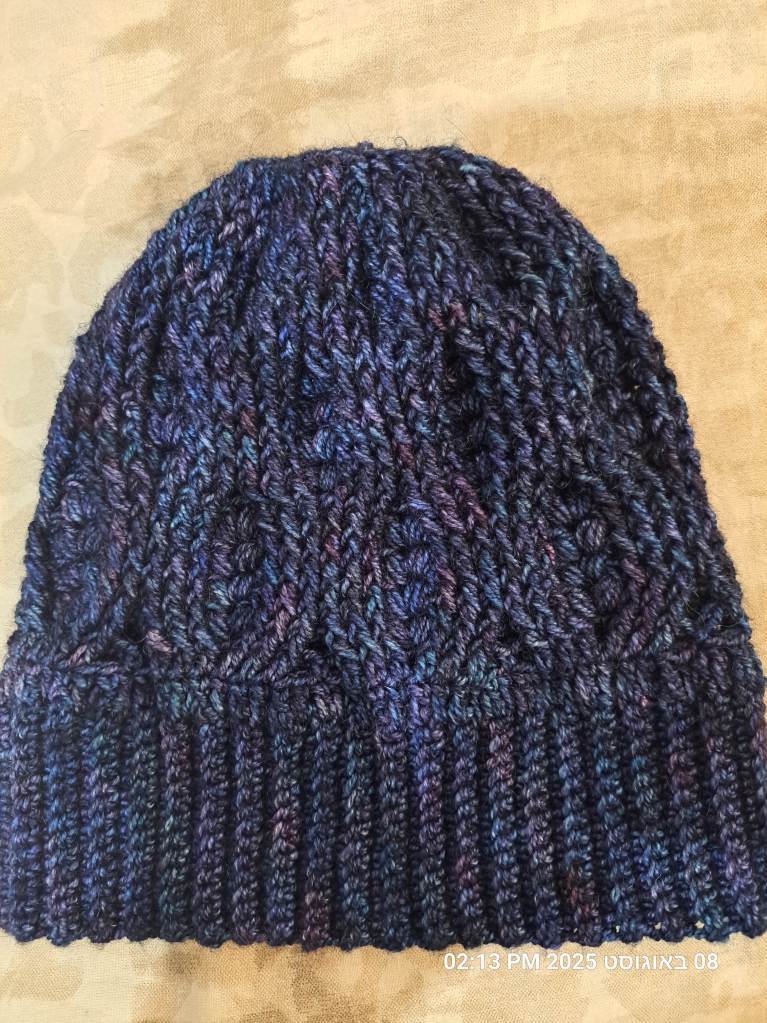
As a treat to myself, I decided to do another quick project in one of Malabrigo’s lovely yarns: this time Dos Tierras, which I handled for the first time. It’s superwash, 4 ply yarn made of 50% merino and 50% baby alpaca. I used a 3.5 mm hook; the colorway I chose was Whale’s Road.
Dos Tierras feels and works up a lot like Rios, despite being 50% alpaca (rather than pure merino like Rios). Also, despite being DK/sport weight, it contains the same yardage (210 per hank) as the worsted-weight Rios. This means that Dos Tierras is heavier, more compact, and likely more tightly plied than Rios.
Dos Tierras comes with all the perks of other Malabrigo superwash yarns. It has a lovely hand, a nice stitch definition, and amazing color saturation. It’s even, not prone to tangling, and easy to unravel if necessary.
On the other hand, again, like Rios, Dos Tierras is a bit floppy due to its superwash treatment. In fact, it’s probably even floppier because of the alpaca content, given that alpaca is less elastic and stretchy than merino.
That’s why a hat likely wasn’t the ideal project for this yarn – something drapey, like a scarf or cowl, would work up better. But my daughter really wanted a hat from this yarn, so I tried my best to make it work.
After completing the stretchy brim (single crochet in back loop), I tried doing post cables. Predictably, this didn’t work out too well – the fabric was stiff and heavy, and the cables lay flat, so I unraveled it and did the wheat stalks pattern instead. I LOVE this pattern, but again, I felt it would turn out nicer and squishier with a non-superwash yarn, possibly some lovely single-ply like Malabrigo Worsted.
Sometimes, you fall in love with the yarn you work with. Sometimes, you develop a love-hate relationship. This was my story with Alize angora gold batik ombre.
I had this yarn cake sitting in my stash for years, from before I switched almost 100% to using all-natural, biodegradable yarns. It’s 80% acrylic, 20% wool fingering/fine sports weight yarn that comes in 150-gram cakes containing 825 meters.
I used color 7295 (eggplant/muted purple) and a 2.5 mm hook. Used this pattern from Pinterest, but my tunic/top came out a lot more flared than in the picture.
[A close-up of the details on the body]
It’s a long gradient yarn, which means that it’s suited for one-item projects worked in a single piece, like top-down tunics or light cardis, shawls, or scarves that show the whole extent of the beautiful slow color shift.
You can start working from the center (in which case you start with the lighter shade) or from the outside, like I did (and then you begin with the darker shade).
Pros:
Gorgeous gradual color change, nothing like the blobs of color you often get with variegated yarns
Drapes nicely
Economical: one cake goes a long way
Cons:
Mostly acrylic; doesn’t feel very nice on the fingers – especially if you’ve been spoiled by gorgeous yarns like Malabrigo!
Itchy against the skin; I wouldn’t use it for a scarf or cowl
Brushed yarn, which means the fibers snag on each other. Almost impossible to frog, so be extra careful when working with it.
Overall, I’m not a fan and probably won’t buy this again.
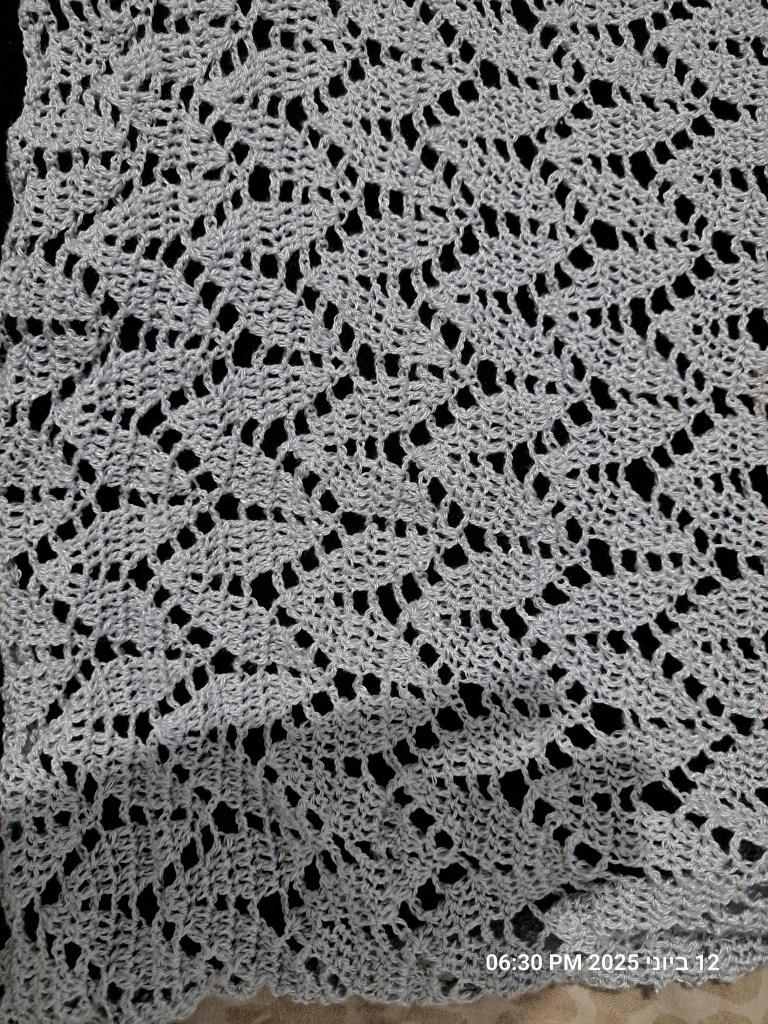
I’ve been MIA for a while again throughout a super busy period – but I did have some downtime to finish this top, on which I’ve been working for over a year (with breaks for other projects).
Materials: Six 25-gram, 210-meter balls (total of 150 grams and 1260 meters) of Pure Silk by Ice Yarns, a 100% silk lace weight yarn, and a 2.5 mm hook.
This specific yarn has by now been discontinued (although some retailers still list what’s probably leftover stock), so I’ll just focus on what it’s like to crochet with pure silk yarn in general. Silk/wool or silk/cotton blends are far more common; working with 100% silk is a whole another experience.
First, the softness. Silk feels amazing against the skin and is 100% non-irritating and non-abrasive. Suitable for all skin types, even the most sensitive. Silk is hypoallergenic and naturally mold- and fungi-resistant. It’s also very gentle on the fingers and won’t chafe even when you’ve been crocheting for hours.
Second, the drape. Silk drapes incredibly and has quite a bit of stretch if you use a relatively large hook. This top wears amazingly: it hugs the body without being too tight and has zero stiffness. This, of course, is also due to the fact that I worked with laceweight yarn: the thinner the yarn you have patience to work with, the more delicate and drapey crochet garments will come out. (Sidenote: The crafters who say crochet garments never turn out as nice as knit ones usually forget that crochet creates a thicker fabric, so you HAVE to work with thinner yarns for good drape and a comfortable, not too thick garment.)
Third, the sheen. This isn’t noticeable in the photos, but when light hits the fabric directly, you’ll see a lovely, muted sheen, subtle and elegant.
Silk also has wonderful temperature regulation properties and is perfect for any weather. It keeps you cool when it’s hot and warm when it’s cold.
Now for the downsides: silk yarn can be pretty slippery, and keeping your tension (I.e., achieving even stitches) could be a challenge. Stitches tend to be looser and less uniform, which creates a poorer stitch definition, meaning your pattern won’t look as crisp as when you work with wool or cotton.
Silk yarn also tends to split, so a rounded hook would work best. Finally, it frogs so easily that you can accidentally rip out half a row if you drop your project or don’t fold it carefully enough in your bag when you aren’t working on it.
And, of course, we have to mention the price. Silk is highly labor-intensive, which makes it expensive. A whole garment from pure silk yarn can hurt the wallet! That’s another pro of working with lace weight yarn: a little goes a long way.
If you’re keen on diving into a crochet project with pure silk yarn, you can try the lovely Malabrigo Mora (which, however, is substantially thicker than the yarn I used here, being fingering rather than laceweight) or look up silk yarn on Colourmart.
I’ve wanted to work with pure cashmere for a long time, but as any yarn enthusiast knows, cashmere is ridiculously expensive. Then, while browsing Reddit one day, I spotted a comment saying, “If you want really nice yarn at great prices, check out ColourMart.”
Guys. I was blown away. [Just to be clear, I’m not an affiliate and make nothing from recommending ColourMart!] The website looks like it hasn’t been updated since 2005 or so, but you can find absolute treasures there.
How significant is the difference? Well, I ordered 300 grams (about 2,200 yards) of lace-weight cashmere yarn from ColourMart for $67. If you check out Jade Sapphire Mongolian Cashmere 2-ply on WEBS, one 55-gram hank (400 yards) sells for a whopping $54, so 300 grams would cost almost $300! Rowan Pure Cashmere is even more expensive: 50 grams costs $69.5, so 300 grams would cost $417.
So what’s the deal? Well, Colourmart sells luxury mill-end yarns from premiere textile mills and fashion houses. In other words, what you’re getting are the leftovers from making luxury fabrics on an industrial scale. This is what enables the retailer to sell cashmere, silk, alpaca, and other expensive yarns at mind-blowingly affordable prices.
One downside of ColourMart is that the selection and color palettes aren’t always predictable. The other is that the yarns are typically pre-treated with oil for industrial knitting, which makes the fibers feel stiffer and more compact until they’re washed. You can pay a small fee to have your yarn pre-washed and wound into hanks, as I did (by default, the yarn comes on cones). You can also wash the final garment, but as I understand, the fabric may “grow” a bit after washing, so prewashing or swatching might be better for size-sensitive garments.
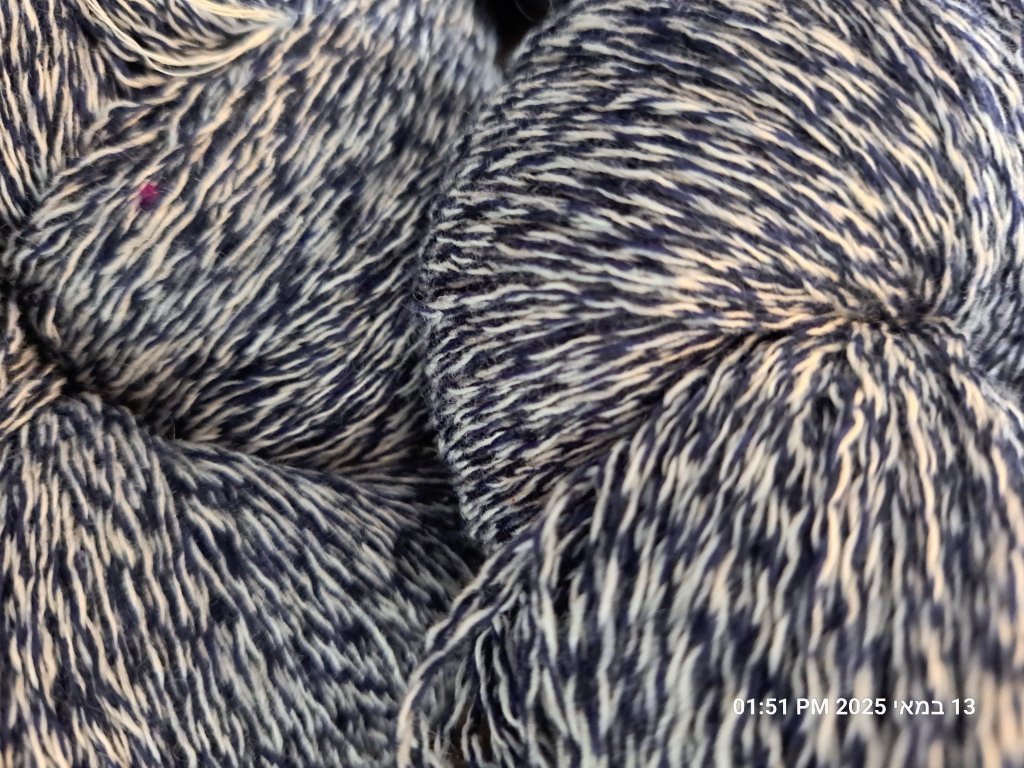
I chose a heathered cashmere that feels a bit crisper than I’d expect, but I know that cashmere “blooms” and grows softer and fluffier with wear and gentle washing.
They also send you a selection of yarn samples, from cobweb to chunky, with your first order. It’s super helpful to feel the yarn to get an idea of what you might want to order next.






 Domestic Felicity