When food prices soar and people are struggling to maintain food security, those who annihilate free food sources completely miss the direction the wind is blowing.
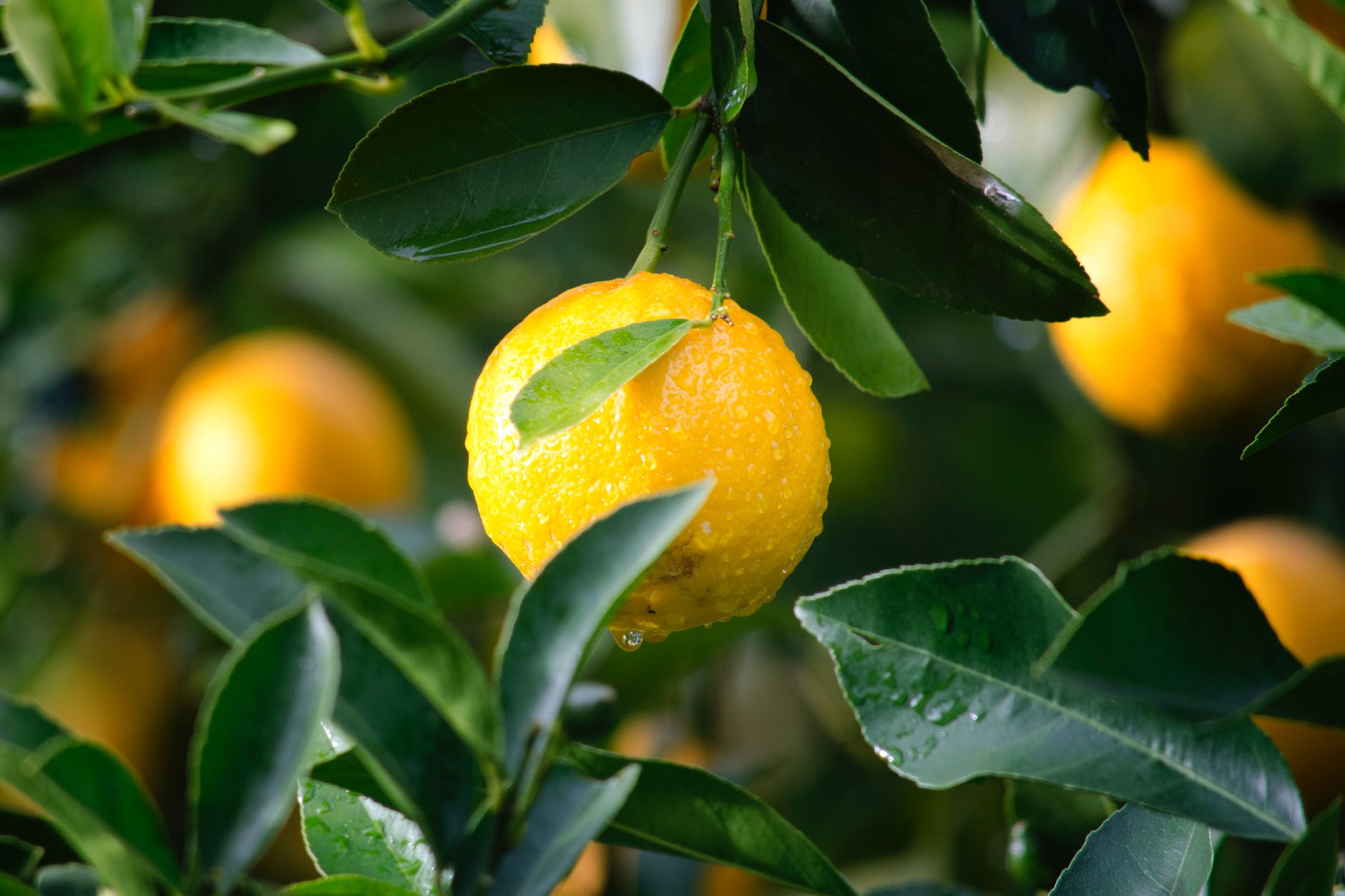
Right next to our home, there was an old, abandoned-looking little house with several lovely orange and lemon trees. Its elderly owner had moved to a long-term care facility and let the neighbors know they could pick the fruit to their heart’s content. We’d carefully step over the sagged low fence and bring home bags of lemons and oranges.
Time passed. Not long ago, the elderly homeowner passed and his heirs put the house up for sale. An enterprising young couple bought it, divided it into two sublet units, and cut down the beautiful old trees.
My heart broke when I saw the lush green branches being dragged to the waste disposal and left there to wait for the municipality’s truck. My kids, who saw it too, nearly cried. We stopped next to the branches for a while, picked a few last oranges, and said goodbye to the tree that had given so much to so many people over the years. Today, I saw they were preparing to pour concrete over the place where the trees had stood.
It’s not the first time we have recently witnessed fruit trees being decimated. Just a few weeks ago, our municipality uprooted two ancient, magnificent trees from which people in the neighborhood used to pick olives every year. Some bean-counter must have decided that fruit trees aren’t worth their annual upkeep, like pruning or removing falling fruit.
Here’s what I think. I believe that when food prices soar and people are struggling to maintain food security, those who annihilate free food sources completely miss the direction the wind is blowing.
Luckily, we still have plenty of abandoned yards and public spaces where we can pick lemons, oranges, and tangerines. They might be smaller and have more pits than regular varieties you’d find in the store, which might be the reason why most people don’t bother with them, but they’re perfectly good for juicing.
In Judaism, fruit trees hold a special place and it’s generally forbidden to cut them down for no good reason. I think it’s one of the greatest pieces of wisdom in Jewish lore – the respectful, almost reverent attitude toward sources of food and life.
Rosemary is one of my favorite herbs. So hardy and easy to grow, and with so many uses. This native Mediterranean shrub thrives in bright sun and warm temperatures, so you should be able to grow rosemary in zones 8 and 9.
I love rosemary for its versatility. It’s great for cooking, has outstanding health properties, and requires little care and not a lot of water. Even better, bees love it, but chickens don’t like to eat it, so a mature rosemary bush can even grow in any place you use as a chicken run.
I use rosemary as a:
#1 Cough and cold remedy. Rosemary has antibacterial, antiviral, and antifungal properties. Just make some rosemary tea when you’re under the weather and enjoy it with a little honey. I find it helps soothe coughs and sore throats.
#2 Cooking herb. Rosemary really brings out the flavor of meat and fish; oven-baked salmon sprinkled with salt, coarse ground pepper, and rosemary leaves is my favorite.
#3 Lice and bug repellent. Rosemary’s pungent smell repels lice, mosquitoes, and other bugs. You can spray hair with a little rosemary infusion or dab some rosemary tea behind children’s ears to defend them against a lice infestation.
#4 Fragrance. I’ve added rosemary to home-processed soaps, sometimes combined with mint and eucalyptus extracts.
I got my rosemary plant from someone who simply cut off a branch and let it develop roots in water. I haven’t been very successful in rooting rosemary cuttings in water myself, but I’ve seen it work for other people. You can also buy a young plant from a nursery and add it to your herb garden. Rosemary takes some time to really start growing, but once it gets going, you may need to prune it once in a while to keep it from overrunning its space.
I’ve had this marshmallow-soft ball of enormous-sized yarn sitting in the closet for a while simply because I didn’t have a hook large enough to use with it. Then, finally, I figured out how to use my finger as a crochet hook! I was surprised at how quick and easy it was. The technique I used was very similar to what this video shows.
The rectangle in the photo above took me under an hour and works great as a chair seat cover. Personally, I’m not a huge fan of super bulky yarn – I’m more into fingering-weight yarns and fine wearables – but jumbo yarns can be a nice option if you’re looking to whip up a quick handmade gift.
Israel’s new government is about to cancel two consumer taxes the previous government has put in place: a tax on disposable plastic tableware and a tax on sugary drinks (which also go out onto supermarket shelves in plastic bottles). Many people see this recent move as pandering to the Israeli ultra-Orthodox population and have a lot of things to say about those nutty religious fanatics who can’t bother to wash their dishes.
I’ve often said that large families have a huge environmentally friendly potential. Modest lifestyles, a limited amount of car and airplane travel, and lots of using hand-me-downs make religious families with many kids a lot less wasteful than many families with just one or two kids who burn up gas like there’s no tomorrow and order huge boxfuls of cheap stuff from Shein that’s going to end up in the landfill after a couple of wears.
Basically, I believe there are two elements that keep most large families in Israel from becoming truly environmentally friendly: time and brain-space.
I know what it’s like when you have a bunch of kids come indoors from playing, look into the sink, and discover it’s still full of last night’s dishes. Then you desperately reach for the stack of disposable plates and cups on the upper shelf, promising yourself you won’t procrastinate with dishwashing next time (or, in my case in the past, telling yourself you’ll have to wash those dishes the moment the running water supply resumes!)
Sidenote: As far as I know, most Haredi families in Israel don’t use a dishwasher. One reason is Jewish dietary restrictions: most strictly observant families would use the dishwasher either for meat or for dairy dishes, which would still leave them with huge amounts of kitchenware to wash by hand. Another reason is that the initial investment would seem daunting to many large families on a shoestring budget. And, finally, a dishwasher takes up space, and many Haredi families live in cramped apartments with tiny kitchens.
Another thing is brain-space or, if you prefer, lack of awareness. Ultra-Orthodox schools and society rarely emphasize environmental studies (although I definitely believe they should). Some even disparagingly call caring about the environment “the secular religion” and go on a tangent, saying that people “worship” the environment instead of caring about the “really important things”, like helping people in need. Of course, it’s a false narrative that often covers up one simple truth: when you have five kids under six, it’s hard to care about anything but day-to-day survival. You do what you need to do to keep your head above the water, even if it creates bigger landfills – which is ultimately one reason I chose not to cloth-diaper. I do try to improve and make more environmentally friendly choices, though.
A friend who lived in the U.S. for a few years told me that in her opinion, the Israeli reliance on disposables is unprecedented in the developed world. I think it’s a shame, especially since, in my opinion, disposables don’t really save as much work as people think.
First, you need to remember to buy them, and then you panic if you don’t. And sometimes you end up running out to the store just because you’ve run out of plastic dishes and you haven’t geared up with a “real” dish set for the guests that just arrived at your doorstep.
Also, since plastic kitchenware (especially the cheap kind most Haredi families use) tips over, tears, and breaks easily, it will create more spills and messes when children use it. And finally, disposables clog up your garbage can so you need to empty it more often.
Plus disposable kitchenware is just plain yucky. Food both looks and feels so much nicer when served in glass or crockery.
The second tax that is now being revoked involves sugary drinks. My feelings about this one are more mixed. On the one hand, I don’t believe in a condescending, paternalistic attitude that tries to teach people what’s good for them by punishing unhealthy food choices through their wallet. I also have great faith in a free market. My suggestion is that, instead of revoking the tax, it’s time to roll it to the bottled drink manufacturers who destroy public health with their sugar-loaded offerings.
Finally, we should all remember that the consumer’s power is in our hands. Whatever taxes the government imposes or cancels, we can all choose to make an informed decision about what we eat, drink, or use in our kitchens. We can all take responsibility for our food and consumption habits and work towards making our own private household healthier and more environmentally friendly.
Just taking a few minutes in the midst of this delightfully busy time of the year to wish all my friends a happy Hanukkah, a joyful holiday season, and a terrific 2023.
My goals for 2023:
Spend more fun and memorable times with my kids
Keep up my productive routine of an early workday that ends by noon
Get more creative writing done
Carve out more opportunities to get out into nature
Finally do that big closet sort-out
Catch up with housework
Whatever your 2023 ambitions are, I hope you have a happy, healthy, safe, and productive new year, surrounded by family and friends and enjoying all this messy crazy world has to offer.
I love a bit of shopping as much as the next person – especially if it’s thrif shopping. In fact, it’s thrilling to know you’ve scored and got a quality item for a fraction of the price. I have a pair of knee-high genuine leather boots, which I got for about $20 in a second-hand store and wear almost every day, every winter.
But here’s the problem with shopping, even and especially when you get a great deal: we all have limited space on our shelves and in our closets, and no one wants their house to look like something that belongs in an episode of Hoarders.
Cue a simple but effective rule I’ve been implementing lately for purchases that aren’t absolutely necessary: one goes in, one comes out.
Here’s how I do this: if I consider buying a pair of shoes for myself or my kids, I challenge myself to go over all our shoes and part with at least one pair. It can be something that doesn’t fit anymore or just something that hasn’t been worn in a while.
This actually works great, because:
a) I put stuff in order as I go through it
b) I keep the house from being overrun by surplus items (does stuff breed when I’m not looking, or what?)
c) As I go over our things, I usually find more than one item we can do without, so it usually ends up being “one goes in, two or more go out”
These days, I apply this rule to pretty much anything: clothing, toys, books. With items that get used up, like art supplies and yarn, I adjust the rule to “finish one, then buy another”.
So that’s my current strategy. Rather than do one big seasonal declutter, just keep clutter from accumulating as much as you can.
I thought this hat would take me a few days at most to put together. Worsted weight yarn with a super simple pattern – what could possibly take too long? But, given my recent disproportionate workload and a couple of kids with temporary health issues, I spent a couple of weeks working on this little piece. I pulled it out to crochet a couple of rows on any errand that stalled and on any occasional bus ride.
Here’s a view of the hat before I attached the pom my daughter selected.
Crochet hook: 3.5 mm for the brim, 4 mm for the body.
Pattern: None to speak of. Done from the bottom up, like my other hats, starting with a stretchy ribbing brim (single crochet in back loop only). Body: three front post double crochets and one back post double crochet all the way. Freehand decrease.
I used exactly one hank of Malabrigo Worsted, another dreamlike yarn by Malabrigo, for this project. Let me just say a few words about this amazing yarn.
First, working with Worsted is probably the closest you can get to crocheting off a real live sheep. This yarn is 100% lush merino, not superwash (if you want a superwash variety, try Malabrigo Washted or another type of superwash merino), from sustainably and humanely raised, pastured Uruguayan sheep. It delights the crafter with a beautiful halo and delicious softness. It has a gorgeous stitch definition and is perfect for showing off stitchwork, cables, and textures.
Now for the downside. With all my weakness for super soft single-ply yarns, I’ll be the first to admit Worsted probably won’t stand up to hard wear, which is why I’d use it for something that may expect gentle use, like a hat or cowl, but definitely not a sweater.
Second, the uniformity of thickness was really off. Sometimes it would come closer to super bulky, while at others it resembled more of a sport weight yarn.
Malabrigo Worsted comes in a range of stunning colors. I used Damask Rose, a would-be solid muted pink that offers delightful, subtle variation.
Do I plan to buy more of this yarn? Yes, definitely yes!