The good things in life

DSC_0796

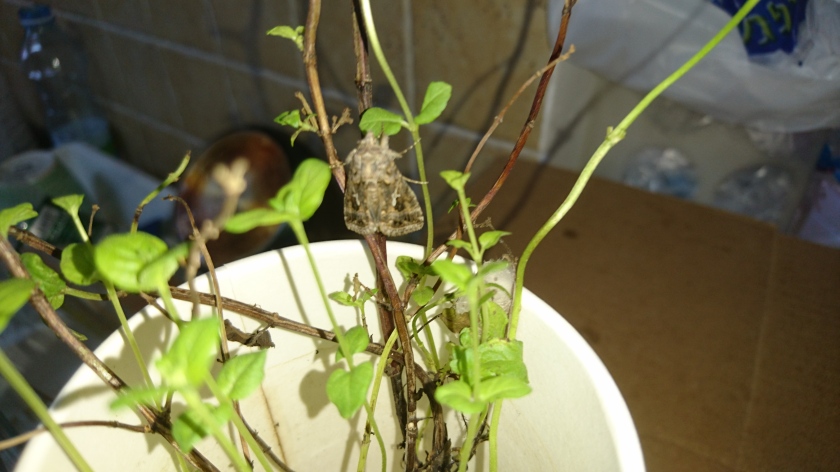
This has been a busy summer, but thankfully, not too busy to appreciate the good things in life. Above: a little moth we were lucky enough to be able to watch transform from a chrysalis before releasing it.

DSC_0798

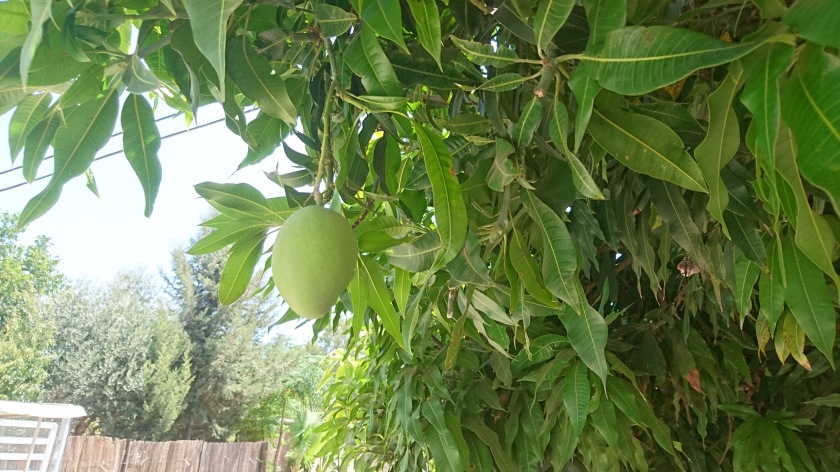
Our mango tree surprised us with pretty big fruit this year. The previous winter had been rainy, so I guess it needed more water.

DSC_0801

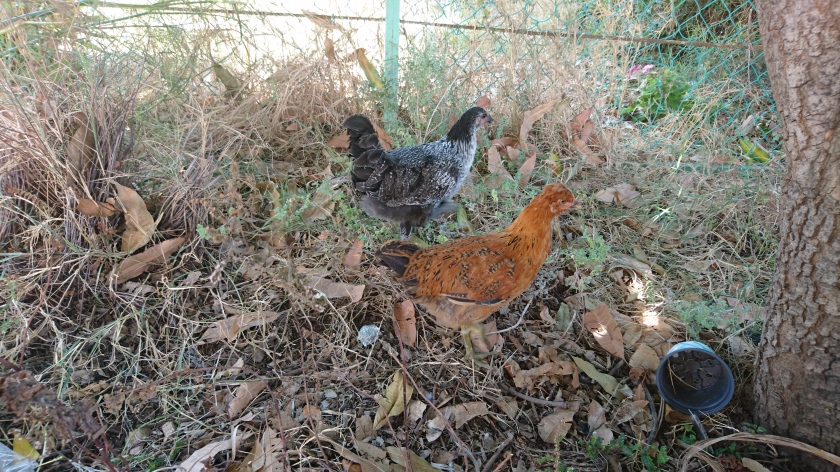
Two pullets of this spring’s hatch. All in all, we have 5 young pullets and 8 cockerels (the latter will not be remaining with us – one roo is quite enough!)

IMG_20200820_132406_776

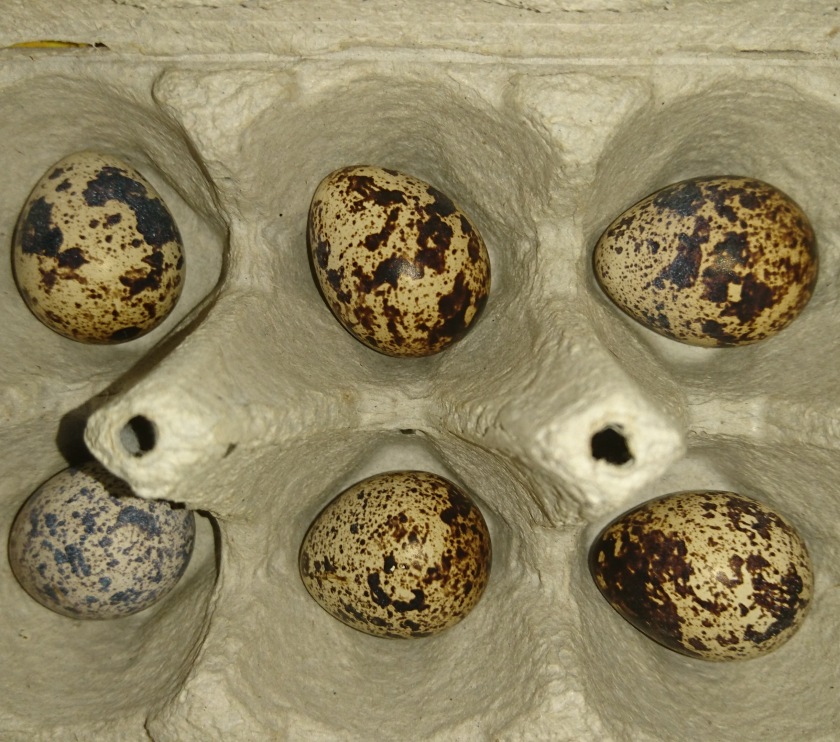
Quail eggs – as pretty as they are delicious.

Hope everyone is having a good August! I love the sunshine, but could do with less heat.

My transition to a work-from-home mom

If You Dream of Being a Work-at-Home Mom, Here's Everything You ...

I had my first baby over 11 years ago (crazy to think of! Time flies!) and ever since, my life has revolved in a large measure around my children.

Until my fourth child was born, I was mostly “just” a stay-at-home mom. Don’t get me wrong – it’s more than a full-time job! Oh, I did get some bits and pieces from my books and articles, but overall, I was more focused on saving money than making it.

My mindset shifted with a prolonged period of financial distress, during which I realized how vulnerable I really was. I knew I needed to have a source of income, but I also knew I wanted to be with my children. Thus I resolved to work from home. But how to achieve this, when I already felt like every spare moment was taken?

Well, I certainly made some lifestyle changes that enabled me to fit part-time work into my mom schedule. Here’s how.

1. I became a lot more careful with my time. Not that I was ever that frivolous, but I did watch the occasional movie with the kids during the day, and I could spontaneously set aside a couple of hours for a whimsical project like picking acorns for crafts.

Now I’m extremely jealous of every spare minute during the day. I am either with my children or working, and any extras (like outings) are strictly pre-planned. I don’t remember when I last watched a movie and I rarely answer the phone, opting to return calls at my convenience instead.

Does this sound too restrictive? It might be, but this schedule has enabled me to generate an income from home while also going on with writing and publishing my books. I think it’s a worthy tradeoff.

2. I sought the niche that works for me. I tried translation, transcription, and a couple of other things, and eventually got into freelance editing and, more recently, writing. If there’s one advice I’d give anyone, it’s this: don’t force yourself to do something you don’t like, even if it pays well. You’ll get burned out very quickly and won’t last.

3. I diversify and work towards creating a scalable income. I don’t concentrate all my work on one platform, but do some on several for a constant cash flow. I also work directly with authors, helping them edit their books.

Finally, even though it’s not easy, I set aside some time for my own books. In the past couple of years, I have been rewarded with a steady trickle of income from this venue, and I hope it will keep growing (book 5 in my Frozen World sci-fi saga coming soon!).

4. I don’t take low-paying gigs anymore. When you just start out, you may have to accept some less-than-lucrative jobs to get some experience under your belt, but take it from me, you don’t want this to last too long. Keep looking about you and angling up to raise your pay rate.

I currently work about 2-3 hours a day, splitting this time between early in the morning before my kids wake up, and a spell of quiet time I usually get around mid-day. I used to work after the kids have gone to bed, but realized I’m not really productive at that time of the day and it’s better to relax and spend some time getting the house in order before I go to sleep so I’ll have a good start the next day.

I don’t make full-time income yet, but that is my goal. Eventually, I want to be able to provide for my family single-handedly, if needed – like in case my husband loses his job again. It gives tremendous peace of mind knowing you have feasible, flexible options to do that – especially during a full-blown worldwide crisis.

Is stability still possible?

financial sustainability

These days, my heart is just breaking. It’s breaking for all the people who have been separated from their families as the skies closed. For all the people who lost their businesses. For the older folks who were active and hardy and kept in good shape, mentally and physically, by going to exercise classes, swimming, and traveling, and are now stuck in their homes, deteriorating by the day and unbearably alone if they have no nuclear family living with them.

It’s heartbreaking that children will have to start school next year burdened with restrictions that are far too heavy for their age, and other children who will be left out without adequate resources for at-home learning.

It seems we are saying a reluctant goodbye to job security, financial security, pension security, any-kind-of-security as stocks are plummeting and pension funds losing value as we speak. I am heartbroken for all the people who lived wisely and made all the right choices, and still find themselves financially (among other ways) vulnerable today.

This was also the core of my latest Mother Earth News post.

“What does this mean? I won’t say anything radical like “money is worthless now” or “ditch the money economy.” I’m a firm believer in personal finances, putting money aside, and planning for the future. 

But I also believe that the coronavirus crisis has shown us that stability, security, and wellbeing depend on much more than money. “

Now is the time to ask ourselves: how self-reliant are we? How prepared are we for another event of extended lockdown and empty store shelves? Do we have barterable skills we can use in lieu of money if the latter loses some of its value? Do we belong to a supportive community of people who can be counted on to help each other out when the you-know-what hits the fan and starts flying in all directions?

Read the rest here.


Crocheting through tough times

Lately, I have found myself putting things off: a visit to the bank, the doctor, the post office… “I don’t have to do it today. There’s time. Maybe in a week or two…”

Then I caught myself: why? What is going to happen in a week or two? Will the coronavirus go away? Will it be safer to go out and about?

Not likely. The you-know-what has hit the fan and is now flying in all directions. I’m afraid the world as we used to know it is no more.

A few days ago, we had a huge local demonstration of small business owners – restaurant owners, tour guides, dance instructors – who were all hit hard by COVID and now demand that the government gives them a financial boost to keep their businesses afloat.

I understand their plight, I really do. I know what it’s like to be financially desperate. However, I believe that no amount of handouts will enable businesses to operate if they don’t adapt to the new situation (Zoom lessons, takeout instead of sit-down meals, etc). And it often sounds like that: people don’t want to adapt. They want things to go back to normal, refusing to admit that normal has flown out of the window.

Even if we are lucky and the coronavirus disappears (which doesn’t seem likely), the impact of the past months has already hurled the world into a deep recession with a wide ripple effect. To get through it, we must be resilient, resourceful, and flexible.

In the meantime, there’s yarn: the best escape whenever things are stressful.

DSC_0751

My latest make, a little crochet tunic for Hadassah. It was meant to be a dress, but I ran out of yarn and, as it was one of the oddments of a vintage stash, had no way to buy more.

DSC_0750

Nevertheless, I like it, and so does the recipient. I put some vintage buttons at the back. Love the open raglan top – such a useful design.

I hope you are all using your favorite wholesome destressing outlet, whether it involves gardening, fabric and yarn, baking, or any other thing you can do away from dangerous crowds.

Power Outage

Today I got an early start in the morning and was sitting in peace and quiet in front of my laptop, working on a project for a client, when the power suddenly went out. Since I have a problem with my laptop battery that I didn’t make a priority to fix, the screen instantly went black, not allowing me to save my work.

A call to the electric company let me know that there was an unexpected accident and the power supply would return in 3-4 hours. Thoroughly bummed out, I went ahead to straighten up the kitchen in preparation for breakfast. 

The power eventually returned and I completed my project and sent it off, but this was a throwback to the good ‘ol days when we lived in a place where this could happen any moment, and for much longer. I remember 72 hours without power, during which we did our best to eat everything that spoils and I was careful not to open my freezer so that it wouldn’t thaw.

I love living in a place with a steady electricity supply, but today’s incident reminded me how much we have to improve in preparing for emergencies.

In our old home, we took care to keep our mobile phone power banks charged and our freezer always stocked with ice bottles so that it would thaw more slowly. A laptop battery would most certainly be fixed earlier. There was a communal backup generator we could fuel and hook up to if need be.

And, from electricity my thoughts jumped to preparedness in general, which is something we really should gear up for again. A life of convenience lulls you into a sense of security which may, unfortunately, be false, as the covid-19 pandemic showed us all, turning our world upside down and giving it a thorough shake that totally messed it up.

***

From Your Own Hands: Self-Reliant Projects for Independent Living

A radical homesteader from Connecticut who prefers to call himself Xero says, “Consumerism to a large degree only exists because it profits off of our own loss of skills. Over the last hundred or so years people have undergone what I see as a horrifying loss of survival skills.

Without these skills, without the ability to survive on one’s own, one must depend on already manufactured, and continuously manufactured goods and services to stay alive. These goods and services cost money. In order to get said money, one must submit to paid labor. Sometimes one can find labor that is fun and fulfilling, but that doesn’t represent the majority of folks, especially on a global scale.” 

Another day, another basket

IMG_20200629_171923_984

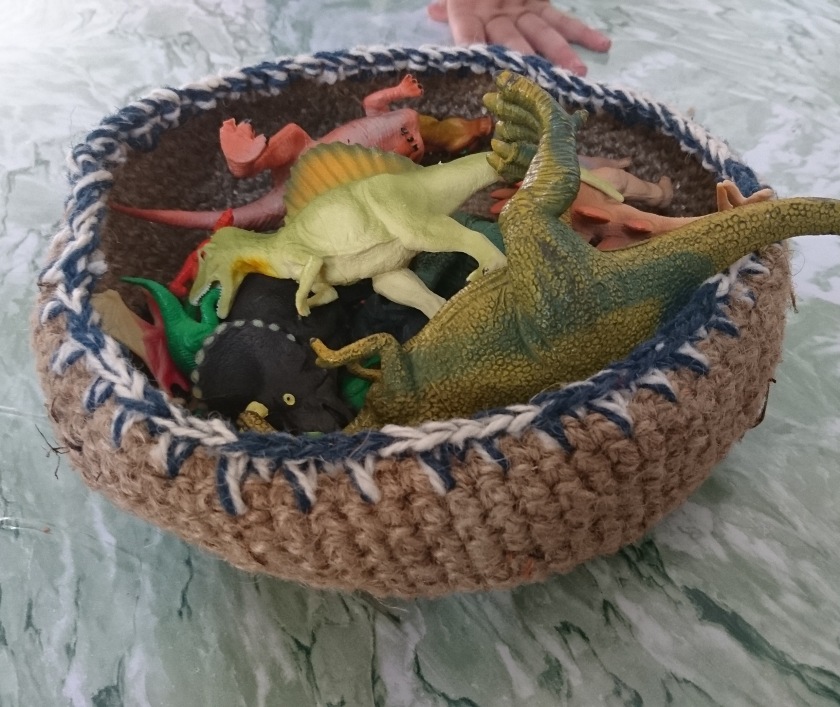
I made another little rustic jute basket, much along the lines of my previous one. It seems perfect as a nest for my kids’ dinosaur collection.

It was meant to be oval but sort of came out round anyway – I guess I didn’t make the base chain long enough.

As much as I love the rustic look of jute baskets (and the fact that the material is inexpensive – I picked the roll up at the hardware store for about $2), I think I won’t be making another one anytime soon, as working with it is pretty heavy on the hands. Jute chafs the fingers, and I had to really pull on the thread to make the loops – no smooth gliding yarn action here!

I made the top row in a double strand of leftover coarse yarn of unknown origin. 😉

I hope you are all enjoying a happy and crafty summer.

When being too frugal keeps you stuck

A Jar With American Change Used For Savings Or Tips, Isolated ...

I am a big proponent of doing more on less, living modestly, and implementing creative frugal strategies. In this post, however, I’m going to talk about how taking it too far can actually keep you broke rather than lift you up to a better situation.

A couple of years ago, our financial situation was pretty bad. Actually, we were in a crisis following a long period of my husband being out of work, coupled with some bad financial decisions. We were on the brink of not being able to afford to maintain the household another month without getting into debt. There were no longer any cushions or savings, and we were free-falling into poverty. 

I was very conscientious and very dedicated, and my mind kept looping and looping in endless circles, trying to come up with even more efficient ideas for saving money. I gave up on showering when there wasn’t enough sun for the solar heater to do its job, stretched one sack of chicken feed for months, and put off grocery store trips as long as I could.

All of these things helped, don’t get me wrong, but it wasn’t enough and I knew it. I felt helpless. I tossed and turned at night, wondering whether it would make a difference if we unplug the extra refrigerator and what to do if the thrift store doesn’t carry shoes in my kids’ sizes, because theirs all had holes.

What I should have done at that point was getting more proactive about getting paid work, selling my books, and building professional networks that would be useful in the long term. THAT makes a difference. Whether you choose a slightly cheaper oil for baking doesn’t.

True, I was limited. I lived in the middle of nowhere with a bunch of kids, with no reliable transportation and no steady internet access. I remember sitting for long minutes waiting for the HTML version of Gmail to upload and cursing under my breath when it wouldn’t budge.

But apart from that, I was a prisoner of my own rigid conceptions of a father of a family being the sole breadwinner and the mother stretching the income to make sure it’s enough. It’s a great way to do things, but if it doesn’t work for some reason – and it might fail at any time, temporarily or permanently – and you aren’t prepared for the possibility, you’re up shit creek without a paddle. I’ve learned that the hard way.

It took me a long, long time to face the fact that, while I can make a little go a long way, I do need that little. I can’t make do with nothing, or nearly nothing.

And that’s a key point of successfully overcoming financial hurdles. In a crisis, you should sit down and make a realistic, bare-bones budget of the minimum you need to live. If you aren’t reaching that minimal income, you need to focus on getting there. It’s that simple. Otherwise, you may tighten and tighten that belt until it chokes you, and it still won’t make a difference.

It’s GREAT to have the ability to go without frills. So many people have an entitled attitude and would rather live in debt that do without. But the primary focus should still be on not being poor. I wasted a tremendous amount of time on researching ways to pinch a few more pennies, while I could have used my efforts so much better looking up ways of working from home.

I have tried several things and it’s certainly been a learning curve, until I got into editing books for authors (quite accidentally) and acquired a few loyal and happy clients. I also do some content writing and, after a long time, began seeing profits from my own books, especially fiction.

I regret nothing. Whatever hard-earned lessons I had, I’m making the most of them.

For most people, financial wellbeing and resilience will have these two components – making enough money to live and staying within a reasonable budget. Sometimes, when you’re just hunkering down and trying to survive, it’s hard to see the forest for the trees.

If you’ve been skimping and saving and pinching for a long time, you might be so mentally exhausted and so, for lack of a better word, poverty-wired, that it can be hard to step back and evaluate ways that might actually help you improve your situation on the macro level.

Try to take a piece of paper and pencil and brainstorm for a while. What are your strengths? How can you utilize them to earn more money and become more financially secure?

Remind yourself that though things might look hopeless, they will improve. You won’t be stuck forever. You won’t be poor forever. This mindset, I have come to discover, is the most important element in pulling out of the quagmire.