Wild Children now available for pre-order!

coverfront

I’m very excited to announce that my upcoming novel, Wild Children (to be released under my pen name, Hannah Ross) is now available for pre-order in both print and Kindle formats. Official release date is April 28-th.

It has been quite a journey with this book. I was pregnant with Israel when I first began writing it, and now he’s two years old! I’ve also completed the first rough draft of the sequel and began outlining the third book, so there’s plenty to look forward to.

From the description:

In a post-war world, where reproduction is strictly controlled and transgressions severely punished, they are society’s rejects. Unwanted and unloved, they are raised in an orphanage until age twelve, then taken beyond the Boundary and left to fend for themselves, to survive or perish.

One child was different, though he didn’t know it. He was wanted, he was loved, and he was hidden for three months. But reason prevailed. A third child meant a lifetime of concealment, a lifetime of fear and loneliness, and discovery would mean social and financial ruin for his parents and siblings, so one rainy night, his mother did what she must. As her heart broke, she walked up the path to the orphanage and surrendered him.

Wild Children is a story of abandonment and survival, of hope and determination, and of a love that refused to die.

Payhip Protest Book Sale

collage-2017-01-11

For a reason I cannot quite understand, Amazon has removed genuine, legitimate and helpful customer reviews from one of my books and refused to provide any real explanation to this. I know they are tightening their review policy to prevent paid and fake reviews, but I believe authors like me, who never use any paid promotion whatsoever and cherish every genuine review they get, don’t deserve such injustice.

Given this circumstance, I’d like to encourage anyone who might want to buy my books to do so directly via Payhip (unless, of course, you prefer a paper copy, in which case Amazon remains the only option). I am currently running a 50% discount on all the books in my Payhip store. Coupon code is 6318WQ1TAM and it will be valid until the end of the month.

Thank you, and you are very welcome to share this on your social media and/or blog.

PS: To those who have been asking me about my next planned book, The Basic Guide to Backyard Livestock, it will take quite a bit of time yet, but I’m having a lot of fun working on it.

The things you will never regret

In our previous home, we had a separate room for a home office. Such privacy is very convenient, but it is also the pitfall of the computer junkie (which, I admit, I am). I could tuck children into naps or, at a period of time when I didn’t have any children young enough to need naps, I could let them watch a movie – while I got into the office to check my emails, etc.
The problem is, the “etc” only too easily turns into watching silly YouTube videos, participating in draining online discussions, making frivolous Google searches (“why does the top point of my left ear sometimes itch?”), and keeping up with the social media. The power of the click is just too alluring.
Of course, there are also the good things – reading excellent helpful articles, writing letters to friends, taking care of personal projects, working on my books. However, the good things are even more dangerous, in the way of justifying an extravagant amount of time spent on them. If you watch a video of a cat playing the piano, you’ll feel guilty for wasting your time after five minutes. But knitting how-to videos are okay, right?

Unfortunately, I became feeling entitled to that office time, alone behind closed doors. It was my time; I needed it. So when naps were broken, or squabbles interrupted movie time, I became unreasonably frustrated. I don’t have an exact estimate of how many hours were spent on lawful pursuits, and how many on mindless web browsing, but there is no doubt a large chunk of my time could have been better employed.

In this house, I have one computer in the living room for everybody’s use, faulty internet connection and a little one that really isn’t a very good sleeper. And I’m happier than ever; this change has been the best thing that could have happened to me. It taught me to prioritize; on a good day, I might have half an hour after lunch for answering emails, browsing ads, etc, and if I’m not too tired there’s an hour or two at night when I can write, read, research information or watch a movie in peace and quiet.

The thing is, when I look back on times enjoyably spent with my children – whether reading together, or taking nature walks, doing crafts, playing games, even just watching a movie together – I can’t think of one hour I would rather have spent doing something else. Even if a baby is colicky or teething, it means a night of precious snuggling with someone who needs me, just then, more than anything. I might be very tired, but I have no regrets.

But when I remember my “me” time, my feelings are not so unequivocal. There are many pages I wish unread or unwritten, many videos unwatched, many games unplayed, many conversations unspoken. Not because these things were bad in themselves, but because they took away from the truly important things I should have been doing.

You will probably never regret spending time with your children. The same cannot be said of other things, be it personal projects, volunteering, hobbies or social commitments. I keep that in mind every day, and it makes all the difference.

***

coverfront.jpg

Speaking on another matter, I’m very excited to tell that my upcoming novel, Wild Children, is now on Kindle Scout – which is essentially an Amazon-based contest the winners of which get their book signed up and promoted by Amazon. You can read the book description and first chapter and, if you feel it deserves to be supported , nominate it on its Kindle Scout Page.

Nutrition and Physical Degeneration

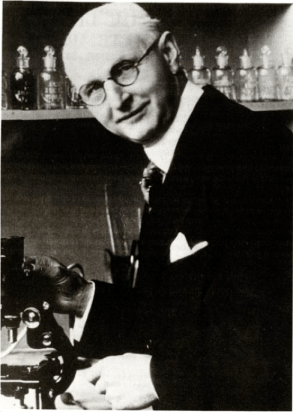
I would like to thank the several readers who sent me a link to the book of Dr. Weston Price, Nutrition and Physical Degeneration. You can read the book – which I highly recommend – online if you follow the link. This was the first time I heard of Dr. Price’s research, and I must say his findings are striking, not to mention highly convincing. The facts speak for themselves.

For those who are unfamiliar with Dr. Price, he was a researcher in the 1930’s who traveled all over the world and collected data on how the contact with modern civilization and modern food impacted the primitive cultures who were exposed to it for the first time. That unique point of time made the research possible – finding truly primitive communities would be a lot more difficult today.

Dr. Price was a dentist and originally his research focused on the condition of teeth, but it soon becomes very clear that teeth problems are just the tip of the iceberg when we come to deal with trouble brought on by the de-vitalized nutrition of modern age.

Even though Dr. Price’s research was conducted such a long time ago and science has marched a long way since, I believe his findings are still and probably even more relevant today. When I think of why his conclusions weren’t widely publicized and the entire approach to nutrition wasn’t revolutionized, the only reason I can come up with is that it would be so inconvenient to many people. Dr. Price offers no easy solutions, but clearly states that it takes a great strength of character to give up the food that is bad for us.

This strength of character is something that the establishment thinks we lack. They view us as a complacent herd. When I was a student, our professors clearly told us that most people don’t have the willpower to change their lives and improve their health. Therefore, we were to focus on the easy, temporary solutions, not the truly effective ones.

Furthermore, the food industry clearly doesn’t want us to put too much thought into what we eat. It’s far too easy for them to toss a handful of artificial vitamins and minerals into junk food like sugared cereal, and market it as health food. It is especially maddening to think that many of the junkiest foods out there are directed towards children and parents of young children – and many parents don’t hesitate to give their children highly sweetened and processed foods, thinking they are healthy because some synthetic vitamins were thrown in.

Nurturing Hands: The Holistic Health Pocketbook

naturalhandsmint

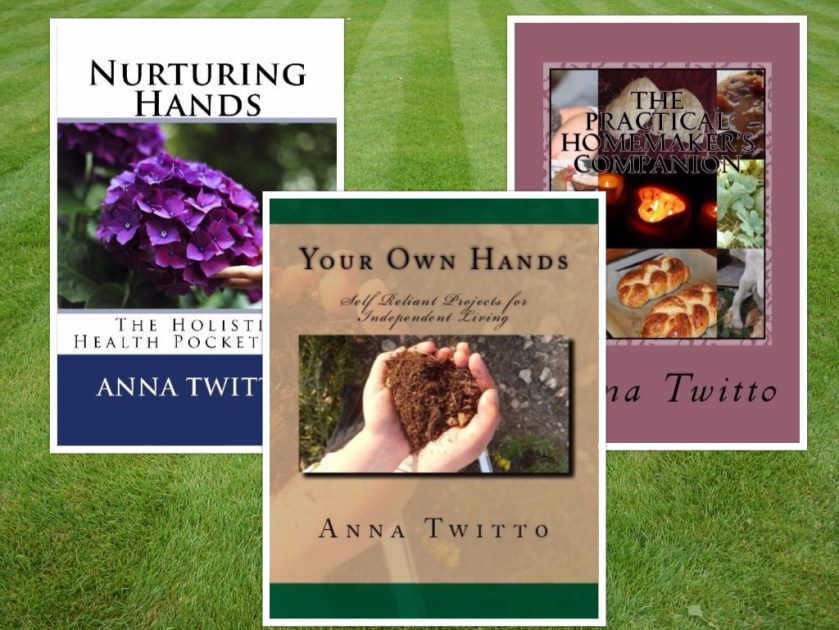
I am happy to announce that my natural health book, Nurturing Hands, has been revised, expanded, newly edited, generally revamped and re-released as Nurturing Hands: The Holistic Health Pocketbook. It is now available both in print, in a neat compact pocket size (134 pages, 4.99$) and in a digital version both on Kindle (2.99$) and Payhip (2$). It includes sections on nutrition, natural birth, breastfeeding, and health-promoting kitchen tips.

Working on this book was tremendously satisfying, like weaving together threads that have been loose for a long time. I hope readers find it both educational and enjoyable.

I am offering up to 3 review copies to my blog readers – if you are interested, just drop me a line through the contact form or in the comments.

Hold On to Your Kids: book review


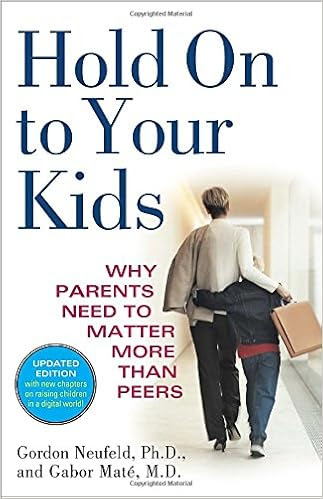
Hold On To Your Kids: Why Parents Need To Matter More Than Peers is a book with an important message (the headline itself, I think, speaks volumes!).

By Briana LeClaire:

“The overarching theme of the book is ATTACHMENT. To whom are your children more attached? Are they attached to you, their parents, and other adults? Or are they attached to their peers? To whom do they look for guidance? Whose star have they hitched their little wagons to?”

“My son is so independent,” a neighbor proudly told me once, “he has so many friends! As soon as he gets back home, after lunch, his friends come to visit him or he visits them, and he plays together with them until it’s time for supper. He hardly needs me at all!” Want to guess how old the boy was? Only 4. And the situation described above was seen by his mother as something most natural and desirable.

There is a perspective of my own I would like to add: while the authors of the book admit that attachment between parents and children, especially young children, is vitally important, and that early enrollment in daycare and preschool is more likely to make children peer-oriented (that is, dependent upon their friends in the development of social connections, goals, values, morals, language and habits), they also say that the most obvious (and, they confess, most desirable) solution – that of young children staying at home, usually with their mothers, is in most cases an impractical, outdated measure.

Their suggested solution is creating an attachment between the child and the “parent substitute” – babysitter, daycare worker, teacher, etc. While, of course, an invested and caring daycare worker is better than a detached, unaware one, I do not think a parent-child-like connection between the child and the care provider is possible or even healthy. There are too many children per caretaker and, above all, nobody can love your child like you do. Also, there is absolutely no guarantee the caretaker/teacher passes on values and messages you approve.

I vividly remember a 3-year-old niece who kept talking to us about her preschool teacher, whose name was Ruthie. That child was evidently engrossed by Ruthie and talked about her a lot more often than she mentioned her parents. Perhaps it is better that the child was so connected to her teacher, rather than her peers, but the fact remains that Ruthie (however capable of creating the attachment) did not care about the child in the same way. It was not her child, after all. At the end of the year, the child and her teacher would part, never to meet again. Is it really good for a child to give her heart to a teacher in such a way, when we know it is to be only a temporary relationship?

Even grandparents, aunts and uncles (the relationship with whom is permanent) are not supposed to be more than auxiliary figures in child-rearing. They can provide help, plenty of help, but the biggest chunk of the job of child-rearing (in time as well as authority) should belong to the parents.

Rather than say it’s impractical for young children to remain under the care of their mothers, it is better to stress the importance of such a measure, and to encourage families to stick to it as much as possible. You know how it works: when you are convinced something is truly important, and that there is really no equally good substitute, you will move mountains to make it happen. Of course, for some parents it will not be possible to keep their child at home, and then damage-minimizing tactics, as described in this book, are in order.

While I do not think mothers at home should be directly funded by the government, I do believe that  significant tax reduction for fathers in single-income families would be a fair measure. Let people keep a larger share of their own fairly earned money and provide for their family. It would ultimately save the government a lot of money on all sorts of programs that fight violence, bullying in schools, teen pregnancy and drug abuse, and other ailments of our society.

Nourishing Traditions and breastfeeding

Image result for nourishing traditions

Disclaimer: this post focuses only on the section on infant feeding in “Nourishing Traditions”, which is just a small part of the book.

As I approached the section on infant feeding in Nourishing Traditions, I was looking forward to a detailed survey of breastfeeding practices in traditional cultures, including perhaps a comprehensive list of foods which are thought to be beneficial for nursing mothers, plus detailed suggestions of milk-boosting diets, meals, beverages etc.

I was disappointed. At the beginning of the chapter, the author says that the importance of breastfeeding your baby “cannot be overemphasized.” However, I felt that the rest of the chapter contradicts this statement by concentrating mostly on recipes for homemade baby formulas, and by providing some advice which is outright detrimental to successful breastfeeding.

Are homemade “natural” formulas better than commercial formulas? Perhaps. Let’s even assume so. But no formula will ever come close to breastfeeding, either in nutritional content or otherwise. Mother’s milk is the food God designed for babies; cow’s milk is the food God designed for calves. It’s as simple as that. Cows’ or goats’ milk protein is unlike the protein in mother’s milk and is less well suited to human infants. Yes, it is possible for a baby to grow up just fine on formula, but on all points – nutritious, emotional and immunological benefits, protection from exogenous diseases, convenience and price – the score of breastfeeding is way higher. Therefore, as I see it, it’s definitely worthwhile to do everything possible to ensure that the baby is breastfed.

The author flatly and unequivocally states that the optimal duration of breastfeeding is “six months to a year”. This essentially means that some babies should be completely weaned as early as six months of age – which is just plain wrong, both according to the current position of the WHO, which states that

Exclusive breastfeeding is recommended up to 6 months of age, with continued breastfeeding along with appropriate complementary foods up to two years of age or beyond”

– and according to wisdom of most traditional cultures. As a matter of fact, I find it astonishing that a book which takes such an obvious stance of learning from traditions of various people around the world blatantly ignores the fact that in traditional cultures, breastfeeding normally continues well beyond one year and certainly beyond six months! In the Jewish tradition, the standard length of breastfeeding is two years.

The statement, “remember that babies should be chubby” (page 601) really grated on my nerves. Is there no room for diversity, no role for heredity to play in the baby’s body build? This expectation from two tall lean parents to produce a fat little butterball baby, makes mothers anxious about their milk supply when in fact they have plenty, and causes them to rush to supplement with formulas and artificially fatten up their babies.

When I came to the final page, titled “Tips for Successful Breastfeeding”, I was dismayed to find much of the same counter-productive advice you often hear from doctors whose knowledge on breastfeeding comes close to zero. Yes, good nutrition and proper rest play an important role in maintaining adequate milk supply. But the author neglects to mention that the most important factor in boosting milk supply is nursing on demand, which usually means often. Again, where is the analysis of traditional practices such as attachment parenting, baby-wearing and co-sleeping, which all encourage frequent nursing?

It isn’t that I think everyone should go the attachment parenting way. Parents are perfectly within their right to offer pacifiers and insist that the baby should sleep in their own room from day one. But if we’re talking about optimizing the chances of successful breastfeeding, people should make their choices with open eyes.

How about this: “If you have any qualms or fears about not having enough milk, assemble the ingredients for homemade formula…” not “check if you really have cause for concern”; not “contact a lactation consultant and/or a La Leche League representative”, not “nurse more often.” Prepare to give formula!! According to the author, “having the supplies on hand can be enough to give you the peace of mind that allows your milk to keep flowing”. Well, you know what? This very strongly reminds me of the well-meaning doctors and nurses who tried to persuade us to keep a can of formula at home, “just in case”. Does having formula around help to keep the milk flowing? I’m sorry, but I’m not buying that.

 Supplementing may be necessary sometimes, but it is just about one of the most critical steps towards diminishing milk supply.

And this: “Lack of adequate milk supply sometimes does occur, especially as baby grows and his appetite increases.”  Yes, sometimes during a growth spurt it may seem as though the milk supply is inadequate. However, by nursing more often, eating well and resting, milk supply can usually be increased. Mother and baby are hormonally tuned in to one another. Infant suckling stimulates milk supply. Lack of adequate supply doesn’t just “occur” (it’s maddening that a serious author implies that a basic bodily function like lactation just stops or decreases out of the blue). It has reasons which can often be traced to things like abrupt night weaning, introduction of solids, spending time away from your baby, giving a pacifier, a new pregnancy, etc.

I’m not saying that mothers who couldn’t breastfeed, for whatever reason, should feel guilty. But I do think that authors should feel guilty if their advice might have undermined breastfeeding for thousands of women.

My final conclusion? Eat the apple and spit out the seeds. “Nourishing Traditions” is a fascinating book with lots of insightful material and valuable advice, and it is kept at a place of honor on my shelf and often referred to. However, on this matter of breastfeeding I quite plainly disagree with a lot of what the author has to say.